


 Shkruar nga Gjergj Zefi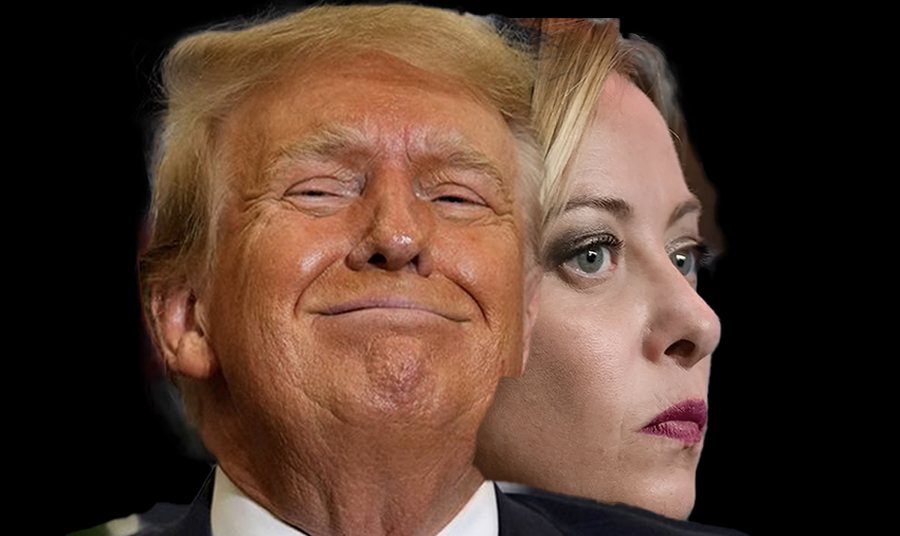
The Italian Prime Minister did not break away from Trump out of principle, but out of fear that her closeness to him was turning into electoral, economic and diplomatic harm...
Giorgia Meloni did not "wash her hands" of Donald Trump because she suddenly became wiser, more European or more principled. She 'washed her hands' because she understood an old rule of power: when an ally starts to take more from you than it gives, he is no longer an ally. He is a burden. And Trump, for Meloni, began to become precisely that: a political burden with very concrete consequences for Italy.
For a long time, Meloni was sold as a bridge between Europe and Trump. She was the conservative “acceptable” to the establishment, but at the same time ideological enough to be understood by the Trumpist right. She seemed like the ideal partner: Atlanticist enough not to scare Brussels, right-wing enough not to annoy Republican Washington. On paper, an elegant formula. In practice, an equation that began to break down as soon as Trump once again plunged the West into the logic of permanent crisis.
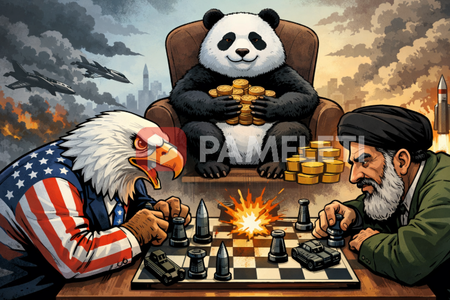
The first reason for the cooling was the war with Iran. This was not a distant crisis that Italy could comment on with diplomatic caution and then forget about. For Rome, it touched the most sensitive nerve: energy, the Mediterranean, supply chains and national security. Italy therefore distanced itself from the American approach, to the point of refusing to use the Sigonella base for operations and ruling out patrols in the Strait of Hormuz without a UN mandate. This was not a symbolic gesture. It was a political message: Meloni no longer wanted to be identified as an extension of Trump in the Middle East.
This is where the true cynicism of history comes in. Meloni did not retreat because he suddenly discovered the danger of military adventurism. These things have been known for a long time. He retreated because the crisis began to produce bills for Italy. When oil, gas, markets and the public balance begin to tremble, ideological friendships turn into luxury. And Italy is not able to finance the political luxury of a president who behaves like a world commander but does not pay any European bills.
Meloni herself asked the EU to consider temporarily suspending deficit rules if the crisis with Iran continues, which shows that her alarm was not propagandistic, but budgetary.
The second reason is electoral. This is both simpler and more ruthless. Trump was becoming toxic. Not necessarily to Mellon's strong ideological base, but to that gray area that decides elections: the jaded voter, the pragmatist, the moderate, the urban youth, the entrepreneur who doesn't want any more shocks.
Reuters reported that Meloni's loss in the referendum on justice was also read as a consequence of her exposure next to Trump at the height of the war with Iran. So, she saw with her own eyes that the photo with Trump was no longer bringing her authority; it was bringing her costs.
This is the moment when a smart politician does not make moral analysis. He makes calculations. And the calculation was clear: the more Trump moved towards crisis, tariffs, attacks on allies and a war of nerves with Europe, the more Meloni risked being seen not as an Italian leader, but as an interpreter of his interests in Europe. This is unbearable for any prime minister who wants to survive. Italy may be an ally of the US; but Meloni cannot accept being seen as a political subordinate of the White House.
The third reason is European. Meloni understood that the wind on the continent had changed. Even the European right, which once saw Trump as a brand of strength, began to distance itself. The war with Iran has deepened the cracks between Trump and the European nationalists who were once considered his natural allies. So, the problem is no longer just Italian. It is continental. Trump was becoming difficult to defend even from those who yesterday used him as an ideological flag. When a brand starts to hurt you in the market, you take it off the shelf. Meloni did this.
Essentially, she didn't 'wash her hands' of Donald because she changed her worldview. There was no philosophical drama at Palazzo Chigi. She didn't wake up one morning and say that multilateralism is beautiful and Trumpism is dangerous. These are embellishments for public consumption. She understood something more primitive, but more real: Trump was jeopardizing the balances. He was damaging his position in the EU. He was complicating his relationship with Italian public opinion. He was increasing the cost of governance at a time when the Italian economy has little breathing room. And when the government smells danger, it doesn't martyr itself. It leaves.
There is also a more subtle, but very significant detail. Meloni did not attack Trump with shouts. He did not make anti-American theater. He did not burn the bridge. He withdrew carefully, with controlled language, with gradual distance. This is the European way to politically kill an ally, without announcing a funeral. Because Rome knows that Washington is not challenged with heroic declarations; it is managed with half-steps, diplomatic fog and calculated signals. In this sense, Meloni did not divorce. He simply announced an organized cooling.
And that's why the question "why did Giorgia 'wash her hands' of Donald?" has a much less romantic answer than it seems. Not because Donald suddenly became unacceptable. But because he became costly. That's the key word. Costly in votes. Costly in energy. Costly in diplomacy. Costly in image. And when a leader concludes that his ally is leading him into the storm, he no longer protects him. He leaves him alone in the rain. That's what Meloni did.
So, let's put it bluntly: Giorgia didn't 'wash her hands' of Donald out of obedience. She washed him out of concern. And in politics, especially in European politics, concern is often the sincerest form of realism./ Pamphlet


A do ishe ne gjendje ti beje nje analize kaq te "holle", sepaku, mikut tend kryeminister, per fatin e keq te shqiptareve ....
Jo, jo, e pa qe atij nuk i punonte. Pike.