


 Shkruar nga Pamfleti
Trump confronts Iran amid repeated threats, short deadlines and a real risk of regional escalation...
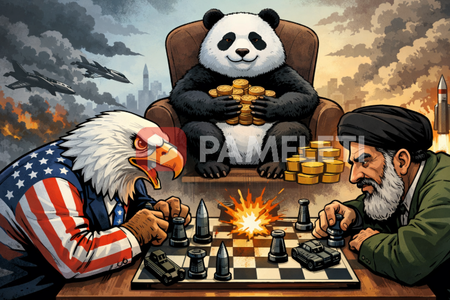
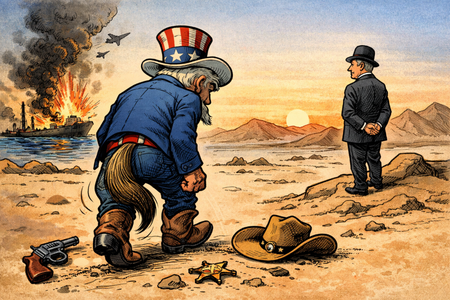
President Donald Trump is once again putting American foreign policy on a familiar trajectory: hard ultimatums, short deadlines and threats of force. This time, the target is Iran and the strategic hub of the Strait of Hormuz, a vital artery for global energy trade.
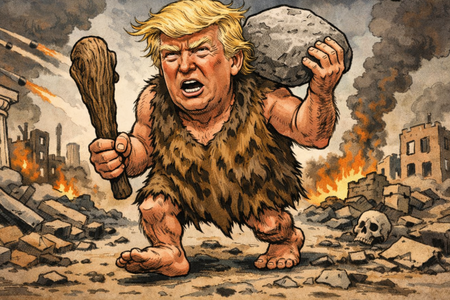
Trump has openly warned Tehran to open the strait, accompanying the message with harsh language and direct threats to strike critical infrastructure, including bridges and power plants. The rhetoric marks another climax in a series of statements in which the US president has moved from claims of Iran’s “unilateral surrender” to warnings of military escalation.
But the essential question remains: is this a serious threat, or another bluff in Trump's familiar style?
His political history suggests a recurring pattern. Trump has often set dramatic deadlines, only to push them back or soften them later. From North Korea to trade talks with China, he has used maximum pressure as a negotiating tool, but has not always followed through on his threats. That precedent makes it unclear whether the current ultimatum is a step toward real action, or an attempt to force Iran to the negotiating table.
However, the current situation is different and more dangerous.
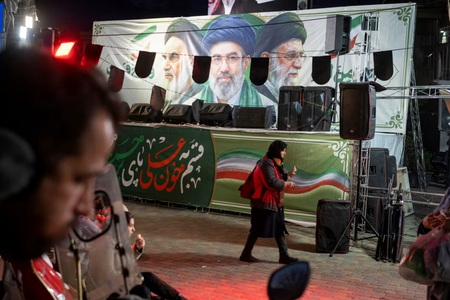
Iran does not need to win this showdown, it just needs to resist. Western intelligence analysis suggests that the new Iranian leadership is less inclined to compromise and more willing to escalate. In this context, any new ultimatum from Washington increases the likelihood of a strong response from Tehran, including attacks on American targets or allies in the region.
The danger lies not only in a direct US-Iran clash. An intervention to force open the Strait of Hormuz would require a prolonged military presence and could draw other international actors into the conflict. Europe has already expressed displeasure with the way this crisis has unfolded, while other global powers have shown no willingness to get involved in such an operation.
Against this backdrop, Trump's rhetoric is not just a communication style. It creates expectations, tension, and real pressure on the ground. Every public statement translates into military moves, strategic calculations, and chain reactions.
The problem is that an ultimatum, as a political instrument, only works if it is believed. The moment it is repeated without being implemented, it loses its effect and becomes a bluff. But if implemented, without a clear exit strategy, it risks opening up an uncontrollable conflict.
Trump seems to move between these two extremes: maximum pressure without strategic patience.
This makes the current situation unstable. If Iran chooses not to surrender, and all signs indicate that it will not, then the American president faces a difficult choice: retreat once again, weakening his credibility, or escalate the conflict, risking destabilizing one of the world's most sensitive regions.
The next ultimatum has been given. It now remains to be seen whether it is another episode of pressure diplomacy, or the beginning of a new phase of confrontation. /Pamphlet


Teveqeli më i shquar i shekullit.