


 Shkruar nga Gjergj Zefi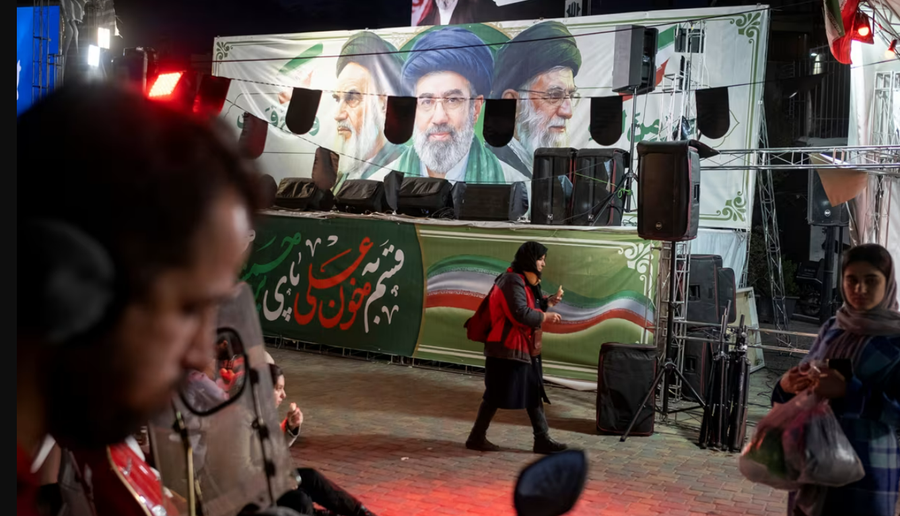
From "regime change" to the state of fear: how Trump strengthened Tehran's most brutal wing...
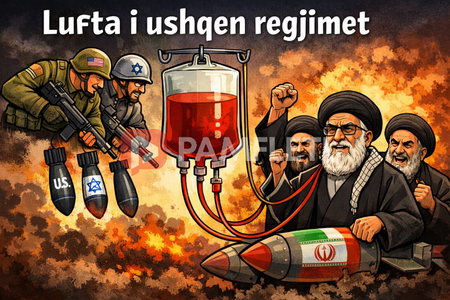
Donald Trump is trying to sell the Iranian crisis as a strategic success. He says the US did not “intend” to change the regime, but that the change happened anyway because the old top brass were killed and other people took over. At the same time, he has declared that the new leadership is “less radical” and “more reasonable.” But the problem is that the facts coming from the ground show almost the opposite: not a softer Iran, but a more militarized, paranoid, and brutal Iran.
Here lies the great political deception. Regime change is not simply a change of faces at the top of the pyramid. Regime change means a change in the system of power, in the way the country is governed, in the relations between the state, the army, the clergy and society. Nothing of the kind seems to have happened in Iran. On the contrary, serious reports speak of a strengthening of the strongest and darkest element of the system: the Revolutionary Guard and its repressive network.
Trump can call this “regime change” all he wants. In reality, what has been produced so far is more like a mutation of the regime, not its overthrow. And this mutation is not moving toward moderation. It is moving toward the complete militarization of power.
Marco Rubio, who is much more cautious than the president, publicly acknowledged that there are "internal divisions" in Iran, but added that Washington must prepare for the possibility, even the probability, that the new leadership will be no more reasonable.
So, even within the US administration, the security that Trump is trying to sell in front of the cameras does not exist.
If you take away the propaganda, a bitter conclusion remains: the elimination of old figures did not soften the Islamic Republic; it pushed it to close itself even more tightly.
Analysts quoted by American media and think tanks warn that the new structure is less inclined to compromise and more openly linked to the IRGC. This means less room for diplomacy, more survival instincts and more violence against anyone seen as a domestic threat.
And here comes the most cynical side of this story. Trump initially spoke as someone who was paving the way for the “liberation” of Iranians. But a regime that is being attacked from the outside, wounded and afraid, usually does not liberalize. It radicalizes. It clenches its fist. It sees traitors everywhere. This is exactly what we are seeing today: stronger retaliation against protests, executions, arrests of dissidents, expansion of censorship and tighter control over the internet. So, not liberation of society, but its deeper imprisonment.
There is a greater irony. The war that was supposed to weaken the Iranian threat could give the regime the final argument to pursue nuclear weapons. When a military elite sees itself surrounded, battered, and vulnerable, the temptation to provide the “ultimate guarantee” becomes stronger.
Analysts are openly saying that Tehran could learn the lesson of North Korea: no one dares to touch you when you have the bomb. If this logic wins out within the Revolutionary Guard, then Trump will not have weakened the threat; he will have pushed it to a more dangerous stage.
Equally dangerous is the regional effect. A more ferocious Iran, even if militarily damaged, does not automatically become more harmless. It could become more vindictive, more asymmetrical, and more unpredictable. It could use more militias, sabotage, hybrid warfare, energy blackmail, and the destabilization of sea lanes. This means that Trump’s triumphalism does not promise peace. It promises an even more nervous Middle East, where order is replaced by improvisation and revenge.
On a moral level, this is the greatest failure of the Trumpist narrative. You cannot talk about a “more reasonable Iran” while on the ground an apparatus is being consolidated that responds to fear with rifles, protest with hangings, and public debate with digital blackouts. You cannot call a development that leaves the Iranian people more vulnerable to their own state a victory. And you cannot package as “regime change” the fact that the most hardline wing of the same system is rising to the top.
In the end, the story can be summed up like this: Trump did not “gift” Iran with a new regime. He gifted the old regime with a new excuse to become even more bloody. And this is perhaps the most dangerous form of Western failure in the Middle East: when it speaks in the name of change, but actually feeds the monster it claims to be fighting./ Pamphlet


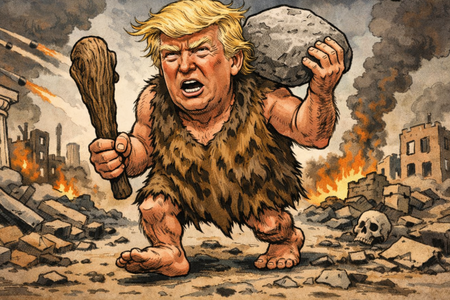
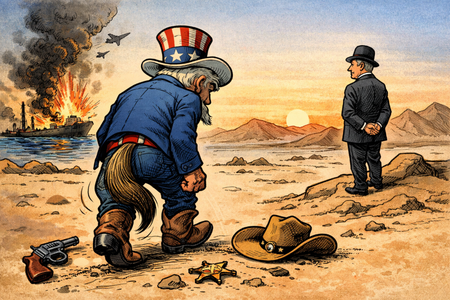
Pra Donald Tramp nuk e ka patur qëllim ndryshimin e regjimit(siç). Por e ka patur Netanjahu. Në luftë nuk shkohet me mëndjen e një shteti tjetër, aq më keq që atë vënd (Izraelin) e drejton një i çertifikuar si kriminel lufte. Kanali i Hormuzit ishte i hapur. Tashti kush kalon të paguaj taksën e kalimit.
Ik mer pirdhu t’i zhabulan malok.