


 Shkruar nga Gjergj Zefi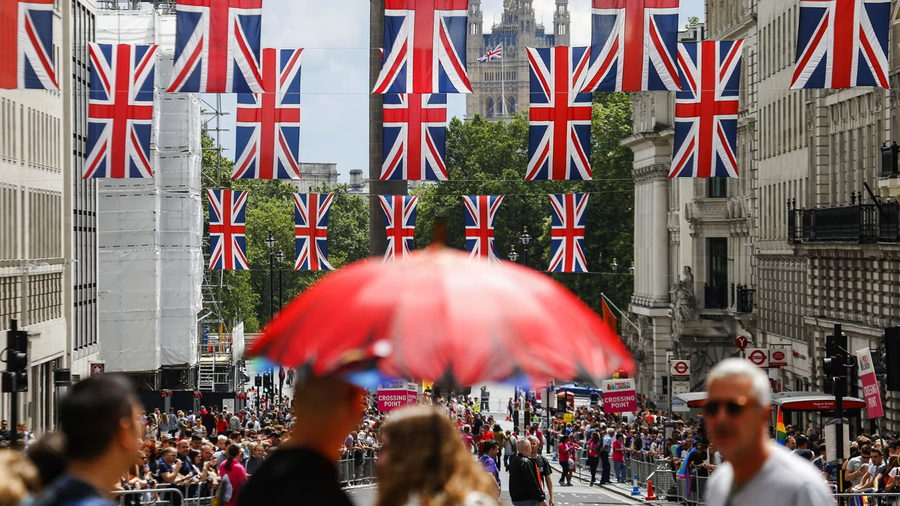
The British voted for sovereignty and prosperity. Ten years later, Brexit has left them with less investment, less influence in Europe and more political instability...
On June 23, 2016, the British made one of the most important decisions since the end of World War II.
By a narrow majority, they voted to leave the European Union, rejecting a political, economic and strategic project in which Britain had invested for more than four decades.
Brexit supporters portrayed the vote as a national liberation. They promised a return to sovereignty, controlled borders, a stronger economy and a Britain that would walk alone into a new era of prosperity. Opponents warned that the country was entering an experiment with unpredictable consequences.
Ten years later, the propaganda fog has lifted and the reality can be seen without emotion. Brexit did not destroy Britain, but it did not make it richer, more powerful or more secure either. On the contrary, it ushered in a decade of economic uncertainty, political fragmentation and the decline of British influence in Europe. What was sold as a return to control is increasingly being seen as the most costly strategic decision London has ever made in peacetime.
Most economic studies published in recent years reach the same conclusion: the British economy is smaller than it would have been if the country had remained in the EU. The UK in a Changing Europe Institute estimates that Brexit has shrunk the British economy compared to the alternative scenario of remaining in the Union.
The most obvious consequences appeared in four areas.
First, investment. After the referendum, many companies postponed or canceled long-term investments due to uncertainty over future trading relations with Europe. Some analyses estimate that private investment remained significantly lower than it would have been without Brexit.
Second, trade. Leaving the European single market created customs procedures, border controls and new administrative costs. Sectors such as the automotive industry, agriculture, fisheries and small exporters faced obstacles that did not exist before.
Third, productivity. Economists argue that the British economy lost its growth momentum compared to other developed countries after 2016. Some estimates put the GDP per capita gap at 6-8% lower than it would have been without Brexit.
Fourth, the financial market. London remains one of the world's leading financial centers, but some of the activity, capital, and personnel have shifted to EU cities such as Frankfurt, Paris, and Amsterdam. At the same time, the British stock market has suffered major capital outflows over the past decade.
The great irony is that many of the key promises of the Brexit campaign have not materialised. Immigration control remains a contentious issue, while the economy has not experienced the promised boom. Today, a large proportion of Britons believe that Brexit has damaged the economy and the cost of living. Polls also show growing support for closer relations with the European Union.
Politically, Brexit has also brought another effect: instability. Since the referendum, Britain has changed prime ministers at a pace unusual for its political tradition. Today's resignation of Keir Starmer brings the country to its seventh prime minister in ten years.
Brexit may not have been the disaster its opponents predicted. But it may have been the most costly strategic mistake Britain has made in peacetime. And that is why, ten years later, more and more Britons are seeing it not as a triumph of independence but as the island's self-imposed curse./ Pamphlet


Lini një Përgjigje