


 Shkruar nga Gjergj Zefi
The ultimatum is ending, but with it may come the end of reason...
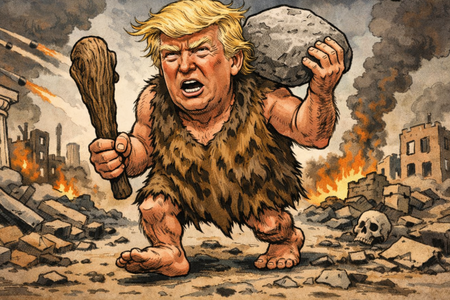
When the powers talk with deadlines, missiles, and threats to civilian infrastructure, the world is approaching an abyss, after which no one will ask who was right.
The ultimatum is expiring. And with it, the part of reason that usually prevents states from deviating from pressure into folly is fading.
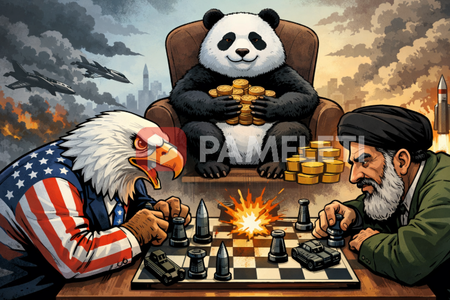
President Donald Trump has said that the deadline for Iran is "final," while Reuters and AP report that the American threat is directly linked to widespread strikes on Iranian infrastructure if the Strait of Hormuz is not reopened.
Iran, for its part, has rejected a temporary ceasefire and is seeking a more permanent end to the war, with concrete guarantees against new strikes.
This is the point where diplomacy ceases to be the art of compromise and risks turning into a notary office of disaster.
When one side speaks in the language of deadlines and the other in the language of absolute distrust, we no longer have difficult negotiations. We have a narrow corridor, where any wrong step could ignite not only Iran, not only the Gulf, but the entire energy and strategic balance of the world.
Reuters and AP emphasize that Hormuz remains a vital node for the global economy, while markets are reacting with fear and oil is hovering around $110 per barrel.
But there is something even more serious than the crisis in the markets: the normalization of the idea that bridges, power plants, and infrastructure on which millions of civilians depend can be hit. This is the point where politics loses its human face.
The AP reports that international law experts and UN officials have warned that attacks on civilian infrastructure could be considered war crimes, especially when the consequences directly affect water, energy, hospitals and the daily lives of the population.
And here it must be said unequivocally: no strategic reason, no calculation of force, no slogan for national or international security can morally cleanse a decision that plunges an entire people into darkness, thirst, fear, and ruin.
Civilian infrastructure is not a “target.” It is the nervous system of everyday life. To strike it is to punish not the regime, but the citizen. Not the commander, but the child. Not the war bunkers, but the light in the house and the water in the hospital.
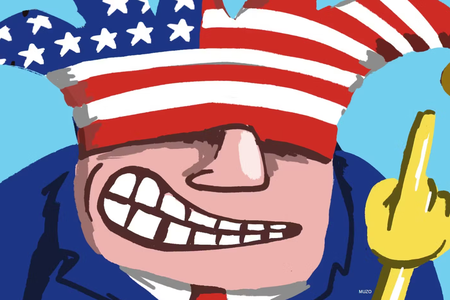
The real editorial today should not be addressed only to Washington, Tehran or Tel Aviv. It should be addressed to the entire international political elite, to all those who speak in the name of order, law, stability and security: People, put your finger on your head! The world cannot be run like a television crisis room, where deadlines are announced in front of the cameras and the planet is held hostage to the impulse of the next statement.
Because such a war never stays where it starts.
Reuters reports that the tension is already shaking Gulf and European markets, while the AP describes the human and regional consequences extending beyond Iran. The history of the Middle East has proven it time and again: it is very easy to give orders, but no one can control the consequences with the same ease.
For this reason, even when one thinks one is acting from a position of strength, one must pause for a moment and understand an elementary truth: brute force does not necessarily produce obedience; it often produces chaos, long-term hatred, and a cycle of revenge that makes peace even more distant. On the other hand, both the categorical rejection of any transitional formula and the raising of maximum demands at the height of the crisis can make the way out more difficult. This is a diplomatic interference based on the fact that the US is threatening escalation, while Iran is rejecting the temporary ceasefire and demanding much broader guarantees.
Today, the world does not need a rhetorical victory. It does not need leaders who are measured by how hard they threaten. It needs one thing: Restraint. Restraint. Cold-bloodedness. Because when an ultimatum becomes more important than the lives of millions of people, then politics has failed. And when politicians fail, they do not pay the bill. Cities, families, civilians, economies, generations pay the bill.
So the message must be simple, blunt, and unvarnished: stop before it's too late. Reopen real channels of mediation. Ditch the language of total destruction. This is not a wise strategy. This is a classic recipe for a new international tragedy.
Because the end of an ultimatum may seem like victory and determination. But very often it is only the beginning of a catastrophe that no one will be able to stop./ Pamphlet


Lini një Përgjigje