


 Shkruar nga Pamfleti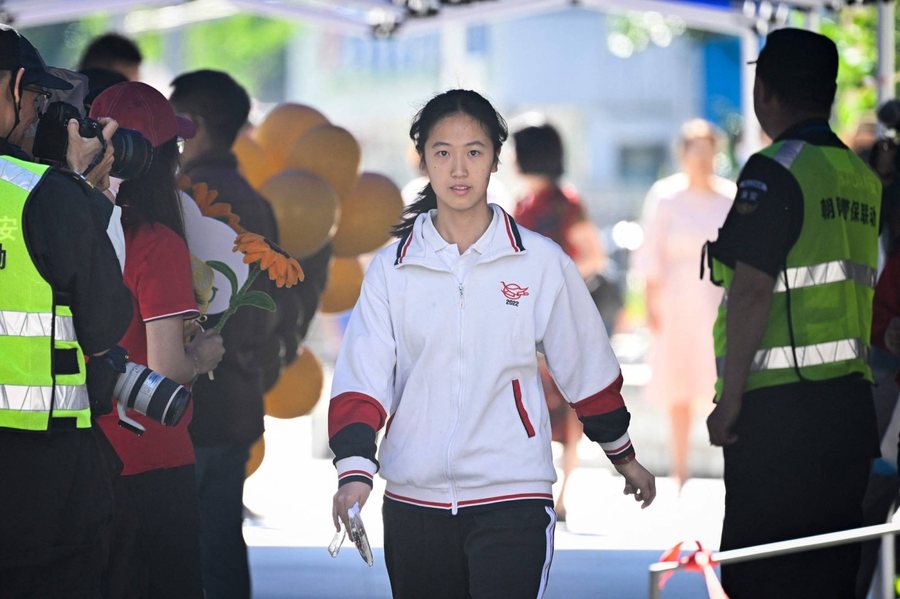
Authorities are strengthening measures against technological fraud, as artificial intelligence and smart glasses are considered new threats to the integrity of the national university exam.
At the beginning of each June, China pauses its usual pace of life not for a national holiday or state parade, but for the Gaokao, the national university entrance exam. This year, some 12.9 million students will take the test, considered the most important moment of their academic and professional lives for many young Chinese.
Although the number of candidates is lower than last year's 13.35 million, due to declining birth rates and demographic aging, the Gaokao remains one of the largest educational events in the world.
To understand the importance of this exam, one must understand the role that education plays in Chinese culture. For millions of families, the Gaokao score can determine a child's future and evaluate years of financial and emotional investment by parents.
The Gaokao is often considered the modern heir to the imperial examinations that for over a thousand years selected China's ruling elite. In the Confucian tradition, success in education was one of the most important paths to improving social and economic status.
However, this system is facing new challenges. China is going through a difficult period for young people, due to high unemployment among graduates. For many families, the huge sacrifices for children's education no longer automatically guarantee a well-paid and prestigious job.
For this very reason, the competition for admission to elite universities in Beijing and Shanghai has become even fiercer. A high score can open the doors to prestigious careers and privileged professional networks, while an average score can significantly limit future opportunities.
Preparation for the Gaokao is often described as extremely intense. Students spend years in a rigorous study regimen, with days starting before dawn and ending late at night. In addition to school, they attend extracurricular activities, private tutors, and constant exam simulations.
During their senior year of high school, many young people reduce their social lives almost completely. Parents organize family routines around the needs of the candidates, while local authorities close roads, suspend construction work and ask drivers to avoid using horns near testing centers.
The psychological pressure is immense. Every year, Chinese media reports cases of extreme fatigue, anxiety attacks, and emotional problems among students facing this exam.
Because of the extraordinary importance of the result, the Gaokao has been associated with attempts at cheating for years. In the past, it was a matter of traditional copying or identity substitution. Today, the main challenge comes from technology.
The Chinese Ministry of Education has specifically warned against the use of smart glasses, which can be connected to the internet and artificial intelligence systems. Authorities have ordered detailed checks on any type of glasses candidates wear or carry with them.
The concern is related to the rapid development of wearable technologies, including invisible micro-cameras, miniature headphones and remote transmission systems, which can be used to receive assistance during the exam.
In Fujian province and other regions, school administrators have received special instructions to identify hidden devices in ordinary accessories. Inspectors are trained to carefully observe the shape and characteristics of glasses to detect any hidden technology.
Security measures this year are among the strictest to date. Testing centers are equipped with advanced monitoring systems and “smart gates” similar to airport detectors, capable of detecting cell phones, electronic glasses, and other prohibited devices.
For Chinese authorities, ensuring a “safe Gaokao” is not just about the integrity of an exam. It directly affects the credibility of a system that is presented as one of the main mechanisms of meritocracy in the country.
In a society where economic inequalities have increased significantly in recent decades, the Gaokao continues to be seen as the instrument that should ensure equality of opportunity. Any scandal or potential manipulation risks damaging this perception.
However, as technology evolves, so do the methods of cheating. For nearly 13 million young people, the Gaokao remains the most important test of their lives. For families, it is an investment in the future. For the Chinese state, it is a test of its ability to guarantee justice, order, and trust in the education system.








Lini një Përgjigje