


 Shkruar nga Pamfleti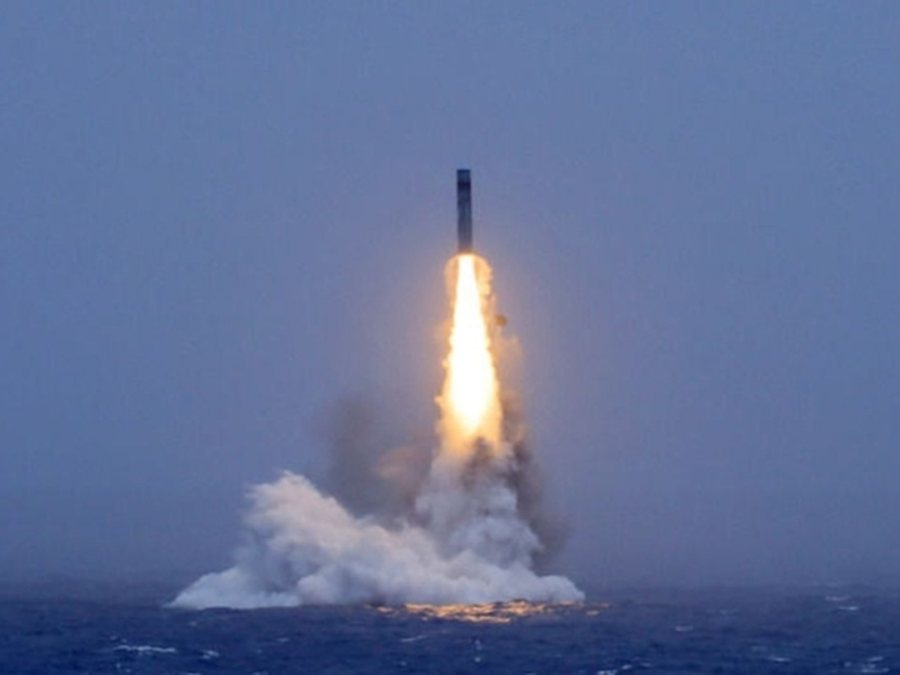
Chinese President Xi Jinping appears to be aiming to show that the People's Liberation Army remains fully functional, despite changes in military leadership following the departure of several generals in early 2026.
For the first time, a Chinese nuclear-powered strategic submarine has launched an intercontinental ballistic missile (ICBM) into the Pacific Ocean, marking a significant development in Beijing's military program. Until now, such tests have almost always been conducted from land bases within Chinese territory.
According to the Global Times, the missile was equipped with an inert warhead, simulating the weight and aerodynamic characteristics of a nuclear weapon. State media reported that the test was successfully completed and that "our nuclear deterrent triad has been significantly strengthened."
In military terminology, the "nuclear triad" means the ability to launch nuclear weapons from land, air, and sea.
The state-run Xinhua news agency also confirmed the test, stressing that interested countries had been notified in advance and that "the test was not directed against any specific country."
However, Japan, Australia and New Zealand reacted by expressing "great concern", describing the military demonstration as destabilizing for regional security.
Beijing's warning was reportedly issued just hours before the test and did not include the exact coordinates of the missile's trajectory. Analysts believe this was done to avoid the presence of foreign surveillance ships, which could collect data on the weapon's technical characteristics.
The US State Department also criticized the way the test was conducted, calling the procedure "irresponsible." Washington stressed that the US and Russia follow special notification protocols for missile tests, in order to avoid misinterpretations and reduce the risk of escalation.
According to published data, the missile was launched from a submarine in waters north of Hong Kong, flew about 4,000 nautical miles, passed near the US base in Guam and ended up in the Pacific, northeast of the Solomon Islands.
Experts believe the missile used was part of the Julang (JL) family, most likely the more advanced JL-3 model, which was publicly unveiled during the military parade in Tiananmen Square in September last year.
According to American estimates, the JL-3 has a range of about 10,000 kilometers, which gives China the ability to strike most of the American territory if the missile is launched from waters near the Chinese coast.
"Beijing is telling the world that it has a big nuclear stick with which it can dominate the Pacific," Justin Bassi, director of the Australian Strategic Policy Institute, told The New York Times.
According to US intelligence, China currently has 14 nuclear-powered submarines, while the US Navy has about 70. However, experts estimate that Chinese submarines remain noisier than American ones, being easier to detect by sonar systems.
Meanwhile, the US conducts five to 10 Minuteman and Trident missile tests in the Pacific each year, while Russia tests its arsenal in the Barents Sea. With this latest test, China appears to be following the same practice, expanding its capabilities for demonstrating military force.







Lini një Përgjigje