


 Shkruar nga Diplomatico | Pamfleti.net
The Israel-Iran clash and the war in Gaza are creating a new wave of global polarization, which according to some analysts may also be reflected in the Balkans, a region where historical tensions and geopolitical rivalries have never completely disappeared...
As the war in the Middle East escalates between Israel, Iran, and other regional actors, a question is increasingly recurring in diplomatic and analytical circles: could this clash also have repercussions in the Balkans?
For many experts, the answer is not simple, but the history of the region shows that major international conflicts are often reflected in this part of Europe.
The Balkans remain a space where domestic politics often intersect with global rivalries. The war in Gaza and the clash between Israel and Iran are creating a climate of international polarization, which could fuel political and identity narratives in the region as well. In this context, some Balkan leaders may use the crisis for domestic political purposes.
Serbian President Aleksandar Vučić is one of the figures often mentioned in analyses of geopolitical balancing in the Balkans. Serbia tries to maintain good relations with both the West and Russia and China, pursuing a multifaceted diplomacy. A major global conflict, such as the one in the Middle East, creates space for opportunistic diplomacy, where countries try to increase their strategic weight.
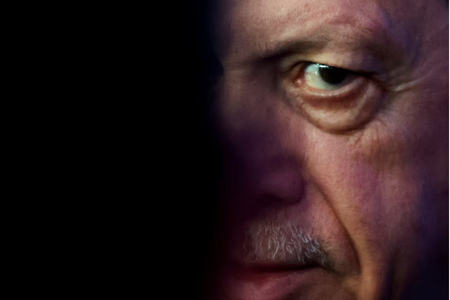
At the same time, Recep Tayyip Erdogan's Turkey remains a key player in this equation. Ankara has significantly increased its political, economic and cultural presence in the Balkans over the past two decades. Erdogan often presents Turkey as a protector of the interests of Muslim communities in the region, from Bosnia and Herzegovina to Kosovo and Albania.
In a tense international climate, political rhetoric can intensify and influence how the conflict in the Middle East is perceived.
Bosnia and Herzegovina is one of the most sensitive points in this equation. Its fragile political structure and ethnic divisions make the country vulnerable to external influences. The leader of the Bosnian Serb entity, Milorad Dodik, has often taken positions that challenge the state structure of the country and align with Moscow's political lines.
In a tense global situation, such figures can exploit the crisis to strengthen nationalist rhetoric.
Another dimension is the rivalry between the great powers in the region. The United States, the European Union, Russia, Turkey and increasingly China, have different strategic interests in the Balkans. Every international crisis creates new spaces for these actors to influence regional developments through diplomacy, media or economic investment.
Russia, for example, has often used the Balkans as a staging ground to challenge Western influence. If global tensions rise over the conflict in the Middle East, Moscow could try to increase political pressure in the region through its traditional allies.
However, the situation today is different from that of the 1990s. Most Balkan countries are part of NATO or have clear aspirations for Euro-Atlantic integration. This creates a security framework that makes it much more difficult for major regional conflicts to erupt.
But that does not mean the region is immune to global crises. In the era of hybrid warfare and the battle for public narratives, international conflicts often manifest themselves in the form of political tensions, propaganda, and social polarization.
For this reason, many analysts warn that while the war in the Middle East may be taking place thousands of kilometers away, its political and strategic echoes could be felt in the Balkans. In a region where history has shown that external tensions often intertwine with local conflicts, any global crisis remains a factor that must be carefully monitored./ Pamphlet


E kush e dhjet Ballkanin o te mjere!? Ka minerale, pfff! Ka plazhe, hic ne krahasim me vendet e tjera. Ballkani ka hunden te madhe por eshte sa nje mize. Nuk e di pse Ballkanasve injorante se c'ju duket vehtja. Pozite gjeostrategjike, nothing. Ballkanasit te mbushin barkun me buke e te shullehen ne Diell mjaft e kane.