


 Shkruar nga Gjergj Zefi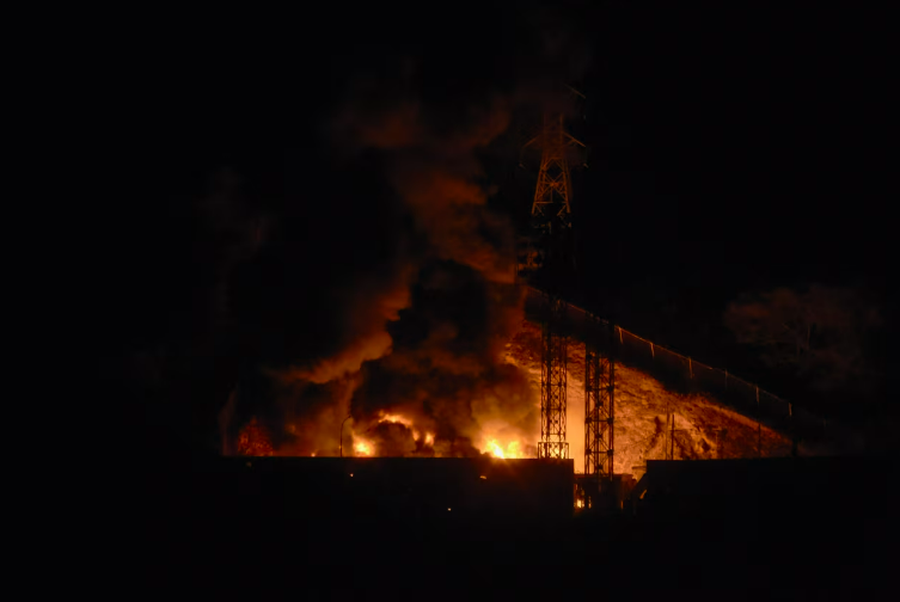
US military intervention in Latin America revives the old doctrine of regional dominance and sets a dangerous precedent for a world where force replaces diplomacy...
When a superpower decides to intervene militarily in a sovereign state without international approval, the global order is shaken. This is what is happening with Venezuela. The United States justifies its action with the war on drugs and the protection of national security, but the signals conveyed by this intervention are much broader, deeper and more dangerous.
What happened in Caracas is not simply an operation against an authoritarian regime, but a silent return to a 19th-century political logic: that the Western Hemisphere belongs exclusively to America.
At first glance, Washington’s strategic benefit is clear: eliminating an ally of Moscow and Tehran in the region, regaining control over energy resources, and establishing a new balance in Latin America at a time when Chinese and Russian influence is growing. But the problem arises when such an action, however justified in the eyes of an alliance, breaks international norms and triggers a chain reaction. In a world where rules become temporary and force replaces dialogue, every unilateral act creates the right for another unilateral act. And in this logic, Beijing can read Venezuela as a precedent for Taiwan.
If a superpower can intervene in the name of "regional security," then why shouldn't China also intervene, in a territory it considers an inseparable part of it? What the US seeks to prevent in Asia, it has now done in Latin America. This is the greatest danger: the replacement of international law with the law of the strongest.
For smaller countries, often caught between larger interests, this is a wake-up call. The creation of such precedents increases global uncertainty, weakens multilateral institutions, and turns the world into an arena with unclear rules. Diplomacy retreats and force takes its place, with consequences that affect not only large continents but also relatively small spaces, such as the Balkans.
Therefore, it is time for the international community, including NATO and EU countries, to reflect on the path the global order is taking. The intervention in Venezuela should not be seen in isolation, but as part of an increasingly tense international climate, where a move in one corner of the world can produce global shocks. And tomorrow, before discussing a diplomatic solution in Taiwan, we will perhaps have to explain why we were silent on Venezuela./ Pamphlet


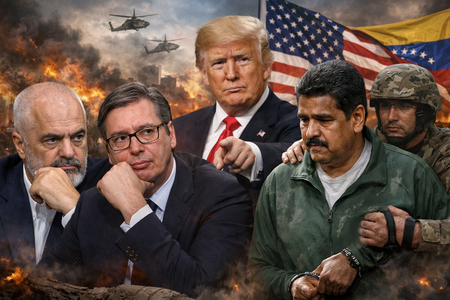

Ligjerisht nderhyrja e arrestimi e grabitja e nje presidenti mund të quhet shkelje e rende e tere verr ver. Edhe mos diskutimi ne Senat duket arrogant. Por për hir të secretit të operacionit ky veprim nuk mund të kryhej. Ky nuk ishte nje invadim ushtarak por rrembim i nje personi kriminel ne kerkim. Pse a mund të rrezohej Hitleri, Enveri, Stalini, Kadafi, Sadami me zgjedhje demokratike? Kurre. Keshtu më mirë të shkelet e drejta nje personi se sa të nje populli e me shume gjakderdhje. Tani pse e qysh e ku aresyeja te nafta e mineralet e bananet, Amerikani sa fillon nje muhabet të thote: “What’s in it for me?”
Ska cfar i shtoje komentit tuaj je i sakte madje pak me i ashper duhet te ishte komenti juaj,te majtet nuk kuptojne ndryshe….????????????♂️