


 Shkruar nga Pamfleti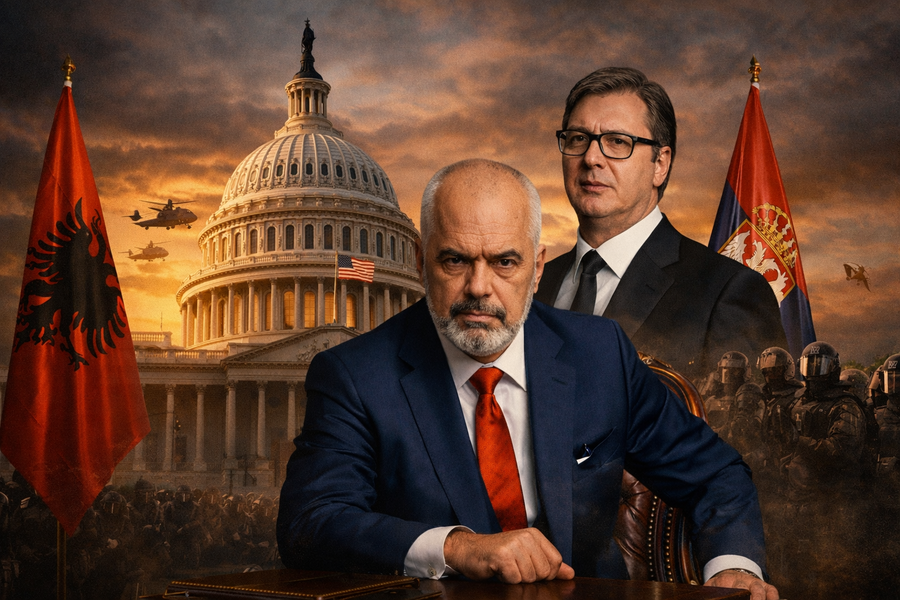
The US administration is sending clear signals to the autocratic leaders of the Balkans. After the Democracy and Prosperity Act, the US welcomed the elections in Kosovo and congratulated the new government, unlike what happened with the elections in Tirana.
In Washington, the Balkans are no longer a daily priority, but neither is it a forgotten territory. It is treated as a file that is opened whenever major American interests intersect: confronting Russia, containing China, and keeping a region that has historically produced crises under control. It is in this logic that the latest signals coming from the US should be read.
The passage of the Western Balkans Democracy and Prosperity Act in Congress is not a declaration of war on the region’s leaders, but neither is it a friendly postcard. It is a chilling reminder that existing sanctions will not be lifted and that the door for new measures remains open. The message is clear: Washington has no intention of rewarding stabilocracy, corruption, or electoral manipulation, even if they are disguised as “stability.”
In this context, the American alarm about corruption in the Balkans is becoming increasingly loud, even when not accompanied by press conferences. The American administration and Congress are increasingly aware that corruption is no longer simply an internal problem of the countries of the region, but a gateway for Russian and Chinese influence. Therefore, any regime that builds power on the capture of institutions, selective justice and clientelistic economics should consider itself a candidate for pressure, not relief.

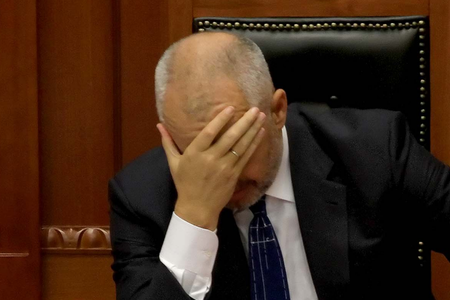
Albania is a significant example of this new reality, even though the prime minister does not accept it and today went so far as to curse the Americans. Edi Rama’s electoral victory was accompanied by triumphalist rhetoric in Tirana, but not by congratulations from Washington. The US embassy chose silence. A silence that in diplomacy is worth more than a critical statement. It suggests that the US is not convinced by the narrative of the “model” elections, while concerns about state capture and systemic corruption remain alive.
In stark contrast, today the US Embassy in Pristina clearly and publicly welcomed the elections in Kosovo, declaring that it "looks forward to working with the new government". This distinction is not formal. It is political. Washington is showing that it still knows how to differentiate between processes that, despite their problems, respect the rules of the democratic game and those that use elections as a legitimization mechanism for centralized power.
Serbia, too, though for different reasons, is under the same scrutiny. Direct references to electoral irregularities and the suppression of protests, as well as the lack of any signal of sanctions relief, show that Belgrade is no longer in its diplomatic comfort zone. On the contrary, the message is that any rapprochement with Moscow and Beijing will have concrete costs.
Overall, the Balkans are entering a phase where the US does not promise much, but clearly warns. There will be no automatic lifting of sanctions, no indulgence for corruption, and no unconditional support for leaders who confuse stability with authoritarianism. Whoever reads this telegram from Washington correctly will understand that the American silence is not a vacuum, it is a warning.
And perhaps this is the strongest message to the Balkan autocrats: the US is no longer interested in keeping you afloat, but is ready to leave you to face the consequences alone. / Pamphlet




Tralala zura nje gale iken shoqet e s'ma pane, i thone kesaj.