


 Shkruar nga Gjergj Zefi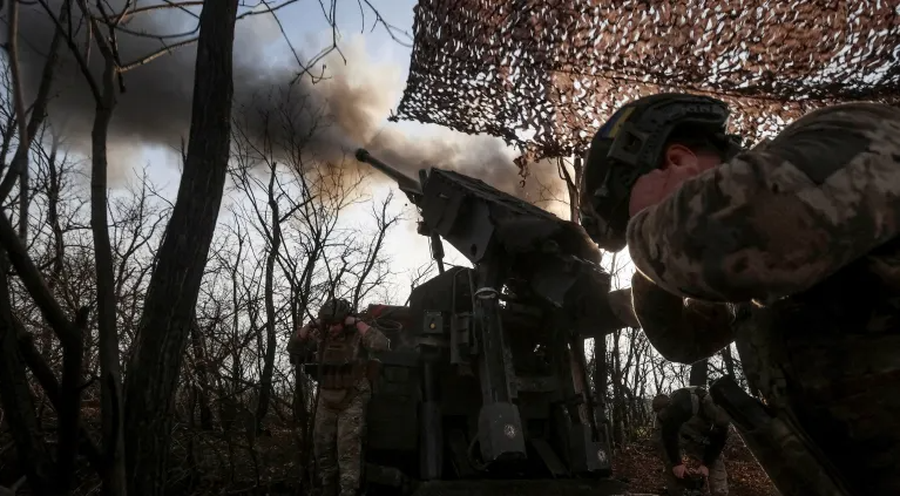
How Western diplomacy is building a world order that ignores the truth, forgives crimes, and equates the victim with the aggressor to maintain "peace"...
In today's world, where images of massacres are broadcast in real time and where crimes against humanity are no longer secret but documented in every detail, Western diplomacy continues to try to impose a "neutral" version of peace, where all parties are equally responsible, and truth is just a "perspective."
This is the great illusion of Western peacemaking: a diplomatic architecture that, instead of justice, offers moral equality between victim and aggressor. And this is happening everywhere; in Gaza, in Ukraine, in Sudan, in Nagorno-Karabakh, in Ethiopia or even earlier, in the Balkans.
The pattern is clear: the moment a conflict enters the internationalization phase, the process of “flattening” the truth begins. War crimes become “narrative” issues; genocide is relativized as “interpretation”; structural violence is stripped of its historical context; and internationals come up with sterile terminology like “inclusive participation,” “intercommunal dialogue,” or “diverse perspectives.”
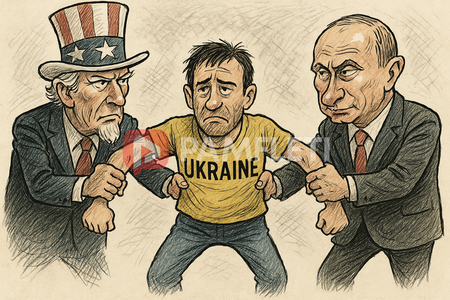
In this scenario, Palestinians being massacred in Gaza are treated as parties who “must listen and forgive,” Ukrainians struggling to survive are instructed to show understanding for “Russian security concerns,” and peoples who experienced ethnic cleansing; from Bosniaks to Tigrayans, are invited to submit to a peace that does not recognize their suffering.
The illusion works through language. Through “interfaith” conferences, “empathy training” training, and “active listening” projects. This is the mechanism by which Western powers, especially the European Union and some UN agencies, transform the crisis into a matter of technical management rather than moral. Where an international court is needed, a “dialogue” is offered. Where punishment for the aggressors is needed, artistic projects for “narrative development” are proposed. Instead of justice, selective memory is offered.
This is not just an ethical failure, it is a strategy. A strategy that serves to preserve a global order where political alliances and economic interests are more important than international law.
Peace, in this formulation, is a product for sale. And like any product, it must be acceptable to everyone: both the victim who has lost everything and the aggressor who enjoys diplomatic immunity. This absurd equation does not produce tranquility, but forced silence.
The most recent example is Gaza. While tens of thousands of civilians are killed, and the infrastructure of a people is deliberately destroyed, many Western governments fail to use the word “genocide.” They talk about the “humanitarian situation,” the “need for de-escalation,” and the “right to self-defense” for both sides. Even when the documents speak for themselves, diplomacy is silent or throws up its hands. This is not passivity, it is a choice.
At the same time, Western peacemaking sees violence as a passing phase towards stability, not as a symptom of a sick global order. This philosophy aims to close wounds, not heal them. And when wounds are closed with violence, they fester beneath the surface, ready to burst forth again. The post-war history of Bosnia, the unresolved trauma in Ethiopia, the sudden eruption in Nagorno-Karabakh, are testament to this process: there is no lasting peace where there is no truth and justice.
Consequently, what the world is seeing today is a reframing of truth according to political necessity, and a “peacemaking” that is more like an amnesty for crimes than the building of a more just world. When peace becomes an end in itself, it loses its ethical function. And when diplomacy is silent in the face of genocide, it ceases to be civilizing and becomes complicit./ Pamphlet



Shume drejt e ke,po ketu po harxhohen miljarda,si te vresim njerez dhe te shkaterrojme,sa te mundemi.Ku do shkojne keto shpenzime,pervecse ta bejene te shpertheje kur te duan "ATA"ate qelbin,qe do mbulojne. Kjo do zgjidhet vetem atehere kur nje brez i ri,te kundershtoje te shkoje ne lufte,cila do qofte ajo,pasi te gjitha per mendimin tim jane te planifikuara dhe keta,qe drejojne ,jane vecse aktore te lojes madhe,Mjere ato nena,qe humbin femijet e tyre.