


 Shkruar nga Alexander Kolyandr
The new government of Peter Magyar is expected to put pressure on the National Bank of Hungary to regulate the activities of OTP according to strict Brussels standards. As a result, Russia would lose the main financial bridge that allowed it to bypass technological sanctions and transfer capital to Western markets...
Make no mistake: The Kremlin is feeling the brunt of the Hungarian opposition's historic victory, which ended Viktor Orbán's 16-year rule. And the first and most direct blow is ideological.
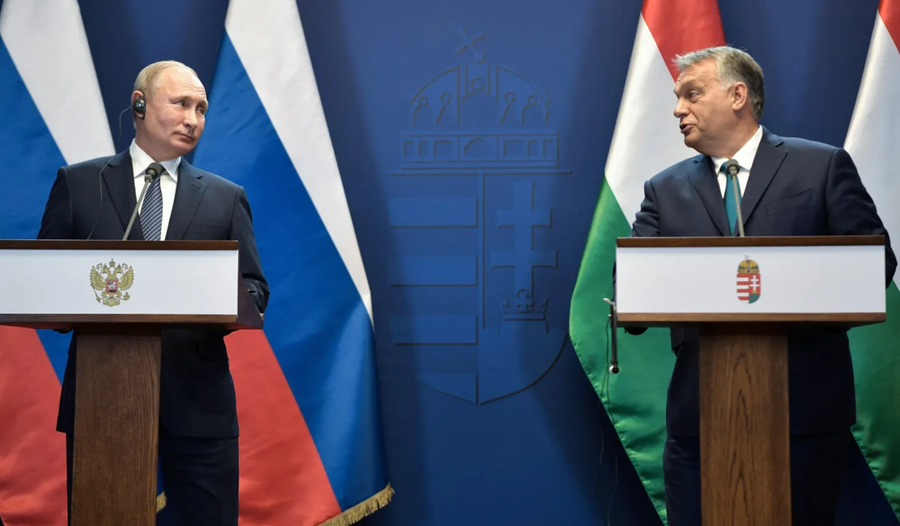
Orbán was living proof that “illiberal democracy” was possible, popular, and even sustainable within the European Union. His downfall undermines this narrative and sets an unpleasant precedent for other supporters of Moscow.
For those in power, as in Slovakia, or even for those aspiring to come, as in Germany and the Czech Republic. These movements coalesce around nationalism and opposition to the EU, supporting the Russian claim that the European bloc is an artificial structure that suppresses the will of ordinary people.
Most of these right-wing parties are skeptical of sanctions and aid for Ukraine. Here too, Viktor Orbán was a pioneer. Since 2022, Hungary has consistently blocked the extension of sanctions and the allocation of military funds to Kiev through the European Peace Facility (EPF), as well as blocking Ukraine's EU accession process.
Orbán’s willingness to block Western support has become increasingly aggressive. In 2024, he blocked technical changes that would have allowed Ukraine to receive a $50 billion loan, openly anticipating Donald Trump’s return to power. Just three weeks before the last election, he blocked a $100 billion aid package again, making it conditional on rules for oil transit through the Druzhba pipeline.
In fact, Orbán has never been a principled pacifist or a staunch ideological ally of Russia. His career began with strong anti-Soviet positions. However, he has proven to be a hardy pragmatist, using his veto power to extract maximum benefits for Hungary: funds from Brussels, exemptions from energy sanctions, and transit compensation.
For Moscow, this stance was a gift. Because it not only slowed down anti-Russian measures, but also cost the EU time, money, and precious political capital. With Orbán out of power, Moscow loses its main brake on Brussels.
Although the Kremlin officially tried to downplay this event through Putin's spokesman, Dmitry Peskov, who declared that "they have never been friends," reality shows the opposite.
The new Hungarian government has already signaled a rebuilding of relations with the EU, mainly to unlock the 30 billion euros frozen by Brussels.
Economically, Budapest served as a financial and energy bridge. Hungary remains a major buyer of Russian gas through long-term contracts with Gazprom until 2036, worth about $2.5 billion a year.
Although financially not vital to Russia's budget, for Gazprom - which lost the European market - Budapest was one of the few remaining customers. The situation is more complex with oil. Hungary, Slovakia and the Czech Republic enjoyed exemptions from sanctions for imports via the Druzhba pipeline.
With the new Hungarian government, the 2027 deadline for the final divestment from Russian oil becomes much more realistic, costing Russia about $6 billion in annual sales losses. But perhaps the most painful loss for Russia is the financial channel through OTP Bank.
The Russian branch of OTP is the 20th largest bank in Russia and one of the few to have escaped direct US sanctions. Unlike other European banks (such as Raiffeisen or UniCredit) that are regulated by the European Central Bank (ECB) and are under constant pressure to leave Russia, OTP is regulated by the National Bank of Hungary.
Under Orbán's rule, the Hungarian central bank did not exert any pressure on OTP's activities in Russia, turning it into a unique channel for cross-border operations and circumvention of financial sanctions.
A new, pro-European administration is likely to no longer protect this activity, making supply chains more difficult and increasing transaction costs for Russian entities.
Orbán’s defeat is not just a change of power in a small EU country. It represents the collapse of Russia’s main strategic stronghold in the West. From the veto in the EU Council to banking channels and nuclear projects (like Paks-2), Moscow’s “pivot” within the European Union has suffered a weakening that seems irreversible./ Pamphlet from the “Center for European Policy Analysis”




Mund te hetohete oto banke dhe firma hungarese