


 Shkruar nga Pamfleti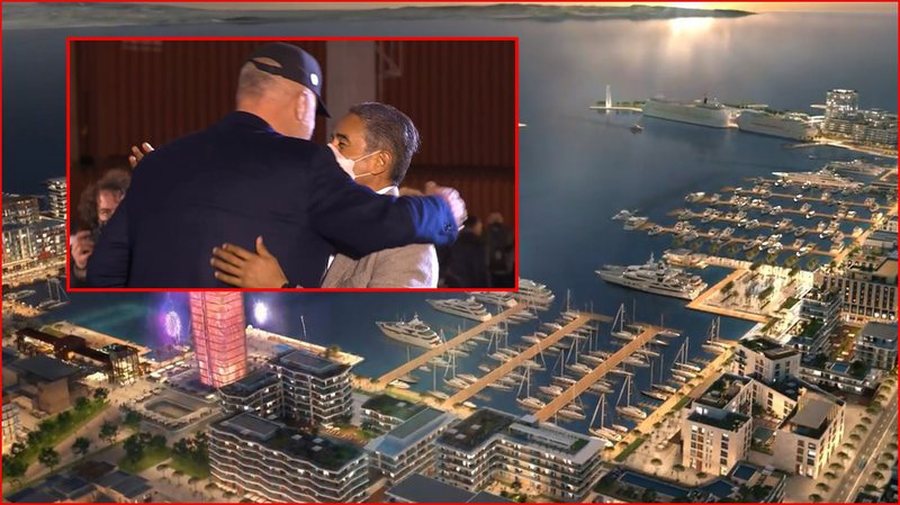
In a project where the Albanian state results in a 33% participation, the lack of transparency on revenues from preliminary sales raises serious doubts about favoring the private party, avoiding the public interest and distorting the real financial report...
In the Durrës Tourist Port project, the question is no longer how many towers will be erected, but where is the money being collected from sales going and why the Albanian state, although a 33% partner, has not yet provided a complete, detailed and verifiable overview of its share.
According to data and information previously published by "Pamphlet", preliminary sales of apartments, offices, commercial units and garages have been carried out in the territory of the former Port of Durres, although some of the buildings have not been completed. According to the information, by March 2026 the value of the income generated from preliminary contracts is estimated at tens and then over one hundred million euros. These figures, in the absence of official publication of complete financial documentation, remain claims that require institutional verification, but are enough to raise a legitimate public alarm.
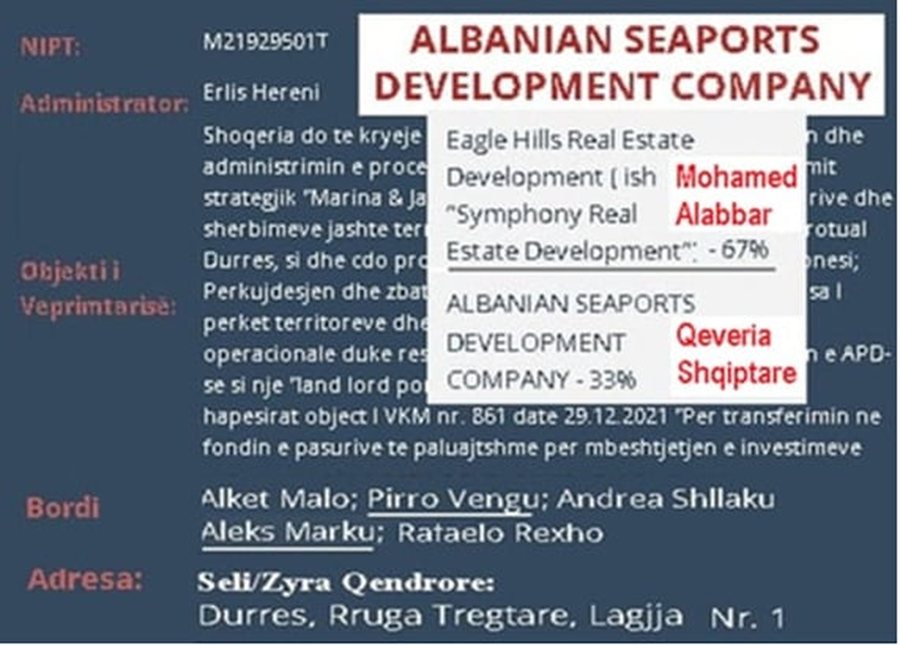
The essence of the issue is simple: if the Albanian state has a 33% stake in this venture, then there should be full transparency on how the revenues generated from sales are being reflected, administered and shared. If these revenues are being collected by the private party, either directly or through other contractual links, then the public has the right to know whether this practice is in accordance with the contract, the partnership relationship and the economic interest of the state.
The government cannot be satisfied with the justification that the revenues are being reinvested in the project. Even if this is technically or accountingly permissible, such a fact does not exclude the obligation for clear reporting to the partner and the public opinion. On the contrary, the larger the project and the greater the public wealth made available, the greater the burden of transparency becomes.
And here lies the most difficult knot: the Albanian state has not entered this project as an observer, but as a contributor with a public asset of strategic value. If the land, legal status, procedural facilities and institutional weight of the state are used as the basis of this venture, then any lack of clarity on the revenues generated is not simply an accounting problem. It is a direct matter of protecting the public interest.
Under these conditions, several questions arise that the government and responsible structures can no longer avoid:
Where are the revenues from preliminary sales reflected?
In which bank accounts are they administered?
What is the exact amount collected so far?
What share is recognized or reserved for the state partner?
Is there an independent audit of the project's financial flow?
And above all: is the interest of the Albanian state really being protected, or has it been overshadowed by the interest of the private party?
These are not propaganda questions. They are legal, financial and institutional questions. Because when large sums of money circulate in a project with public ownership and state partnership, but the state does not fully account for its benefits, a dangerous terrain is created for suspicions of non-transparent management, unfair favoritism of the private party, concealment of income or avoidance of obligations arising from contracts and the law. These are issues that propaganda cannot solve, but only documents, auditing and investigation.
Therefore, at this stage, no one needs to declare guilty with political language. A cold statement is enough: so far there is a lack of sufficient transparency for a project that involves public assets of extraordinary value and where it is claimed that very large revenues have been generated from sales. And when transparency is lacking in such a project, suspicion is not an exaggeration. It is a civic obligation.
If the government claims that every procedure is regular, then the solution is quite simple:
to publish the full operating contract, the revenue sharing formula, the real cash balances, financial movements and audit reports. Until then, any attempt to close the debate with political statements only deepens the conviction that in the Port of Durres we are not dealing with a simple construction project, but with an issue where the public interest may be seriously at risk./ Pamphlet







Te hetohete jane kunder ndetimi durres