


 Shkruar nga Pamfleti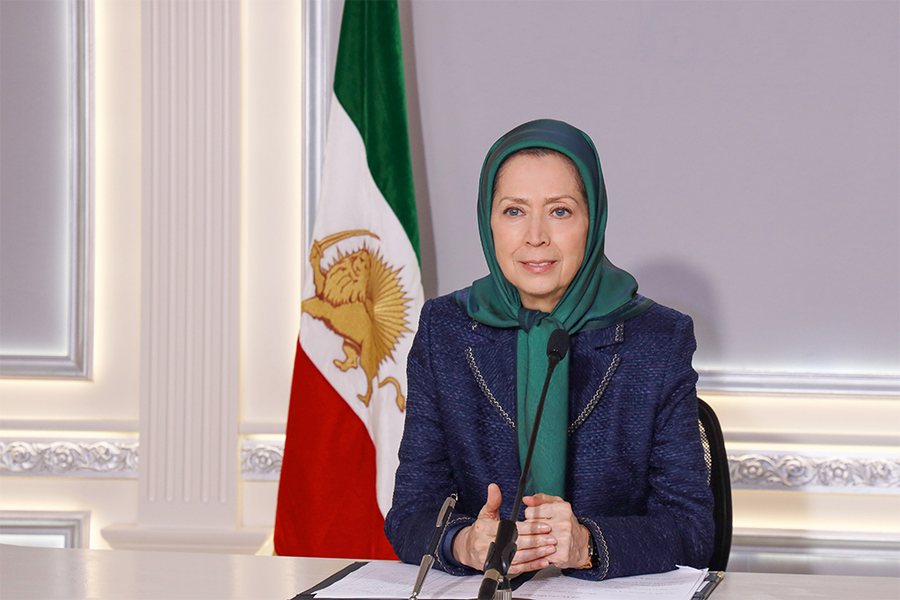
The Iranian regime's response to the current regional crisis has once again highlighted a fundamental reality that many observers have long noted: Tehran's survival depends not on stability or peace, but on continued confrontation, internal repression, and external conflicts.
The president-elect of the National Council of Resistance of Iran (NCRI) says Tehran relies on war, repression and regional destabilization to survive, while peace would remove the regime's last shield against popular uprisings.
The Iranian regime's response to the current regional crisis has once again highlighted a fundamental reality that many observers have long noted: Tehran's survival depends not on stability or peace, but on continued confrontation, internal repression, and external conflicts.
In a statement issued on June 14, Maryam Rajavi, president-elect of the National Council of Resistance of Iran, welcomed any understanding that could end the war and ease the suffering of the Iranian people. Her statement highlighted what she described as a deep political and strategic impasse facing the ruling clerical establishment.
"The Iranian Resistance, which has been fighting for freedom and peace for nearly five decades, welcomes any agreement that ends the war and the suffering of the Iranian people," Rajavi said.
Her statement comes at a time when the Iranian regime is facing increasing pressure both at home and abroad. Years of economic collapse, social discontent, widespread corruption and successive nationwide protests have significantly weakened the foundations of the ruling system. At the same time, Tehran's regional influence has taken a hit, while its nuclear ambitions have increased international isolation.
A Regime Blocked by Its Own Survival Strategy
Maryam Rajavi argues that the pursuit of nuclear weapons, regional interventions, and military adventures are not separate policies, but parts of an interconnected strategy aimed at the regime's survival.
According to her, the ruling establishment has relied for years on external conflicts and regional influence to compensate for the loss of domestic legitimacy, to divert public attention from internal crises, and to justify political repression.
However, Rajavi points out that this strategy has become a source of weakness. The same policies that were intended to preserve the regime have contributed to economic decline, international isolation, sanctions, and growing popular discontent. As a result, the regime now finds itself between growing external pressures and increasingly strong internal resistance.
Why Peace Is More Threatening Than War
One of Rajavi's main arguments is that peace poses a greater threat to the regime than war.
She argues that external conflicts have historically served authorities as a justification for suppressing opponents, tightening security measures, and portraying critics as enemies of the state.
In contrast, periods of peace and reduced tensions highlight the country's unresolved problems, such as poverty, unemployment, corruption, and political repression. Without external threats to distract public opinion, attention focuses on the regime's failures.
According to Rajavi, the leadership in Tehran understands that the greatest challenge to its survival comes not from foreign governments, but from an increasingly discontented people.
Fears of a New Nationwide Uprising
Rajavi also highlights the regime's growing fear of another nationwide uprising.
Recent waves of protests have demonstrated the high level of public anger and the fading fear of state repression. Despite mass arrests, executions, and strict security measures, the authorities have failed to eliminate the underlying causes of social discontent.
She emphasizes that democratic change must come from the Iranian people and their organized Resistance, not from external interference.
Human Rights Must Be Included in Every Agreement
Rajavi insists that any international agreement aimed at reducing tensions or ending the conflict must include the issue of human rights.
It calls for a halt to the executions of political prisoners and the killing of protesters, warning that the regime may use diplomatic agreements to buy time while continuing domestic repression.
A Regime Facing a Strategic Impasse
According to Rajavi, the Iranian regime is facing a deep strategic impasse. Escalating tensions brings more international pressure and economic hardship, while reducing tensions removes the regime's main justification for repression.
She concludes that the greatest challenge for the Iranian leadership is the growing demand from citizens for freedom, democracy, and fundamental political change. As public awareness grows and discontent deepens, the regime increasingly faces the outcome it has feared for decades: a society seeking a different political future.




Lini një Përgjigje