


 Shkruar nga Gjergj Zefi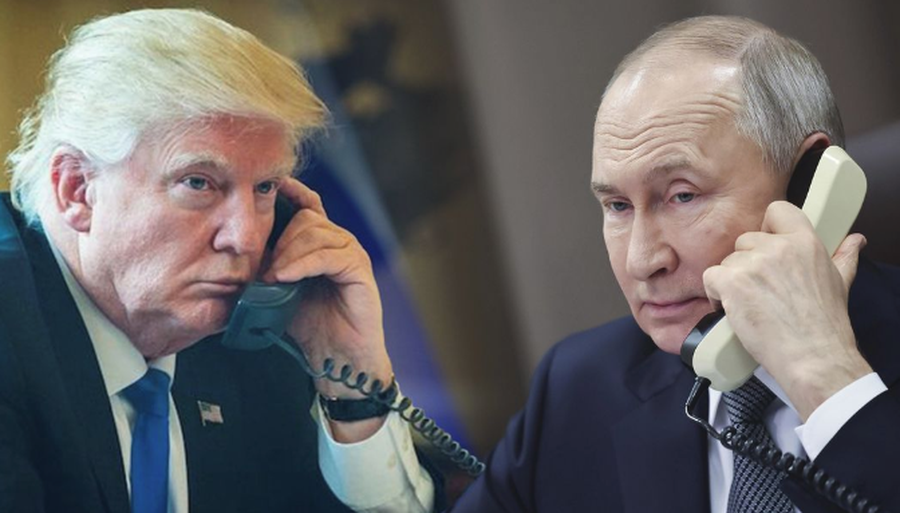
When Washington negotiates with the Kremlin, why should Europe continue to foot the bill?
This irony is hard to miss.
For more than four years, European allies have been asked for unity. They have been asked for discipline. They have been asked for sanctions, billions of euros in aid for Ukraine, increased military budgets, economic and political sacrifices. The message was clear: The West must speak with one voice against Russia.
Today, as Donald Trump holds 90-minute phone calls with Vladimir Putin and seeks diplomatic solutions, a question arises that many European capitals may be asking quietly, but that citizens have the right to ask openly:
If Washington can negotiate directly with Moscow, why doesn't this right also apply to European capitals?
Ultimately, who bore the brunt of the war?
It was European countries that faced the energy crisis. It was the economies of the European Union that absorbed the shocks of inflation and the costs of sanctions.
It was European taxpayers who financed successive aid packages for Ukraine, while millions of refugees settled in Europe's cities.
Of course, the United States has also provided significant military, financial, and political support to Ukraine. But for Europe, this war has not only been a matter of strategy. It has been a daily economic and social cost.
Therefore, if the US administration decides to explore a compromise with the Kremlin, this raises a political dilemma for European allies.
Should Europe wait for the outcome of negotiations between Washington and Moscow?
Or should it also build its own diplomatic channels, protecting its security and economic interests?
In diplomacy, there are no eternal friendships. There are permanent interests.
History has proven this more than once.
America changes administrations. Priorities change. Presidents come and go. While Europe remains there, in the same geography, with the same eastern neighbor and the same security challenges.
This is why many analysts argue that the European Union should build a more autonomous foreign policy and one less dependent on political cycles in Washington.
The phone call between Trump and Putin is not a problem in itself. Diplomatic dialogue is always better than military escalation.
But the problem arises if European partners are asked to finance a strategy for years, while the most important decisions are made on a hotline between Washington and Moscow.
If diplomatic business is permitted for America, then why should it be considered taboo for Europe?
This is not an anti-American question.
It is a question of Europe's political sovereignty.
Because after all, if the war was collective, even peace cannot be negotiated as a "Business Phone Call" between two capitals, while the rest of the alliance waits in the corridor to learn the result./ Pamphlet


Lini një Përgjigje