


 Shkruar nga Pamfleti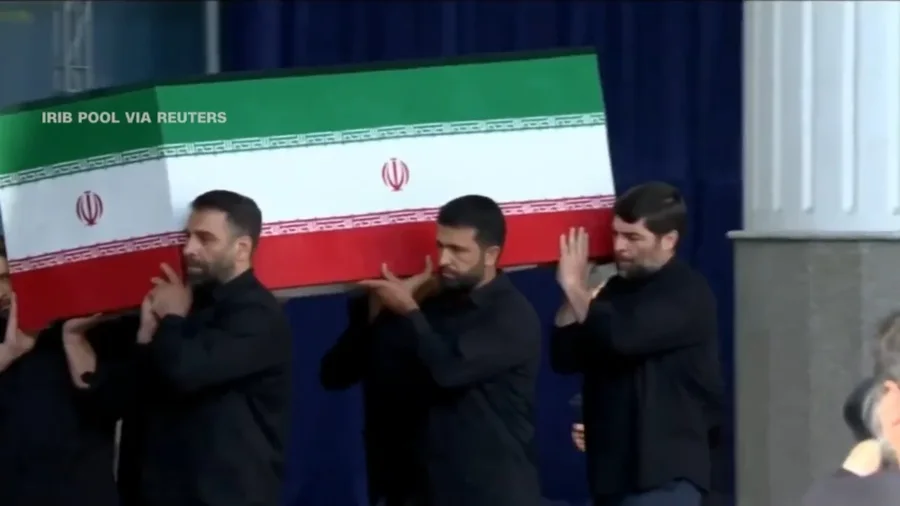
Three of the sons of the late Iranian leader, Ayatollah Ali Khamenei, attended the funeral ceremony held at the Imam Khomeini Grand Mosque in Tehran, where they prayed next to their father's body. His son Mojtaba was absent from the ceremony, which was noticeable during the tributes.
Mostafa, Masoud and Meysam Khamenei were present, who also attended the ceremony for the four other family members who lost their lives.
Mostafa Khamenei, 64, is the eldest son of Ali Khamenei and serves as a Shiite cleric. He has played a limited role in Iranian political life and holds no office in state institutions, although he is considered an influential figure in religious circles.
Masoud Khamenei, 52, heads the Office for the Preservation and Publication of the late leader's Works, an institution that archives and publishes his speeches and materials. Various sources also attribute influence to him in a media network.
The youngest son, Meysam Khamenei, 48, has maintained a more reserved public profile and also worked at the same institution that administers Ali Khamenei's works.
Other family members also attended the ceremony, including Gholam-Ali Haddad-Adel, Mojtaba Khamenei's father-in-law, and Mohammad Mohammadi Golpayegani, the son-in-law of the Khamenei family. The coffin of Golpayegani's 4-year-old daughter, who was buried with the other family victims, was also seen during the tributes.
Supreme Leader Ayatollah Ali Khamenei, Iran's spiritual leader and the country's highest authority, who led the Islamic Republic for almost four decades, was killed during airstrikes by the United States and Israel on February 28, 2026, at the age of 86.
Praised by supporters as a wise leader and by critics as a dictator, Khamenei will be remembered as a monumental figure of the Islamic Revolution, who built his rise to the position of supreme leader on a reputation for piety and fierce commitment to the cause.
The use of force against his own people, the imprisonment of opposition figures within the leadership itself, and the great resistance to external influence, especially that of the United States and Israel, shaped his legacy as a harsh and uncompromising figure, who led the country towards international isolation.
"History will show that Khamenei's rule was deeply traumatic for the Iranian people, who saw their country isolated and weakened to the point where most saw emigration as their only hope," said Alex Vatanka, director of the Iran Program at the Washington-based Middle East Institute.




Lini një Përgjigje