


 Shkruar nga Pamfleti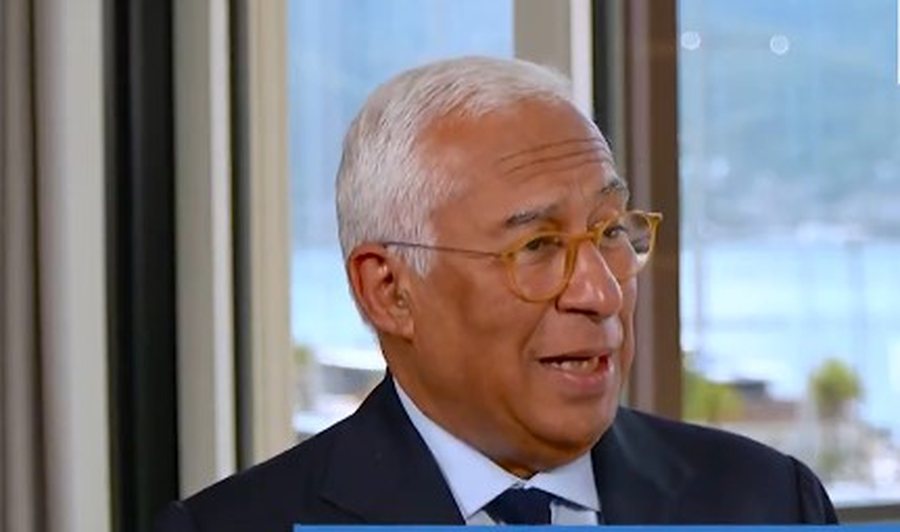
The President of the European Council, Antonio Costa, has supported the simplification of the European Union's procedures for admitting new member states, stressing that the bloc must accelerate the enlargement process to prove that it remains committed to the European aspirations of the Western Balkan countries.
In an interview with Euronews from Tivat, Montenegro, where EU and Western Balkan leaders are meeting this Friday, Costa suggested changes to the current membership methodology, which has often been criticized as complicated and slow. According to him, this is one of the main reasons for dissatisfaction in the region, where some countries have been waiting for years to advance the integration process.
"Currently we have to vote more than 40 times throughout the process," Costa said, adding that the EU could consider reducing the number of decisions to make the process faster and more efficient.
Currently, membership in the European Union requires unanimous approval by all member states at several stages of the process, giving governments the ability to block progress through veto power.
One of the most well-known examples is that of North Macedonia, which has faced successive blockages by Greece and Bulgaria on issues related to national identity, constitutional changes, and minority rights. Similarly, Hungary has repeatedly used its veto to hinder Ukraine's progress towards European integration.
"Personally, I believe that we do not need unanimity to open chapters and group chapters. We only need unanimity to close them," said Costa, referring to the 33 chapters of the accession process, organized into six thematic groupings.
The President of the European Council also stressed that bilateral disputes should not hinder the integration process of candidate countries. According to him, these issues should be resolved between the parties involved, with the support of European institutions, but without affecting the progress of the negotiations.
Costa's statements come at a time when the enlargement process has received new impetus. Hungary recently lifted its two-year veto on the launch of Ukraine's accession talks after reaching an agreement on the rights of the Hungarian minority in Ukraine.
Costa described this "new approach of Hungary to the European Union" as "positive".
Another of his proposals is to make wider use of transitional periods for countries aiming for membership. He cited as an example the gradual integration of new states into the EU's Common Agricultural Policy, through which European farmers are supported.
"We learned from previous enlargements that we have always applied transitional clauses in areas such as agriculture and freedom of movement. Now, since we are talking about a very challenging enlargement, perhaps we need transitional clauses in institutional matters as well," he said.
Although Costa did not provide concrete details on how to gradually integrate new countries into European institutions, the debate has intensified following recent proposals that envisage intermediate forms of membership, with participation in decision-making processes but without full voting rights.
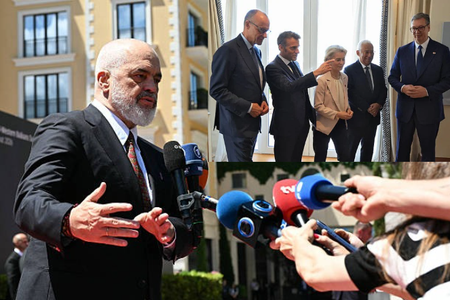
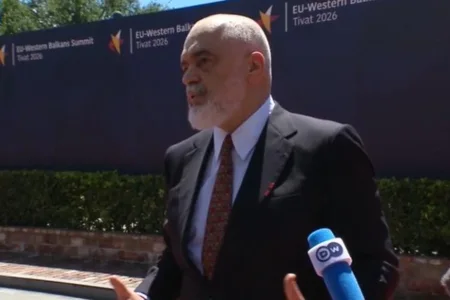
In this context, Albanian Prime Minister Edi Rama and Serbian President Aleksandar Vučić called in a joint opinion published in February for the acceleration of the European integration process without the right of veto. Such a model would allow candidate countries to be more quickly included in the structures of the European Union, even before full membership.
Albania and Serbia are currently continuing the negotiation process as candidate countries for membership in the European Union.


Lini një Përgjigje