


 Shkruar nga Pamfleti
More than 30 European leaders are gathering in Tivat, Montenegro, today to deepen the integration of Western Balkan countries into the European single market and reaffirm the prospect of membership in the European Union. Albania is seen by Brussels as the next likely country to join, although some EU governments have doubts about its progress in the fight against organized crime.
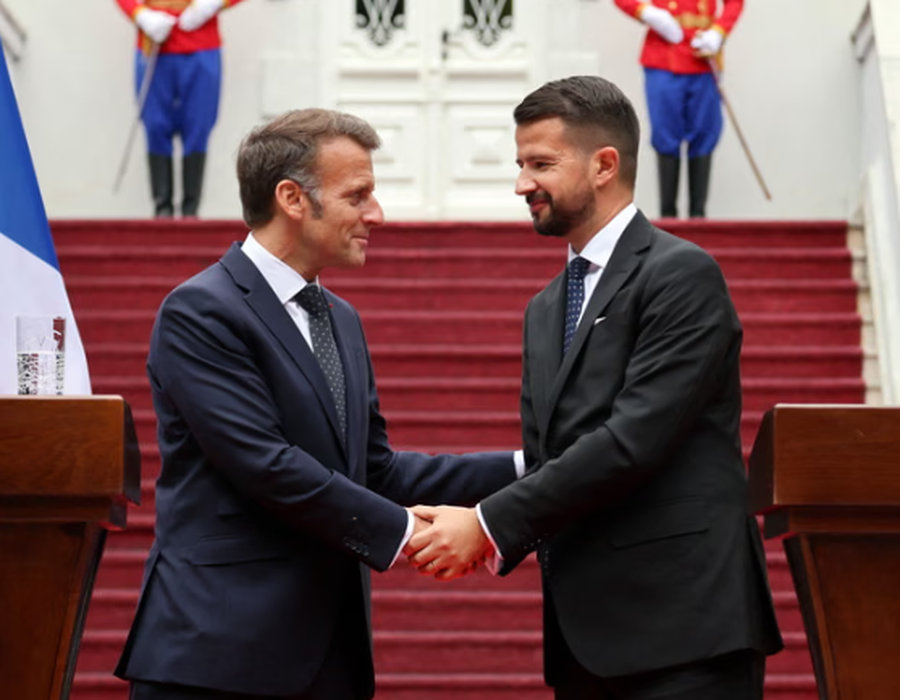
European Union leaders will try to give the six Western Balkan countries a clear signal that EU membership remains an achievable goal, despite internal disagreements over the pace and manner of the European bloc's expansion.
French President Emmanuel Macron, German Chancellor Friedrich Merz, Italian Prime Minister Giorgia Meloni and European Commission President Ursula von der Leyen are among more than 30 leaders who will attend the EU-Western Balkans summit in Tivat, Montenegro, on Friday.
The meeting will focus on the gradual integration of the countries of the region into the European common market, as a concrete step towards full membership in the European Union. The President of the European Council, António Costa, declared this week in Sarajevo that the EU's commitment to the Western Balkans is real and that the prospect of enlargement remains equally real.
"The enlargement of the European Union is a geostrategic interest for Europe and an investment in the peace, stability and security of our continent," Costa said.
His statements come at a time when the European Union is facing growing competition from Russia and China for influence in the region.
The summit comes just days after Hungary's new government lifted its veto on Ukraine's progress in the EU accession negotiations. Prime Minister Péter Magyar's decision paves the way for Ukraine and Moldova to begin negotiations on the first chapters of European legislation, particularly in the areas of the rule of law and democratic standards.
Ukraine and Moldova gained candidate status in 2022, shortly after a full-scale Russian invasion. However, European institutions are trying to show the Western Balkan countries that they have not been left behind.
Montenegro and Albania at the forefront of the process
Montenegro is considered the most advanced country in the accession process and aims to become the 28th state of the European Union by 2028.
Due to previous experiences with Viktor Orbán's Hungary, some member states are considering putting in place safeguards for new members. One idea being discussed is temporarily limiting the veto power for future member states.
After Montenegro, Albania is seen by Brussels as the most likely candidate for membership. However, some European governments continue to express concerns about the fight against organized crime.
Meanwhile, the path of North Macedonia, Kosovo, and Bosnia and Herzegovina remains complicated by internal political disputes and regional challenges.
Serbia, on the other hand, is increasingly perceived as a country that is moving away from the European course under President Aleksandar Vučić. Criticism is linked to the handling of anti-government protests and Belgrade's refusal to join European sanctions against Russia.
Faruk Bašić, a researcher at the Brussels Institute for Geopolitics, believes that the war in Ukraine has transformed the way the European Union views enlargement.
According to him, previously the logic was for candidate countries to gradually harmonize their legislation and values with those of the EU before membership.
"The war in Ukraine has shown a new geopolitical urgency that we have not seen before," Bašić said.
Debate over Ukraine's status
However, debates continue within the EU over how to integrate Ukraine.
Germany has proposed an associate membership model, which would give Ukraine representation in European institutions without voting rights, as a transitional stage towards full membership.
The proposal has been met with skepticism in Kiev and in some EU member states. One European diplomat described the idea as a substitute for full membership, warning that it could reduce the motivation to move forward with the enlargement process.
European officials emphasize that the summit in Tivat is not expected to bring major political decisions on membership, but will focus on concrete measures that directly affect citizens.
One of the latest decisions adopted by the EU Council is the launch of procedures for the abolition of roaming fees between the Western Balkan countries and the European Union.
If the process is completed successfully, citizens of the region will be able to use calls, messages and mobile internet while traveling in EU countries without additional fees, in the same way as citizens of member states.
This plan is part of a broader strategy aimed at the gradual integration of the Western Balkans into the European common market before full membership.
Several countries in the region are already involved in European mechanisms such as the Single Euro Payments Area (SEPA), which facilitates and unifies electronic payments in the European currency./ The Guardian


Lini një Përgjigje