


 Shkruar nga Pamfleti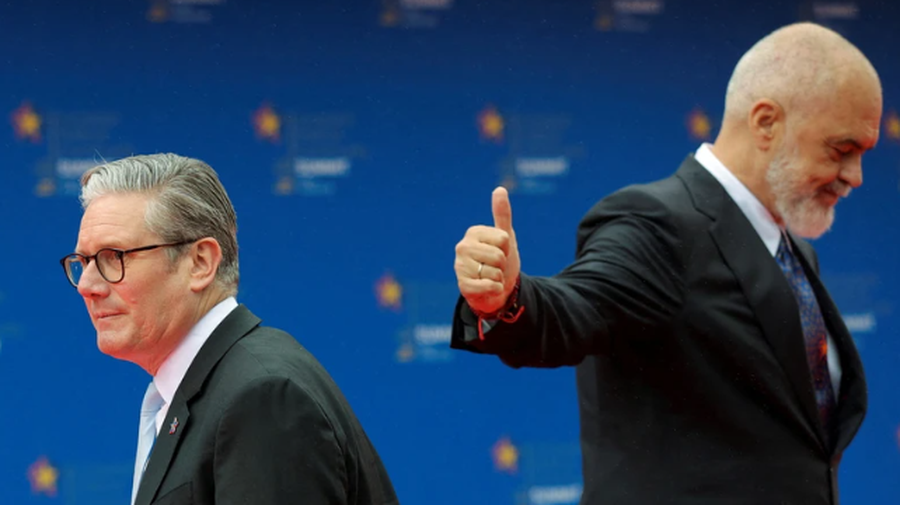
British Prime Minister Keir Starmer's first state visit to Tirana was presented as an elegant display of protocol, but in the end it turned into a wave of noise in the British media: "Edi Rama refuses to build a refugee center for the United Kingdom."
At first glance, an act of "statesmanship", defending the borders and sovereignty of his country. In reality? A theater with two acts and an epilogue that has not yet been written.
Diplomatic sources confirm to Pamphlet that no concrete agreement to set up a refugee center has ever been on the table. There was no technical draft, no joint working group, no pre-prepared negotiations. Simply a well-thought-out scenario to publicly display a “refusal” that may in reality be just a tactical pause, or more precisely: a bargaining chip.
Because it is absurd that a leader like Starmer, who represents a global power, would take a “no” from a small country like Albania and walk away with a smile. The diplomat who spoke about the Pamphlet defined it as a “sporting refusal”, which has something wrong with the scenario of international relations. And this has more to do with the second phase of this report, which is personal and political.
In the background, an old thesis is circulating with intensity: Edi Rama will not complete his fourth term. And for the first time, this is not only being said by his opponents, but he himself implied it, when on the first day of the May 11 campaign he said that his successor will be a woman.
And it is no coincidence that at the same time, Lea Ypi, the name increasingly mentioned as Rama's political heir, has made her first clear public appearance. Not as an academic, but as a figure with a political and European narrative.
In an emotional post, Ypi talks about “feeling at home” in a speech on migration and borders, emphasizing that after months of “political homelessness,” she felt solidarity and understanding. Carefully chosen words, but which essentially mark the beginning of a political positioning, in a terrain that is also the subject of debate between Britain and the EU.
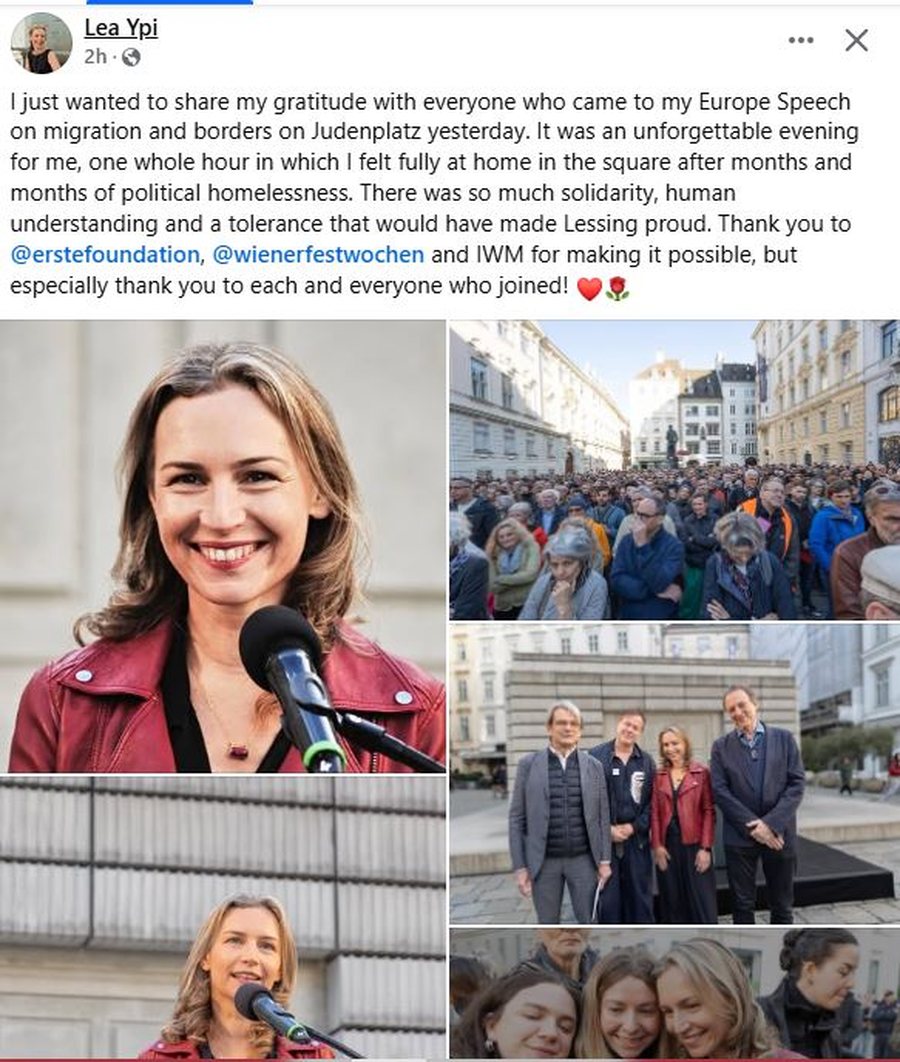
Meanwhile, she will also speak at the Turin Book Fair, one of the largest European events, where the focus will once again be on migration, borders and identity. Precisely those issues where Albania is involved today as a host country, and where Rama is increasingly seen as a mediator of a larger international plan.
And if this woman, who holds a British passport and is closely linked to the academic and ideological structures of Keir Starmer's Labour Party, is indeed what is thought, then Rama's rejection of the refugee center is simply a temporary diversion to move on to the second part of the plan.
So: Albania does not say "no" to refugees, it says "yes" with a new face.
And this face can be called Lea Ypi. A figure who belongs neither to the SP nor to Rilindja, but who comes with the signature of the left-wing political laboratories in London, the same ones that have designed leaders for countries like North Macedonia or Montenegro.
A figure who is untroubled by local corruption, but supported by the international vision of an Albania that is manageable, silent and in function of European regional projects for migration, security and border control.
In this context, Rama did not refuse anything. He left a path open. And to cross that path, perhaps it will not be him, but someone else who no longer bears the stamp of Soros, the agreement with Meloni or the patronage of official Tirana./ Pamphlet


Lini një Përgjigje