


 Shkruar nga Pamfleti
Amid war, pressure and uncertain diplomacy, an uneasy peace remains distant.
On the surface, the idea of a deal between the United States and Iran seems closer than ever. A 15-point plan, drawn up by the Donald Trump administration and transmitted via Pakistan, suggests that diplomacy has not completely disappeared from this conflict. But beneath the surface, the reality remains much harsher and more contradictory.
The very fact that the war broke out while negotiations were still underway shows the limits of trust between the parties. Over 1,500 dead in Iran alone and thousands injured are not just statistics; they are evidence of a conflict that has passed the psychological point of no return. Under these conditions, any attempt at peace does not start from neutral ground, but from a field laden with losses, doubts, and unresolved scores.
But the American plan is ambitious and fundamentally one-sided. It demands not only to stop Iran's nuclear program, but also to limit Tehran's military capabilities and regional influence. In return, it offers sanctions relief and economic support. This formula is not new: it is an attempt to exchange strategic security for economic relief. But herein lies the problem: for Iran, these demands touch on the very essence of sovereignty.
On the other hand, Iranian demands are equally strong. Tehran seeks recognition of its rights, compensation for war damages, and international guarantees against future attacks. More directly, it demands an end to the military and economic pressure that has accompanied it for decades. These two approaches are not simply different, they are fundamentally incompatible in their current form.
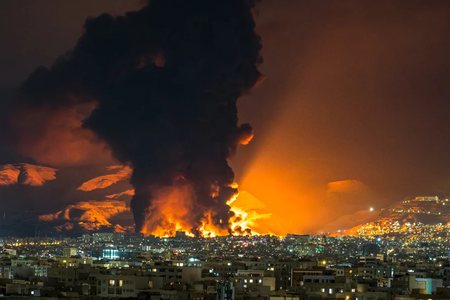
Meanwhile, the war has spilled over beyond its traditional borders. The closure of the Strait of Hormuz and the sharp fluctuations in global energy markets have turned the conflict into an international crisis. Every day that passes without an agreement increases the cost not only for the region but for the entire global economy.
However, there is a clear paradox: while the rhetoric remains harsh and public denials continue, indirect signals of communication have not stopped. Intermediate channels such as Pakistan, Turkey or Egypt show that no one completely excludes the possibility of dialogue. Even the reaction of financial markets to news of a ceasefire plan shows that the expectation of a solution exists, even if as a fragile hope.
The essential question is not whether the parties can sit down at the table. History has shown that this is always possible. The real question is whether they are willing to make substantial concessions. So far, neither side has given a clear signal in this direction.
In this sense, a US-Iran deal is not impossible. But it does not seem imminent either. It requires more than plans and declarations, it requires a real shift in strategic calculations. And in a war where each side still believes it can gain something more, peace remains, for now, a second option. /Pamphlet



Një marrëveshje SHBA - Iran është e mundshme. Një mosmarrëveshje SHBA- Iran është e pamundur. Nuk ka fitues. Humbësi i madh është Netanjahu dhe lobi Izraelit në SHBA. Tramp dhe MAGA e Tij, fiton në finish.
Kjo puna e komisarit ishte loje. Vertet Izraeli eshte pipilush shtet por parane e pordehn e ka te madhe e Ameriken kurre nuk mund ta terheqe pas hunde. Amerika me duket se po e perdor Izraelin si gur shahu qe sido qe te vije puna zullumqari do mbetet Izraeli. Kush veb bast?