


 Shkruar nga Pamfleti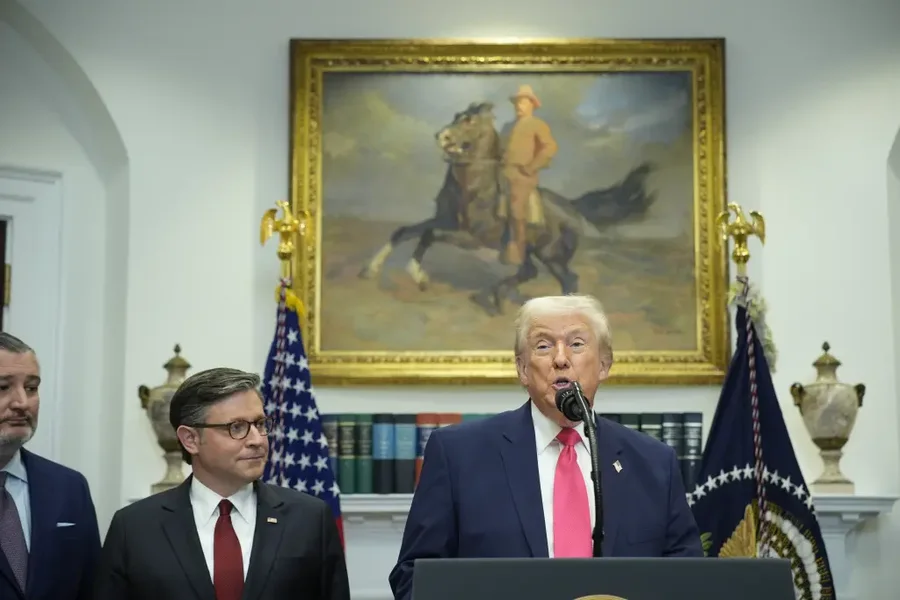
The Trump administration officially banned immigration applications from 19 countries deemed to pose a high risk of producing terrorists and other national security threats, hours after a source told The Post that the list could expand to 30 countries or more.
In a four-page memo issued late Tuesday, U.S. Citizenship and Immigration Services (USCIS) ordered the suspension of green card and citizenship applications from those countries, as well as claims for benefits, "pending a comprehensive review."
The 19 countries affected by the order were previously singled out by President Trump for travel restrictions in a June 4 proclamation and include Afghanistan, Burma, Burundi, Chad, Cuba, Republic of the Congo, Equatorial Guinea, Eritrea, Haiti, Iran, Laos, Libya, Sierra Leone, Somalia, Sudan, Togo, Turkmenistan, Venezuela and Yemen.
USCIS also announced a suspension of "all pending asylum applications, regardless of the alien's country of nationality."
“USCIS has determined that a comprehensive review, possible interview, and re-interview of all aliens from high-risk countries of concern who entered the United States on or after January 20, 2021 is necessary,” the memo read, noting that “USCIS has considered that this guidance may result in delays in the adjudication of some pending applications and has weighed this consequence against the urgent need for the agency to ensure that applicants are screened and reviewed to the maximum extent possible.”
"Ultimately, USCIS has determined that the burden of processing delays that will fall on some applicants is necessary and appropriate in this case, when weighed against the agency's obligation to protect and preserve national security."
The memo mentioned last week's shooting of two West Virginia National Guard soldiers in Washington, D.C., by an Afghan national, a former member of a CIA-backed military unit that fought the Taliban.
The suspect, 29-year-old Rahmanullah Lakanwal, entered the US legally in 2021 under the Biden administration's "Operation Allied Welcome" program, which evacuated and resettled refugees after the failed US withdrawal from Afghanistan in August of that year.
Lakanwali was granted asylum in April, which made him eligible for a green card after 12 months.
The State Department also suspended the issuance of visas to individuals traveling with Afghan passports in response to the Thanksgiving Eve attack, which killed Guard member Sarah Beckstrom, 20, and seriously injured Andrew Wolfe, 24, not far from the White House.
"Recently, the United States has seen what the lack of review, vetting, and prioritization of speedy adjudications can do to the American people," the USCIS memorandum states.
"USCIS remains committed to ensuring that all aliens from high-risk countries of concern who have entered the United States do not pose threats to national security or public safety."
Homeland Security Secretary Kristi Noem announced that she had proposed expanding the number of countries on the restricted list during a meeting with Trump.
"Our forefathers built this nation on blood, sweat, and an unwavering love of freedom, not for foreign invaders to slaughter our heroes, drain our hard-earned tax dollars, or rob us of the benefits that are ours as Americans," Noem wrote.
At a cabinet meeting on Tuesday, Trump lashed out at immigrants from Somalia in response to an ongoing Minnesota benefits fraud case involving dozens of members of the East African diaspora.
"Somalis have stolen billions of dollars from Minnesota," the president said, adding: "They contribute nothing. I don't want them in our country."
Trump issued the initial June proclamation after an anti-Semitic bomb attack in Colorado, which was allegedly carried out by an Egyptian national in the US on an expired tourist visa.
This order completely restricted travel to the US from Afghanistan, Burma, Chad, the Republic of the Congo, Equatorial Guinea, Eritrea, Haiti, Iran, Libya, Somalia, Sudan, and Yemen.
Partial restrictions on entry into the US were imposed on citizens of Burundi, Cuba, Laos, Sierra Leone, Togo, Turkmenistan and Venezuela. /Adapted from New York Post/






Lini një Përgjigje