


 Shkruar nga Pamfleti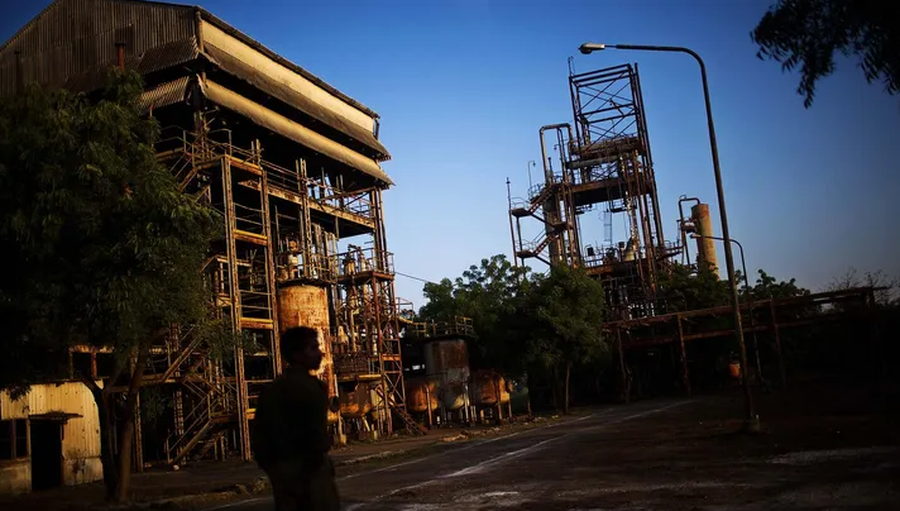
December 3, 1984 - Bhopal disaster in India, kills 20,000 people
An explosion at a Union Carbide pesticide plant in Bhopal, India, led to the worst industrial accident in history. Decades later, the official death toll remains disputed. According to official estimates, at least 5,000 people died instantly.
While approximately 20,000 died over time and half a million others were injured when toxic gas engulfed the entire city, Bhopal was a city of nearly 1 million people in the Madhya Pradesh region, between New Delhi and Bombay.
The Union Carbide pesticide factory was located in Jai Prakash Nagar, the city's poorest area. Later, some claimed that these factors were part of the reason the plant had outdated equipment, poor management, and inadequate maintenance and safety procedures.
On December 3, 1984, about 45 tons of the dangerous gas methyl isocyanate accidentally leaked from a factory owned by the Indian branch of an American company. The gas spread over densely populated neighborhoods around the plant, instantly killing thousands of people and creating panic as tens of thousands more tried to flee Bhopal.
About half a million survivors suffered from respiratory problems, eye irritation or blindness, and other illnesses that arose from exposure to the toxic gas. Many of them were compensated with ridiculous amounts of just a few hundred dollars.
Subsequent investigations concluded that substandard operating and safety procedures at the understaffed plant had led to the disaster. In 1998, the site of the factory was handed over to the state of Madhya Pradesh.
At the beginning of this century, more than 400 tons of industrial waste were still present there. Despite ongoing protests and lawsuit attempts, neither Dow Chemical, which bought Union Carbide Corporation in 2001, nor the Indian government had properly cleaned up the site.
Soil and water pollution in the area was responsible for chronic health problems and high rates of birth defects in children in the area. In 2004, the Indian Supreme Court ordered the state to provide clean drinking water to the residents of Bhopal due to groundwater contamination.
Only in 2010, several former executives of Union Carbide's Indian branch - all Indian citizens - were convicted by a Bhopal court for the negligence that led to the disaster.
Other important events:
December 3, 1368 - Zhu Yuanzhang establishes the Ming Dynasty in China, beginning one of the most glorious periods in Chinese history.
December 3, 1775 - On the warship "Alfred", the official flag of America (called the "Grand Union Flag") is raised for the first time. This was an important symbol of the independence of the American colonies from Great Britain.
December 3, 1800 - At the Battle of Hohenlinden, Napoleon's French army destroyed the Austrian army, forcing Austria to sign peace and ending the War of the Second Coalition.
December 3, 1910 - The first neon lights were turned on in Paris, revolutionizing advertising and the appearance of cities.
December 3, 1912 - Bulgaria, Serbia, Greece, and Montenegro sign an armistice with Turkey, ending the fighting in the First Balkan War. During the 2-month conflict, a military coalition between Greece, Serbia, Bulgaria, and Montenegro—known as the Balkan League—expelled Turkey from all of the former European possessions of the Ottoman Empire, with the exception of Constantinople (present-day Istanbul). In January 1913, a coup in Turkey led to the resumption of fighting, but the Balkan League again emerged victorious.
December 3, 1952 - The US conducted the first hydrogen bomb test in the Marshall Islands.
December 3, 1971 - The Indo-Pakistani War (also known as the Bangladesh War) begins, leading to the creation of the state of Bangladesh.
December 3, 1979 - In Iran, 99 percent of voters in a referendum voted in favor of establishing an Islamic republic, replacing the monarchy, and giving full authority to religious leader Ayatollah Ruhollah Khomeini.
December 3, 1989 - After a meeting in Malta, US President George HW Bush and Soviet leader Mikhail Gorbachev announced that the Cold War had ended.
December 3, 1997 - The Ottawa Treaty banning the production, use and trade of anti-personnel mines is signed in Canada.
December 3, 2012 - The Philippines is hit by Typhoon Bopha (Pablo), causing over 1,000 deaths and extensive material damage. / Prepared by Pamphlet



Lini një Përgjigje