


 Shkruar nga Adriano Bosoni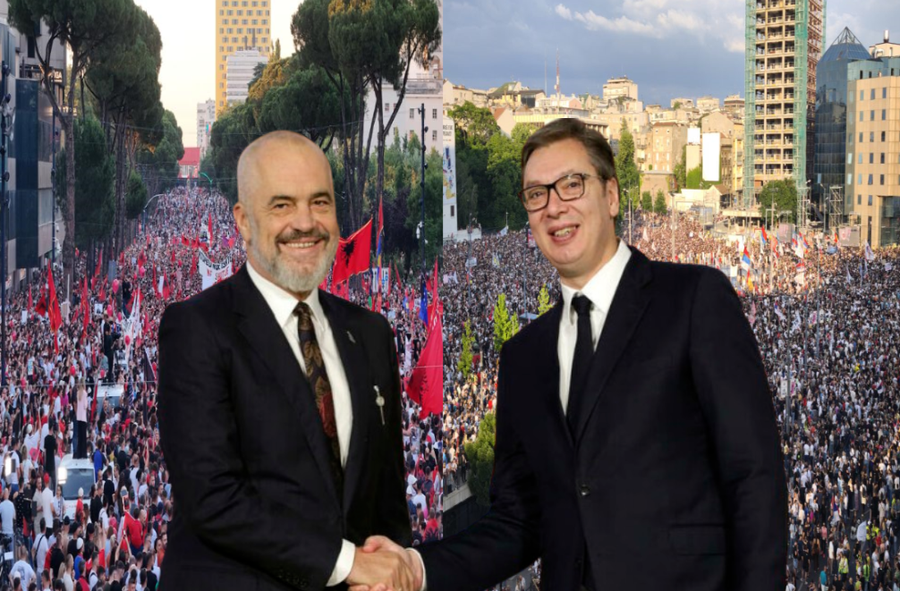
Protests in Tirana and Belgrade are turning into the strongest political challenge for Edi Rama and Aleksandar Vučić, highlighting dissatisfaction with corruption, lack of transparency, and concentration of power in the Western Balkans.
Serbia and Albania have seen large-scale anti-government protests in recent weeks. In Serbia, the demonstrations, initially sparked by the collapse of the Novi Sad railway station shelter in 2024, which killed 16 people, have become the biggest challenge to President Aleksandar Vučić in more than a decade.
In Albania, protests that began in May have morphed from opposition to a controversial coastal resort project developed by a private investment fund run by Jared Kushner into a broader criticism of corruption, governance, and the concentration of political power in the hands of Prime Minister Edi Rama.
Although the two movements are not organizationally linked and have arisen from different causes, they reflect common structural grievances, including perceptions of entrenched corruption, declining trust in public institutions, economic frustration, and a lack of political accountability. Given that these factors are common across the Western Balkans, the rest of the region faces the risk of a period of heightened vulnerability to episodic outbreaks of social discontent.
The largest single mobilization of the wave of protests in Serbia took place on March 15, 2025 in Belgrade, where civil society organizers estimated the turnout at between 275,000 and 325,000 people, while the government claimed that around 107,000 protesters took part. The largest rally of this year was held on May 23 in Belgrade, gathering an estimated 180,000 to 190,000 participants.
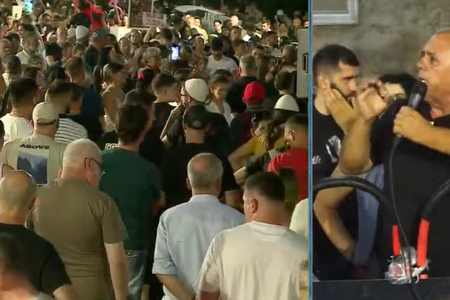
In June, large rallies in Tirana drew between 150,000 and 250,000 protesters, according to local organizers. Relative to Albania's population of about 2.7 million, this turnout represents one of the largest civic mobilizations since the fall of the communist dictatorship in the early 1990s.
Serbia is likely to remain the main source of political instability in the region, with ongoing anti-government protests expected to continue in the coming weeks, while early parliamentary elections may also be held in the coming months.
Lëvizja protestuese është zgjeruar nga pakënaqësitë për aksidentin e vitit 2024 në një fushatë që kërkon përgjegjësi institucionale, transparencë dhe reforma sistemore. Ndryshe nga shumë protesta të mëparshme, kjo lëvizje udhëhiqet kryesisht nga studentët universitarë dhe organizatat e shoqërisë civile, e jo nga partitë tradicionale të opozitës, çka i ka mundësuar të fitojë mbështetjen e akademikëve, shoqatave profesionale, fermerëve, avokatëve dhe sektorëve të tjerë të shoqërisë. Theksi i saj mbi shtetin e së drejtës ka zgjeruar mbështetjen publike dhe e ka bërë më të vështirë për qeverinë që t'i paraqesë protestuesit si aktorë partiakë.
Pavarësisht përmasave dhe vazhdimësisë së protestave, Vuçiç dhe Partia Përparimtare Serbe (SNS) vazhdojnë të gëzojnë avantazhe të konsiderueshme institucionale, përfshirë kontrollin mbi Parlamentin, ndikimin mbi institucionet shtetërore dhe mediat, si edhe besnikërinë e policisë dhe shërbimeve të sigurisë.
Megjithëse protestat çuan në dorëheqjen e kryeministrit Millosh Vuçeviç në fillim të vitit 2025, aktualisht nuk ka shenja të largimeve apo përçarjeve brenda koalicionit qeverisës.
Në javët e ardhshme, skenari më i mundshëm është vazhdimi i demonstratave të mëdha në Beograd dhe qytete të tjera, të shoqëruara me marshime simbolike, aksione universitare dhe përplasje të herëpashershme me policinë, duke shkaktuar ndërprerje në aktivitetin ekonomik dhe zinxhirët e furnizimit.
Strategjia e qeverisë pritet të vazhdojë të kombinojë lëshime të kufizuara, sulme retorike ndaj organizatorëve të protestave dhe përpjekje për ta paraqitur lëvizjen si të motivuar politikisht ose të ndikuar nga faktorë të jashtëm.
Veçanërisht, mobilizimi i vazhdueshëm mund ta shtyjë pushtetin drejt një ndryshimi taktik. Më 27 qershor, Vuçiç njoftoi se do të japë dorëheqjen nga posti i presidentit dhe do të shpallë zgjedhje të parakohshme parlamentare, megjithëse nuk bëri të ditur asnjë datë konkrete. Larg të qenit një kapitullim, kjo do të përfaqësonte një manovër politike të llogaritur për të anashkaluar kufizimin kushtetues prej dy mandatesh si president, i cili përfundon në fund të vitit 2027, duke i mundësuar atij të kandidojë si kandidat i SNS-së për postin e kryeministrit dhe të mbetet figura qendrore e politikës serbe.
By creating the idea of a “democratic reset,” the government would aim to fragment the protest movement and direct public attention to an electoral process where it continues to enjoy significant institutional advantages. However, holding elections in a climate of unprecedented social discontent carries high risks, as it could pave the way for a united opposition front capable of presenting the most serious electoral challenge to the SNS’s decades-long grip on Serbian politics. Even if the SNS wins the parliamentary and presidential elections, allegations of electoral irregularities are likely to spark new protests against the government. /Adapted from “ RANE Network ”



Lini një Përgjigje