


 Shkruar nga Pamfleti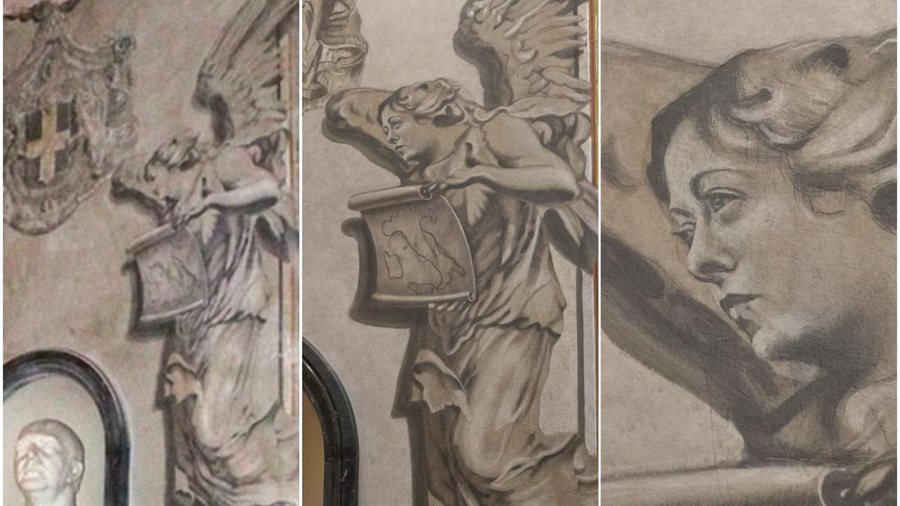
Italian authorities have officially launched an investigation into restoration work on a painting in a church in central Rome, following controversy surrounding a cherub that, according to critics and social media, resembles Prime Minister Giorgia Meloni.
The investigation has been ordered by the Minister of Culture, Alessandro Giuli, and will be carried out by the Special Supervision of Rome, the institution responsible for the archaeological and historical heritage of the Italian capital. At the center of the verifications is the painting in the Chapel of the Holy Souls in Purgatory, in the Basilica of San Lorenzo in Lucina.
According to an official statement from the office of the head of the Supervision, Daniela Porro, archival research has been launched to identify the original documentation of the work carried out in 2000, including drawings, photographs or initial projects. These materials will be compared with the current decoration, after the restoration carried out in 2025.
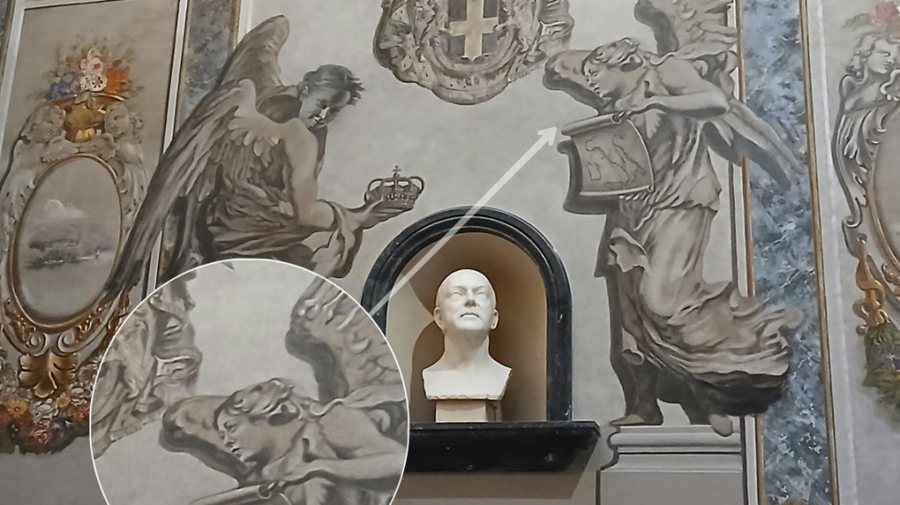
Porro explained that this is a contemporary work, which does not enjoy the status of protected cultural property.
"Any modification is allowed because it is a contemporary work, but if there are changes, they must be agreed upon with the relevant institutions ," she said, confirming that investigations are ongoing.
The work's restorer, Bruno Valentinetti, has denied accusations that he deliberately altered the cherub's face to make it resemble the prime minister. He told local media that he had reproduced the original drawing from 2000 and that the work was done for free, on a voluntary basis.
Meanwhile, church authorities have also reacted. The Vicar of Rome, Cardinal Baldo Reina, in an official statement, stressed that images of sacred art and Christian tradition should not be misused or exploited. According to him, the change in the face of the cherub was the initiative of the decorator and was not communicated to the competent authorities.
The Vicariate of Rome has announced that it will conduct further verifications in collaboration with the parish priest of the church and will evaluate the steps that can be taken next.
The investigation is expected to clarify whether the restoration respected the original documentation and institutional procedures, or whether there were unauthorized interventions in a religious work that has already caused widespread public debate.





Lini një Përgjigje