


 Shkruar nga Pamfleti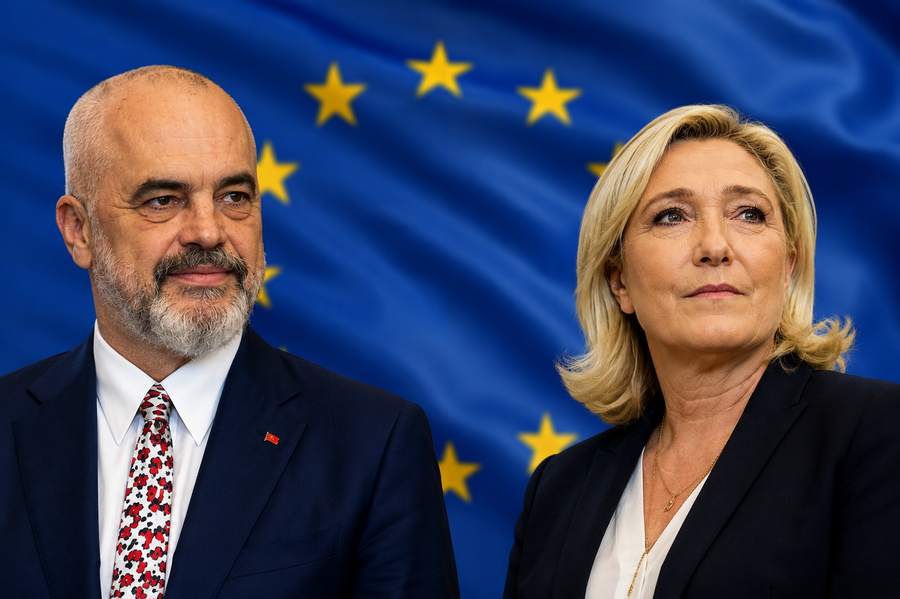
The European Union's new campaign for enlargement to the Balkans could face its biggest political setback yet if French far-right leader Marine Le Pen wins the 2027 presidential election. A victory for her could undermine hopes for membership for Ukraine and the Western Balkans, and could dash Edi Rama's plans for Albania's integration by 2030.
While EU enlargement has received a new impetus after the Russian invasion of Ukraine, with Brussels aiming to bring Kiev, Moldova and several Balkan countries closer to membership, a Le Pen victory would transform France from a cautious supporter into one of the strongest opponents of further enlargement.
Le Pen confirmed on July 7 that she would run for president after an appeals court allowed her to run, even though it upheld her conviction for misusing European Parliament funds.
"The campaign starts tonight," she told French television after the court's decision, promising to continue the legal battle while simultaneously campaigning to become the next president of France.
The far-right politician has long opposed the admission of new members to the European Union. Her party, the Rassemblement National (RN), has softened some of its anti-EU rhetoric in recent years, abandoning the idea of France leaving the bloc. However, the way she has voted continues to show opposition to deeper European integration.
According to an analysis by the European Council on Foreign Relations (ECFR) published in 2025, although newer figures such as Jordan Bardella have moderated the party's tone, "the RN continues to promote a divisive foreign policy through the way it votes."
The report notes that the National Rally MEPs " have voted categorically against any EU enlargement and against deepening European integration ," and have also opposed further aid to Ukraine, arguing that the costs are too high.
Such a change in Paris would carry enormous weight, not least because any new EU member requires unanimous approval from all member states. France already occupies a key position in the accession negotiations, balancing geopolitical arguments in favor of enlargement with domestic political concerns. A Le Pen presidency would almost certainly tip that balance toward deadlock.
Presidenti aktual Emmanuel Macron e ka ripozicionuar gradualisht Francën si mbështetëse të zgjerimit, pas vitesh skepticizmi, duke argumentuar se afrimi i vendeve fqinje me Bashkimin Evropian është bërë një domosdoshmëri strategjike pas pushtimit rus të Ukrainës. Në bashkëpunim të ngushtë me Gjermaninë, Macron ka promovuar një model integrimi gradual, që do t'u lejonte vendeve kandidate të fitonin qasje gjithnjë e më të madhe në tregun e përbashkët dhe institucionet e BE-së përpara anëtarësimit të plotë, duke këmbëngulur njëkohësisht se reformat e brendshme në procesin vendimmarrës të BE-së duhet të ecin paralelisht me zgjerimin.
Franca ka mbështetur përpjekjet e Malit të Zi për anëtarësim, ka shprehur mbështetje për synimin e Shqipërisë që të anëtarësohet deri në fund të dekadës dhe ka argumentuar se Serbia duhet të mbetet e lidhur fort me Evropën, pavarësisht tensioneve të vazhdueshme politike.
Megjithatë, edhe nën drejtimin e Macron, Franca ka qenë shpesh ndër vendet më të kujdesshme për zgjerimin. Një dokument i fundit politik, i hartuar nga ekspertë të DGAP, Institutit Jacques Delors, Institutit Clingendael dhe Carnegie Europe, që analizon debatin mbi zgjerimin në Gjermani, Francë dhe Holandë, konstaton se "ambivalenca franceze" është thelluar në prag të zgjedhjeve presidenciale të vitit 2027.
"Aktualisht autoritetet franceze nuk dëshirojnë të nxisin një debat publik mbi zgjerimin në Francë", thuhet në raport, i cili vëren se opinioni publik francez mbetet ndër më pak mbështetësit e zgjerimit në të gjithë Bashkimin Evropian.
Autorët shtojnë se zyrtarët e lartë francezë shpesh japin një mesazh ndryshe privatisht nga ai që shprehin publikisht.
"Diplomatët e nivelit të lartë shfaqin një ambivalencë të habitshme franceze ndaj zgjerimit, duke folur pozitivisht në publik ('Ukraina duhet të anëtarësohet sa më shpejt të jetë e mundur'), ndërsa pas dyerve të mbyllura vënë në pikëpyetje çdo hap të negociatave."
Sipas Kushtetutës franceze, çdo traktat i ardhshëm për pranimin e një shteti të ri në BE duhet ose të marrë mbështetjen e tre të pestave të të dy dhomave të Parlamentit, ose të miratohet përmes një referendumi kombëtar.
Raporti e përshkruan këtë si "pengesën më të madhe politike të Francës për të përmbushur premtimin e zgjerimit", duke paralajmëruar se asnjëra nga këto rrugë nuk duket politikisht e lehtë, në kushtet e rritjes së mbështetjes për të djathtën ekstreme.
Sipas raportit, Komisioni Evropian është tashmë i vetëdijshëm se Parisi mund të shndërrohet në "pengesën kryesore në rrugën e zgjerimit", ndërsa komisionerja për Zgjerimin, Marta Kos, planifikon angazhim më të madh me Francën për të rritur mbështetjen e opinionit publik. Këto shqetësime pritet të shtohen ndjeshëm nëse Le Pen merr drejtimin e vendit.
Instead of calling for France to leave the European Union, Le Pen has proposed weakening the EU's supranational institutions, limiting the powers of the European Commission and returning more power to national governments, in what she calls a "Europe of Nations." This vision would make enlargement much more difficult, strengthening member states' veto power and slowing down political integration.
Looking towards the 2027 elections, the European Policy Center (EPC) estimates that Le Pen will start the race as one of the leading candidates.
" Le Pen is very likely to remain at the top of the polls and be the favorite to receive the largest number of votes in the first round ," the EPC writes, stressing, however, that the French two-round electoral system will force her to secure a majority even in the run-off.
The EPC also estimates that a joint campaign with Jordan Bardella could strengthen its electoral chances.
" This duo could become a very powerful electoral machine ," the report said, combining Le Pen's traditional support with Bardella's popularity among young voters and more traditional conservatives.
At the same time, EPC analysts point out that debates continue within the party about how to behave towards the European Union. According to them, Le Pen must choose "between her anti-establishment identity, which includes radical opposition to the EU, and Bardella's more pragmatic approach to gaining political credibility". An attempt to balance these two lines, the report warns, would restore doubts about the National Rally's ability to govern.
For Brussels, the implications go far beyond domestic French politics. The European Commission sees enlargement as both a geopolitical response to Russian aggression and a means of stabilizing Europe's eastern neighborhood. Candidate countries such as Ukraine, Moldova, Montenegro, and Albania have accelerated reforms, while Serbia remains a key part of the EU's efforts to maintain influence in the Western Balkans.
However, membership remains conditional on the unanimous support of all member states. With Hungary already blocking parts of Ukraine's accession process, a French president who openly opposes enlargement could close – at least temporarily – the window of opportunity that opened for candidate countries after the Russian invasion of Ukraine in 2022. /Adapted from ' Intelli News '
*Editorial title, original title: A Le Pen presidency could slow down EU enlargement


Lini një Përgjigje