


 Shkruar nga Pamfleti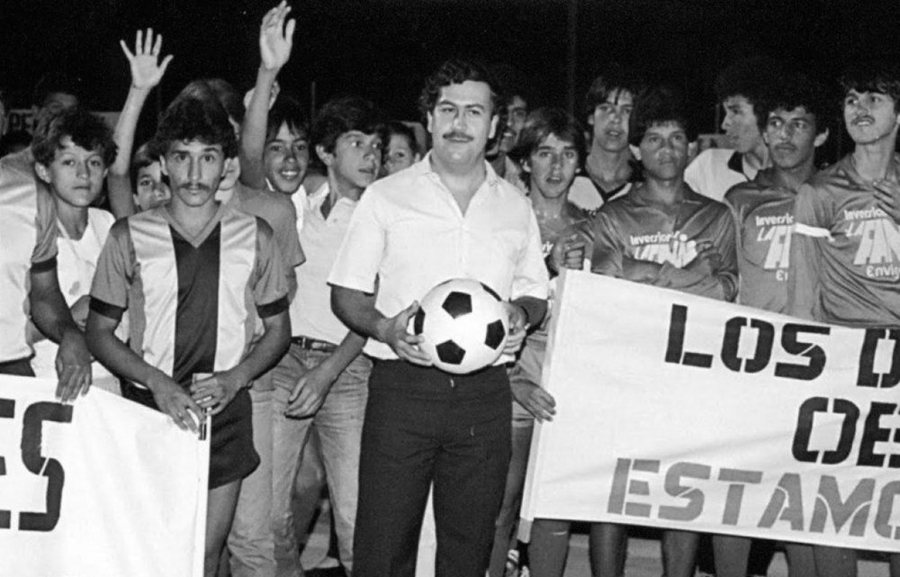
His father abandoned him when he was a child, and his stepfather was violent. Football became his way out of poverty, but a serious injury in 1978 cut short his sporting dreams...
Greg Pahules is an American who in the late 1970s and throughout the 1980s became deeply involved in the international cocaine trade, collaborating with people connected to the Medellín Cartel and personally knowing Pablo Escobar. His story describes his rapid rise in the underworld, his incredible wealth, his confrontation with the cartel's violence and his ultimate downfall. Today he lives far from his former luxury, reflecting on a life filled with danger, wrong decisions and missed opportunities.
Greg grew up in a poor and troubled family. His father abandoned him when he was a child, and his stepfather was violent. Football became his way out of poverty, but a serious injury in 1978 cut short his sporting dreams.
While recovering, he saw a television report about the explosion of cocaine trafficking in Miami. Tired of poverty, he decided to return to his hometown and look for opportunities to make money.
His childhood experience profoundly influenced the way Greg viewed success and money. He was determined to no longer live in want and to achieve the status he had admired among his wealthier peers. This intense ambition, combined with the lack of other prospects after a sports injury, led him to make choices that would define much of his life.
-Entering the world of drugs
Working in a hotel in Miami, Greg made friends with some Colombians involved in drug trafficking. After an episode where he helped them evade the police, he won $50,000, an amount that changed his life.
He quickly joined the Leon family, important associates of the Medellín Cartel. Thanks to his connections in Miami and his ability to move between the American and Colombian worlds, he became an important figure in the cocaine distribution network.
The quick money he earned gave Greg a sense of power and self-confidence he had never known before. He bought luxury cars, expensive items, and began to live a lifestyle that most people would find unattainable. This instant success made it even harder to leave criminal activity.
-Meeting with Pablo Escobar
In late 1979, Greg traveled to Colombia for the first time. During a meeting at a ranch connected to cartel leaders, he was introduced to Pablo Escobar.
Escobar nicknamed him “Gringorio,” a name that would accompany him in cartel circles. Over time, Greg gained the trust of the organization’s leaders and became increasingly involved in their activities.
Meeting Escobar left a strong impression on Greg. He describes the cartel boss as a figure of immense authority, whose presence was immediately felt by everyone. For a young American who had just entered this world, being accepted by Escobar represented a kind of legitimization within the most powerful criminal structure of the time.
-Wealth and power
In the early 1980s, Greg ran the Leon family's Miami operations. He claims he grew their sales from about 25 kilograms of cocaine a month to over 100 kilograms.
At the age of 21, he was earning around $1 million a year. He lived a life of luxury, sports cars, parties, and frequent trips between the US and Colombia.
However, great wealth came with an increasingly dangerous life. Greg was constantly under pressure from American authorities, rivals, and the cartel structures themselves. In this world, loyalty and fear were as important as money, and mistakes were often punished with death.
-Escape and life in Colombia
When US authorities began cracking down on the network he was part of, Greg left the US and returned to Colombia. Escobar and his associates now considered him part of their family.
He lived for years in Medellín, exposed to the bloody war between the cartel, the Colombian state and its rivals. Greg describes a constant climate of fear, where no one was safe.
His life in Colombia was far from the luxury one might imagine from the outside. Although he had access to money and privileges, he lived amidst constant threats, secret movements, and insecurity. He frequently changed locations and was aware that a single mistake could cost him his life.
-The fall of the cartel
In the late 1980s and early 1990s, the situation changed. The war on drugs in the United States intensified, while in Colombia Escobar entered into open conflict with the state and his rivals.
Greg was trapped in Colombia for about a year and a half, constantly moving for safety reasons. He lost friends and associates, while many of the people he knew were killed.
During this period, he witnessed firsthand the disintegration of a system that once seemed invincible. Violence increased, trust between people disappeared, and many important cartel figures were eliminated or fled. For Greg, this was proof that even the most powerful criminal organizations cannot forever escape state pressure and internal conflicts.
After returning to the US, Greg invested in illegal marijuana cultivation. Initially, he made a lot of money and managed to rebuild his life. He formed a lasting romantic relationship and lived for several years relatively far from the underworld.
However, personal problems, drug and alcohol abuse, and market fluctuations led to his bankruptcy. By 2015, he had lost most of his wealth.
Although he tried to build a more stable life, he was never able to completely break away from the habits and lifestyle he had developed over the years. Personal relationships were damaged, businesses failed, and the wealth he had accumulated gradually disappeared. This period marked the transition from a life of luxury to a much more difficult reality.
Today, Greg is 68 years old and lives a modest life in Florida. He works as a street sweeper, no longer owns the assets he once had, and lives on limited savings.
He admits that his decisions were motivated primarily by the desire for money and considers responsibility for his choices personal. However, he continues to have a complicated relationship with the past, not always showing full remorse for the consequences of drug trafficking.
Although he has given up cocaine and alcohol, Greg continues to live with the memories of an extraordinary period in his life. He considers telling his story as a form of therapy, helping him to face the past. Today he lives far from fame, fortune and power, reflecting on the choices that led him from the top of the criminal world to a simple and quiet existence. / Adapted from "Pamphlet" by "Financial Times"







Lini një Përgjigje