


 Shkruar nga Pamfleti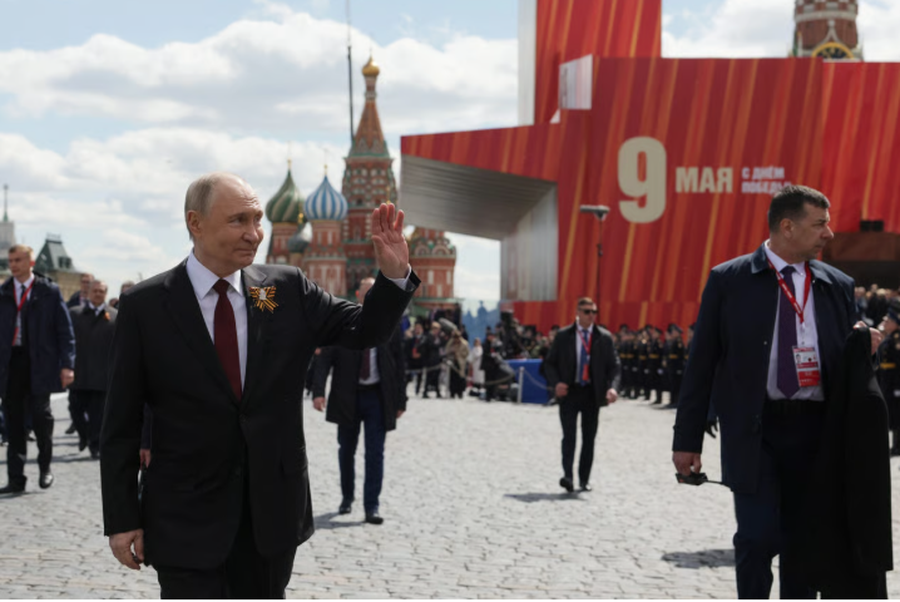
Restrictions on the May 9 parade and growing insecurity within Russia are exposing the cost of the war in Ukraine...
Russian President Vladimir Putin has for years used Victory Day as a symbol of Russia's military might and global role. But this year's celebrations, according to an analysis published by Politico, show more weakness than strength.
The May 9 parade, which commemorates the Soviet victory over Nazi Germany in World War II, will take place under unusual circumstances this year. For the first time since 2007, there will be no tanks or missile systems on display in Red Square.
Russian authorities have cut off mobile internet and communication services in parts of Moscow over fears of Ukrainian drone attacks. The restrictions have affected everyday services, including transport, electronic payments and ATMs. In about 27 Russian cities, parades have been canceled altogether.
The Kremlin has justified the measures as necessary in the face of what it calls a “terrorist threat from the Kiev regime.” However, Russian analysts see the situation as a sign that war is moving ever closer to Russian territory.
Analyst Andrei Kolesnikov told Politico that the security measures "reflect a new phase of the war," the consequences of which are being felt directly in Russia.
According to the article, Ukraine has intensified missile and drone strikes on energy and military targets deep inside Russian territory. The drones have caused disruptions at airports and one of them reached the center of Moscow, just a few kilometers from the Kremlin.
Another challenge for Putin is the limited international participation in this year's ceremonies. Unlike last year, when dozens of foreign leaders attended in Moscow, this year's list has been significantly reduced. Slovak Prime Minister Robert Fico remains one of the few European leaders expected to be in Moscow, although he has said he will not attend the parade.
Ahead of the celebrations, Russia declared a two-day ceasefire starting on May 8. Ukraine responded by proposing an indefinite ceasefire, but the sides continued to exchange attacks. Ukrainian President Volodymyr Zelenskyy warned that Ukraine would “respond symmetrically” to Russian attacks.
To ensure Moscow's security during the ceremonies, Russia has moved dozens of air defense systems towards the capital, leaving other areas more exposed.
According to estimates cited by Politico, Ukraine's objective is not only military damage, but also creating psychological pressure on Russian citizens, with the aim of making them question the Kremlin's priorities.


Lini një Përgjigje