


 Shkruar nga Pamfleti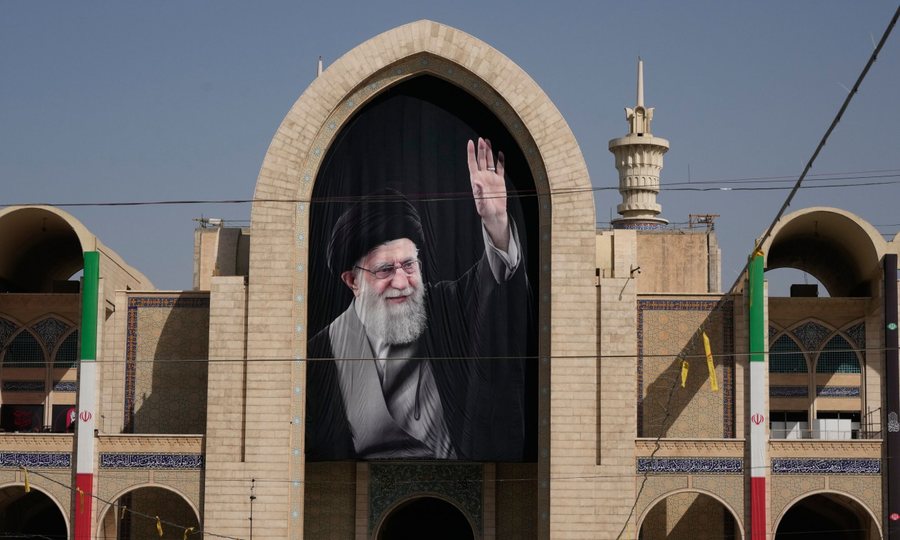
Powerful allies, but also some traditional opponents of the mullahs' regime, passed through the Grand Mosque of the Mosalla in Tehran...
Funeral ceremonies for Iran's late leader, Ali Khamenei, began on Friday with the presence of members of the regime who had not appeared publicly in weeks, such as the head of Iran's Supreme Court, Gholam-Hossein Mohseni-Ejei, the commander of the Iranian Armed Forces, Amir Hatami, and the head of the Revolutionary Guard, Ahmad Vahidi.
Friday's ceremony was dedicated to international leaders and delegations who had arrived in Tehran to pay tribute to Khamenei, who was killed in US and Israeli bombings on February 28.
The popular tribute begins today, while the ceremonies, which will extend to Shiite cities in Iraq, will end on Thursday, July 9, in Mashhad, where Khamenei's body will be buried.
However, the way the regime is using the funeral of the supreme leader for propaganda and diplomatic purposes became apparent yesterday. Important allies, but also some traditional opponents of the mullahs' regime, passed through the Grand Mosque of Tehran, a fact that did not go unnoticed.
Among the first to approach Khamenei's coffin, draped in the Iranian flag and wearing a black turban, was Russia's Deputy Security Council Chairman Dmitry Medvedev. Iranian President Masoud Pezeshkian met with Medvedev and said Iran appreciated "the supportive stance and solidarity of the Russian government and people."
عرض المزيد: از موائع ساحدادی و همدردی دولت و ملت روسیای قدردانی مینیم #باید_برخاست #بدرقه_آقای_شهید_يران https://t.co/FlO2lARCKG pic.twitter.com/vpEStKhEpv
— IRNA - ایرنا (@IRNA_1313) July 3, 2026
On the Chinese side, the ceremony was attended by Chinese lawmaker and vice chairman of the country's highest legislative body, the Standing Committee of the National People's Congress, He Wei. The Chinese representation reflects the close relations between the two countries, at a time when Iran sees Beijing as a key partner in strengthening its economy.
The special symbolism of Saudi Arabia's presence
The so-called "Sunni axis", which has consolidated in the Middle East especially after the war in Iran, was presented almost completely at yesterday's ceremony. Representatives from Turkey, Saudi Arabia and Qatar were present at the Grand Mosque of Mosalla.
In addition to attending the ceremony, they also held diplomatic contacts with Iranian officials, as diplomatic behind-the-scenes tensions in the Middle East remain particularly intense.
Delegacioni saudit drejtohej nga zëvendësministri i Jashtëm i Arabisë Saudite, Walid el Khereiji. Prania e Riadit në varrim tërhoqi vëmendje të veçantë, pasi Irani dhe Arabia Saudite tradicionalisht kanë pasur marrëdhënie të tensionuara, pavarësisht përpjekjeve të viteve të fundit për normalizimin e tyre.
Megjithatë, gjatë periudhës së fundit në mediat amerikane janë publikuar raportime që flasin për pakënaqësinë e Arabisë Saudite ndaj vendimeve amerikane në rajon. Fillimisht, Riadi kundërshtoi sulmin amerikan dhe izraelit ndaj Iranit.
Megjithatë, sipas të njëjtave raportime, pas shpërthimit të luftës Arabia Saudite i kishte bërë të ditur Uashingtonit se ndryshimi i regjimit në Iran duhej të arrihej me çdo kusht, pasi në të kundërt mullahët do të ndërmerrnin kundërsulme në të gjithë rajonin, veçanërisht ndaj shteteve sunite, gjë që, sipas artikullit, ndodhi.
????????BREAKING NEWS ????
— Corefrontline (@corefrontline) July 3, 2026
???????????????? Saudi Arabia’s Surprise Move at Khamenei Funeral Signals Strategic Hedging
Saudi Arabia’s Deputy Foreign Minister made an unannounced appearance at Ayatollah Khamenei’s funeral in Tehran, despite not being on the official invitation list alongside… pic.twitter.com/7eZ77Jv67f
Sipas informacioneve që kanë rrjedhur në media, Arabia Saudite është e zemëruar pas nënshkrimit të memorandumit të mirëkuptimit midis Shteteve të Bashkuara dhe Iranit, pasi beson se nuk ka më ndikim në hartimin e politikës amerikane për Lindjen e Mesme.
Për më tepër, boshti sunit nuk i sheh me sy të mirë sukseset ushtarake të Izraelit në Liban, as "zonat e sigurisë" që Izraeli mban në Gaza dhe Siri, si edhe shndërrimin e tij në një fuqi të re të madhe rajonale.
Këtë qëndrim, sipas artikullit, duket se e ndan edhe Turqia, e cila është e shqetësuar nga sulmet izraelite në territorin sirian. Ankaraja vlerëson se objektivi i Tel Avivit është destabilizimi i qeverisë së presidentit sirian Ahmed al-Sharaa, i cili gëzon mbështetjen e Turqisë.
Për këtë arsye, nuk konsiderohet rastësi që edhe Turqia dërgoi një delegacion për të marrë pjesë në ceremoninë mortore të Khameneit.
Prime Minister @CMShehbaz and the Commander of the Pakistani Armed Forces have both made their way to the ceremony to offer their tribute to the body of the martyred Leader Ayatollah Seyyed Ali Khamenei. pic.twitter.com/JZz8ODmwen
— IRNA News Agency ☫ (@IrnaEnglish) July 3, 2026
Prania e kurdëve, evropianët nuk u ftuan
Ali Khamenei konsiderohet nga komunitetet shiite në të gjithë rajonin si një figurë e shenjtë. Për këtë arsye, të gjitha organizatat shiite të mbështetura nga Irani dërguan delegacionet e tyre në Teheran.
Mes tyre ishin Hamasi, Hezbollahu, Kataib Hezbolla, organizatë që akuzohet për sulme ndaj objektivave amerikane, si edhe Xhihadi Islamik.
The participation of a delegation from Iraqi Kurdistan, a region that is home to Iranian Kurds and where clashes with the Iranian Revolutionary Guard have occasionally erupted, also attracted particular attention.
????
— IRNA - ایرنا (@IRNA_1313) July 3, 2026
A Taliban delegation from Afghanistan also attended the ceremony.
According to Al Jazeera, the Iranian side stated that European leaders, as well as representatives of countries that supported the American-Israeli attacks against Iran, were not invited to the ceremony.
The messages Tehran intends to send
The Iranian regime is now using Khamenei's funeral ceremonies for propaganda purposes.
Following the massive anti-regime protests that took place in recent months in Iran, authorities aim to show millions of citizens participating in public tributes to Khamenei, so that these images can convey a message of unity to both domestic opponents and international opinion.
During yesterday's ceremony, the coffins of several members of his family were placed next to Khamenei's coffin, including that of his four-year-old granddaughter, who lost her life in the same bombing.
Iranian state media paid particular attention to the fact that the four-year-old girl was declared a "martyr" by the regime.
Iranian dignitaries pay their respects to the martyred Leader of the Islamic Revolution Ayatollah Seyyed Ali Khamenei. pic.twitter.com/MkYN8xx2ez
— IRNA News Agency ☫ (@IrnaEnglish) July 3, 2026
At the same time, top Iranian officials publicly expressed their grief over the loss of the supreme leader. The speaker of the Iranian parliament and head of the negotiating team, Mohammad Bagher Ghalibaf, burst into tears in front of Khamenei's coffin, while President Masoud Pezeshkian and Foreign Minister Abbas Araghchi stood by him, visibly moved.
No one denies that the burial of Ali Khamenei closes a very important chapter in the 37-year history of the Islamic Republic of Iran.
However, the regime aims to show that it remains stable and ready to defend itself. Through these grand ceremonies, it seeks to convey the message that there will be continuity in the power structures and political direction of the country.
It is no coincidence that the Chief Justice of Iran's Supreme Court, Gholam-Hossein Mohseni-Ejei, who is accused by the Iranian opposition of involvement in the killings and torture of protesters during anti-regime demonstrations, also appeared at Friday's ceremony. /Adapted from Pamphlet /




Lini një Përgjigje