


 Shkruar nga Pamfleti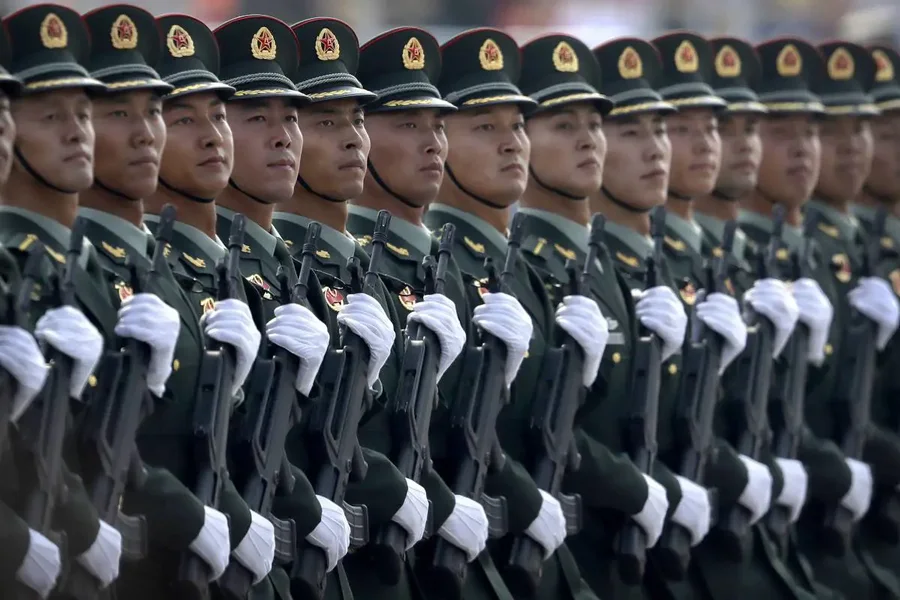
From theater command reform to internal purges, Xi Jinping has radically transformed and strengthened China's People's Liberation Army. Here's how he did it...
It all started in 2012, almost 15 years ago, when Xi Jinping took control of the Central Military Commission, the highest commanding body of the Chinese armed forces. At that time, the Chinese military (PLA) was still built on the superiority of ground forces and on a bureaucratic structure designed to cope with past wars.
Within a few years, Xi would launch one of the most profound military reforms since the founding of the People's Republic of China. The objectives were twofold: to prepare China for modern conflicts, dominated by technology and coordination between different domains of warfare, and to strengthen the Communist Party's political control over the armed forces.
Xi's military reorganization
The result was a more centralized, faster system with a tougher stance in the region, especially around Taiwan and in the South China Sea. As The Print reports, the decisive turning point came between 2015 and 2016 with the creation of so-called theater commands, which replaced the old military regions.
China thus became the second country after the United States to be equipped with a permanent joint command structure, capable of integrating the ground army, navy, air force and missile force. The seven military districts were united into 5 major operational zones, East, West, South, North and Center, each built on certain strategic priorities.
The Eastern Command, headquartered in Nanjing, focuses on Taiwan; the Western Command oversees Tibet and Xinjiang and tracks the border with India; while the Southern Command controls the South China Sea.
Such a reform served to overcome limitations in coordination between different branches of the military and to prepare the PLA for so-called "computerized wars," i.e. conflicts with high technological intensity, where data, networks, and speed of decision-making carry more weight than the number of soldiers.
Beijing shows strength
However, the transformation was not just about military efficiency. Xi also used the reform to consolidate his personal power. In recent years, thousands of officers have been hit by anti-corruption campaigns, which have even affected the highest levels of the Central Military Commission.
These purges have eliminated independent power networks within the armed forces, increasing the military apparatus' political dependence on the Communist Party leadership.
At the same time, China has invested in drones, electronic warfare, artificial intelligence, and integrated command systems, while military exercises around Taiwan have become increasingly frequent.
China's new military architecture aims to ensure a coordinated and extremely rapid response to a regional crisis. Of course, some structural problems still remain: rivalries between different branches of the military, logistical difficulties, and concerns that political loyalty may be rewarded more than operational competence.
However, after more than a decade of reforms, Xi Jinping's message seems clear: the PLA should not only be a modern army, but above all the armor of the Chinese Dragon. /Adapted from Pamphlet /




Lini një Përgjigje