


 Shkruar nga Pamfleti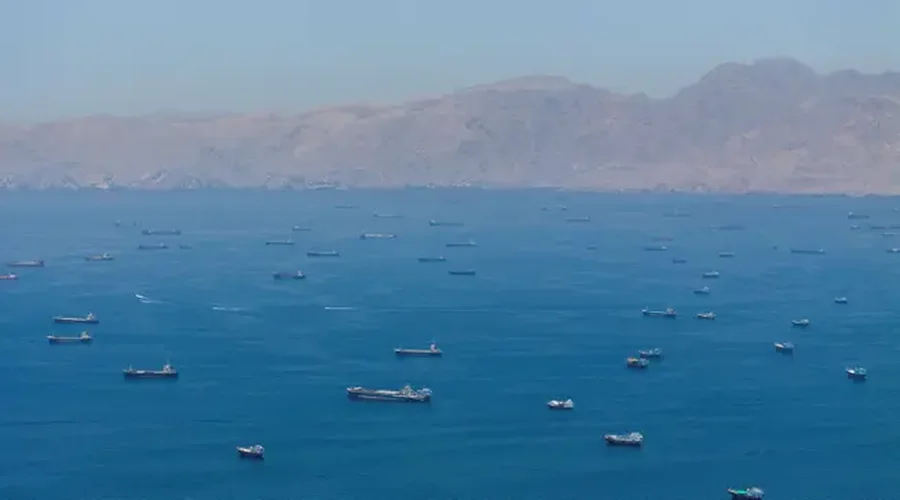
The blockade of the Strait of Hormuz is putting economic pressure on Iran. However, the country is not geographically isolated: three corridors show how Iran is reorganizing its trade…
The Strait of Hormuz is considered one of the most important shipping lanes in the world. A significant portion of global oil trade passes through this strait between the Persian Gulf and the Arabian Sea. For weeks, passage through this route has been largely blocked.
For Iran, this has serious economic consequences: oil exports have fallen sharply, while many imported goods are only reaching the country in limited quantities. The country is losing millions of dollars in revenue every day. Until now, around 90 percent of Iranian trade was conducted through the Strait of Hormuz.
However, Iran is not isolated from the rest of the world. The country borders seven countries and has access to the Caspian Sea in the north. Three corridors show how Iran is creating alternative routes to bypass the US naval blockade.
Western corridor through Turkey and Iraq
The first alternative route runs westward. Through Iraq and Turkey, Iran is connected to trade corridors leading to Europe and the Mediterranean. Since the blockade was imposed, these connections have gained greater importance.
Whether commercial traffic has increased since the blockade was imposed in mid-April cannot currently be independently verified with publicly available information. Several US companies are not currently releasing high-resolution satellite imagery of the region. The public imagery is not sufficient to identify individual vehicles.
Northern route through the Caspian Sea
The second corridor runs north, through the Caspian Sea. This landlocked sea connects Iran directly to Russia. For years, goods and military equipment have been transported through this route. Because of the blockade, Iran is now deliberately directing trade towards this route.
Ship monitoring data shows activity again at Iranian ports. However, many cargo ships are difficult to track because they regularly deactivate their tracking systems.
Eastern connections from Pakistan to China
While sea routes to the south remain blocked, Iran is increasingly shifting trade eastward. New land and rail links from Pakistan to China aim to keep trade flowing despite the blockade.
China is Iran's most important trading partner and the largest buyer of Iranian oil.
These new connections show how Iran is reorganizing its trade. However, a freight train with 50 containers cannot replace a transport ship. The capacities of alternative routes remain limited.
Alternative route boundaries
The three corridors represent only part of Iran's strategies to evade the naval blockade. Alongside them, there are other official and unofficial ways to bypass the blockade: regional land corridors, smuggling networks along borders, or transportation via smaller maritime routes.
These alternatives keep some trade alive. However, many of them have lower capacities, higher transportation costs, or are sensitive to political developments.
One thing becomes clear from these three corridors: Iran is not isolated despite the American naval blockade. The consequences can be partially mitigated. However, these connections are currently unable to replace the strategic importance of the Strait of Hormuz. /Adapted from NZZ /



Lini një Përgjigje