


 Shkruar nga Pamfleti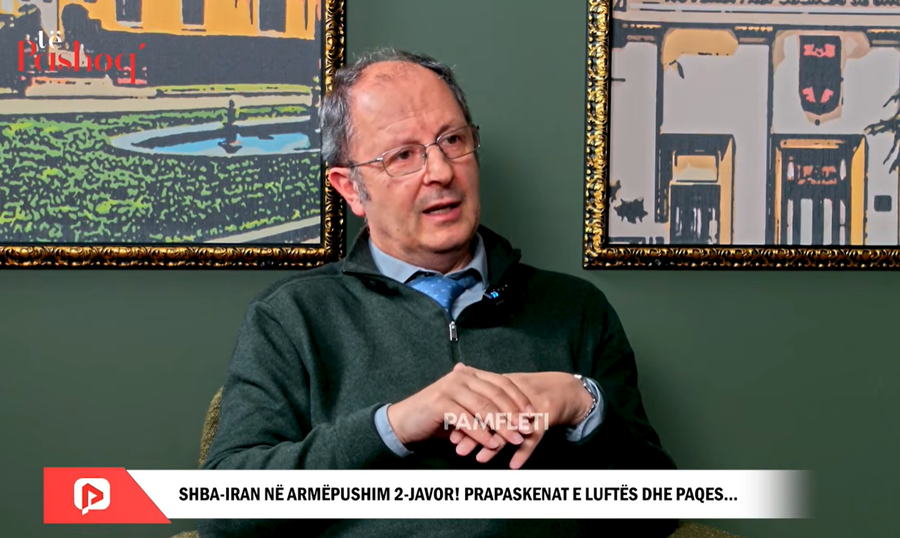
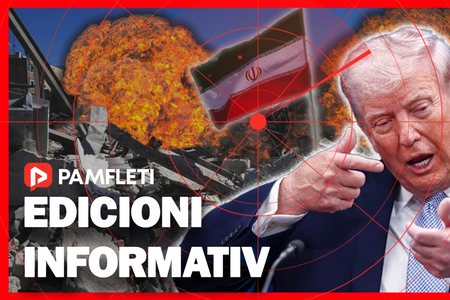
Donald Trump's political stances, characterized by strong threats followed by sudden withdrawals, have sparked much debate about his sustainability and strategy. The practice of the "back-and-forth" formula raises questions about whether this move shows weakness or is a well-thought-out tactic by a leader who breaks all traditional norms.
International affairs analyst Geron Kamberi, in an interview for the show "Të Pashoq" on Pamflet's YouTube channel, said this style should not be seen as a surprise, but as a reflection of his "unusual" personality, formed both in and outside of political life.
Kamberi added that from the perspective of the international image, this approach creates an atypical situation for a power like the US, but the international community has already started to get used to this new presidential model. He emphasized that Trump does not embody the classic model of the American president that the world was used to seeing.
Kamberi also said that for traditionalist observers, this way of governing remains unusual and has created a kind of constant “surprise,” forcing analysts and journalists to make constant efforts to interpret his movements, especially in the field of international relations. He emphasized that this unpredictable approach has a certain cost for the United States.

Excerpt from the interview:
-Dokord, by practicing the formula almost every day, he reversed it, does he lower his score or show his weakness, fear? I mean, because threatening to exterminate and then backing down the next day, what does that mean to you?
Geron Kamberi : From the point of view, from the point of view of the image, I'm saying, or the weight that the United States of America has in the international arena, of course it is an unusual situation, and I already believe that a large part of the international community is getting used to President Trump's style. I don't believe that there will be, in my opinion I don't believe that I individually have not had any surprise about the way he exercises power when he is in the White House, that anyone considering at least his first mandate, without talking about his life outside of politics, he stands out as an unusual man. So, he doesn't embody the type, yes. This is a very accurate phrase. So he doesn't embody a type or a model that we have in our minds and try to find the similarity of the image that we have created of an American president. When he came to the White House in 2016, he came against all opposition and even against all American politics of that period. Not only the Democrats who were against it, but even the American Republican Party, but he managed to succeed and of course exercised a presidency that was completely atypical in terms of the way Americans and the international community were used to. And I believe that in this case, he does nothing but simply be loyal to his principles and the way he sees politics, be it domestic American politics or international politics. Of course, for traditionalists, this is somewhat unusual and a large part of analysts, observers, journalists, who try to explain or interpret the way President Trump governs America, in particular international relations, has created a kind of astonishment, which I believe will last.
-Is this turning into a cost for the US?
Geron Kamberi : If we are going to talk from a cost perspective, cost in this case is the issue of what the international community, various countries, the European Union, and countries that have been traditional allies of the United States of America, had created up to this moment, and what President Trump is currently displaying. Of course, there is a very big division and rift between these two models. Perhaps none of the early traditional allies of the president of the American presidents of the United States of America, I am talking here about Germany, France, and even England, I would say, were accustomed to this style and this form of communication and why not, this way of solving problems in international relations. It is enough to remember two crises that have occurred in the Middle East, be it the crisis of the invasion of Kuwait by Iraq in '91, and then the crisis that followed, namely Operation Desert Storm by President Bush the elder, who built a coalition of 42 countries through the very great diplomatic efforts that he undertook through the American Secretary of State James Baker at that time. And then that was followed by the Iraq war of 2003, which was a unilateral way of acting of the United States of America and encountered the obvious opposition of Europe, especially France and Germany, but managed to build a coalition of good will at that time. Meanwhile, this style, or this style or this way of doing politics of President Trump, for the sake of truth, does not resemble previous American presidencies.





Lini një Përgjigje