


 Shkruar nga Pamfleti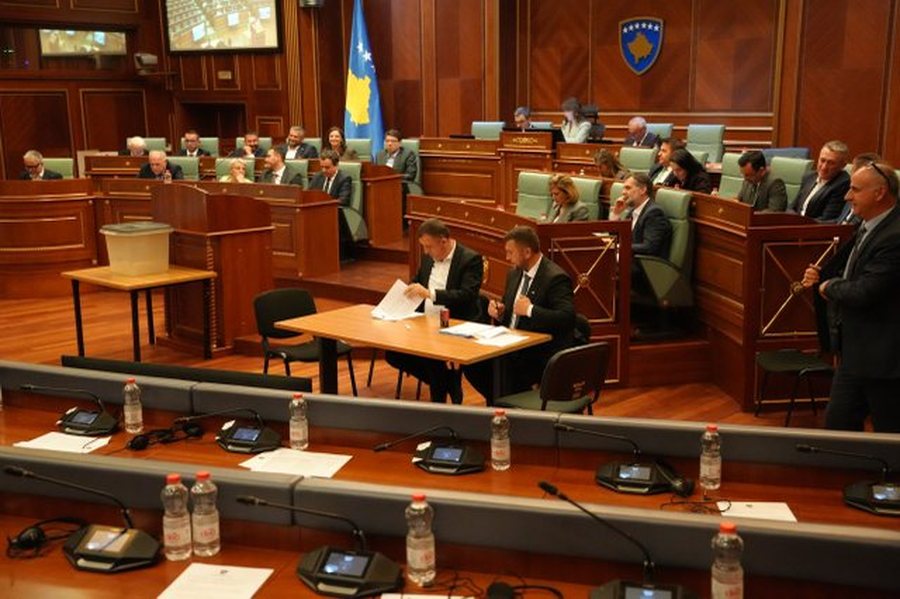
Kosovo politics fails to overcome crisis and leads the country back to elections...
Kosovo is heading towards new parliamentary elections. Political irresponsibility is plunging the youngest state in Europe into a crisis, a crisis from which it is not known when it will emerge.
Today was the deadline to elect a president, and it didn't happen. The session called in the morning was postponed to 2:00 PM, then 7:00 PM, and then 11:00 PM, but it still failed.
The opposition did not participate and the lack of a quorum made voting impossible. The law clearly stipulates that at least 80 deputies must be present for the process to be valid. The refusal of all opposition parties to participate led to the final failure of the presidential election, putting the country in a situation that paves the way for new elections. These will be the fifth elections since last year.
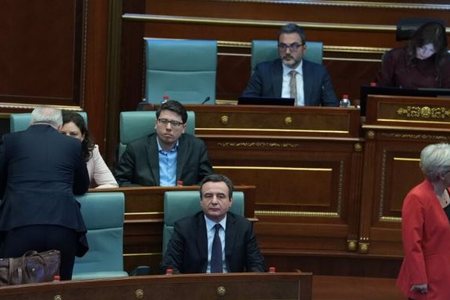
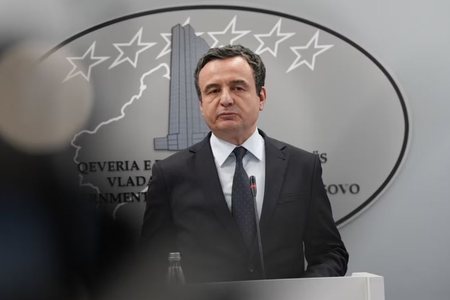
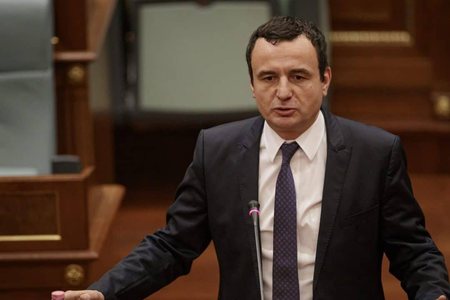
In the 11:00 p.m. session, Kosovo Prime Minister Albin Kurti said that opposition parties in Kosovo are in free fall. He said that Kosovo needs a new opposition to have a new president.
" The opposition is old. This opposition may bring in some new faces, but its craft and character are old. That's why they are in free fall. They are constantly falling through electoral cycles. The more elections are held, the lower they are going. They are not learning any lessons. They would be funny if they were not poor ," Kurti said.
He also added: " There are only these two options. They are deeply dissatisfied with the number of deputies they have. Practically, the LDK is saying that we have 15 deputies but we don't need anything. The PDK is saying that we have 22 deputies but we don't need anything, because you know, 22 + 15 makes 37 and in 57 we have 66. They can't mentally digest this and what they are telling the citizens is, we are going to the elections ."
Political movements
After the failure of the 7:00 PM session, Prime Minister Albin Kurti came up with a new proposal in an attempt to avert the crisis. He announced that the candidate proposed by the majority, Hatixhe Hoxha, was ready to withdraw in order to pave the way for a compromise with the opposition.
" I have communicated with candidate Hatixhe Hoxha, she has agreed to withdraw from the candidacy if LDK brings 15 signatures to the Assembly and LVV brings 15 signatures ," Kurti declared, adding that in this way the necessary number of signatures could be secured to continue the process.
He called on the Democratic League of Kosovo to submit signatures, stressing that this would avoid new elections. “ I expect the LDK to bring 15 signatures… this way we enter the race tonight so that we don't have to go to the elections ,” he said.
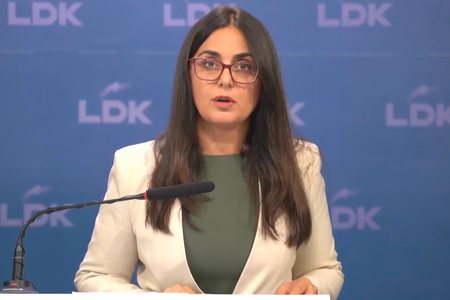
However, the opposition has opposed this approach. LDK MP Doarsa Kica-Xhelili stated that Kurti's proposal only aims to secure a quorum for the majority. " Now he is saying 'we give the signatures but not the votes '," she said, implying the lack of guarantees for a truly competitive process.
Along the same lines, MP Besian Mustafa described the offer as insincere. "Albin said 'Vjosa's signatures but Feride's votes'. Albin, don't give in to Vjosa. We elect him President tonight, we save the state," he declared.
The leader of the LDK, Lumir Abdixhiku, also held a critical stance, describing the process as a "one-party show", emphasizing that his party will not be part of a process that, according to him, does not guarantee a solution. The leader of the AAK, Ramush Haradinaj, also stated that the opposition has been excluded from the consultations and that participation under these conditions makes no sense.
On the other hand, Prime Minister Kurti accused the opposition of deliberately blocking institutions and not recognizing the election results, insisting that the country does not need new elections and that such a process would entail high financial costs.
The debate also included the mayor of Pristina, Përparim Rama, who criticized the majority's approach, warning of the risk of concentration of power. "What we are seeing is not healthy governance, but an alarming model of control and capture of institutions," he said, calling for more dialogue and political balance.
With the final failure of the presidential election and the lack of a compromise between the parties, Kosovo enters a new phase of political uncertainty, while the country is expected to once again resort to early elections.


Lini një Përgjigje