


 Shkruar nga Pamfleti
The American initiative increases political pressure for Kosovo's Euro-Atlantic integration, but obstacles from non-recognition and regional dynamics remain strong.
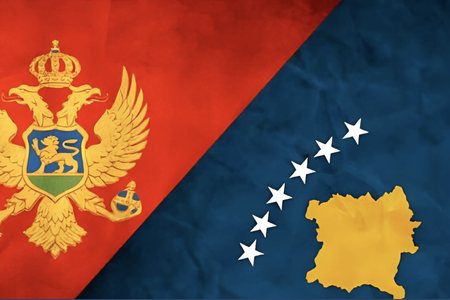
An initiative by three American lawmakers has brought Kosovo's perspective for NATO membership back into discussion, highlighting the challenges related to its international status and relations in the region.
The resolution, presented by Keith Self, Ritchie Torres and Mike Lawler, supports Kosovo's integration into the Alliance. The document emphasizes that functioning democratic institutions, civilian control over security structures and coexistence between communities create a basis for advancement towards Euro-Atlantic structures. At the same time, the initiative calls on Greece, Romania, Slovakia and Spain to reconsider their position on Kosovo's independence.
Authorities in Pristina interpreted this step as increased support from the US. Albulena Haxhiu praised the engagement of American lawmakers, while Glauk Konjufca emphasized Kosovo's readiness to contribute to regional and transatlantic security. Ramush Haradinaj linked the development to strengthening the country's international position.
In Serbia, the reaction was hostile. Aleksandar Vučić declared that Belgrade would oppose any attempt at Kosovo's NATO membership and noted that some Alliance countries do not recognize it as a state.
The accession process remains difficult due to the way NATO makes decisions, which requires unanimity. The positions of the four non-recognizing countries constitute a direct obstacle. At the same time, the presence of KFOR and the framework of Security Council Resolution 1244 continue to influence the international treatment of the issue.
Each of the non-recognizing states links its position to domestic and international factors. Spain links the Kosovo case to domestic issues such as Catalonia and the Basque region. Romania and Slovakia refer to concerns about territorial integrity and the treatment of minorities. Greece has developed functional relations with Kosovo and supports the region's European perspective, but maintains reservations due to international law, relations with Serbia and the Cyprus issue.
For Greece and Cyprus, recognizing Kosovo also has implications for the Cyprus issue, as it could be used as an argument in favor of the structures in the north of the island. This makes a rapid change of position difficult, even though contacts with Pristina have increased.
In this context, the American initiative functions as a political signal of support for Kosovo's integration into the Western security architecture.
However, the lack of consensus within NATO and the progress of the dialogue with Serbia keep this objective on a distant horizon.
The debate over Kosovo's membership in NATO is affecting diplomatic developments in the region and relations between key actors, without bringing immediate changes to existing balances.






Lini një Përgjigje