


 Shkruar nga Maurizio Ferraris
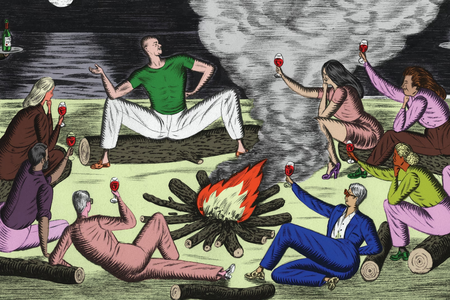
Nietzsche adds that it is we who have killed God, with our knowledge and will to free ourselves from tradition. However, the death of God removes every point of reference for man and begins the process of nihilism, the disappearance of all values: man becomes a stone rolling towards nothingness...
There are philosophers who have gone down in history for inventing theories, and others who have become famous for what they have opposed, as well as for a certain style they have brought to philosophical communication. Friedrich Nietzsche (1844–1900) seems undoubtedly the most prominent representative of this second category, and he has openly declared this. Let us take Kant: after all, according to him, he is a 'worker of philosophy', who limits himself to justifying existing values, and so have all philosophers before him. For himself, Nietzsche imagines other tasks: not only to understand or describe the world as it is, but also to transform reality.
At the end of his journey, before sinking into the darkness of madness, he even seems determined to take concrete action, as when he proposes to intervene personally to resolve the Franco-German conflict over Alsace-Lorraine, to order the shooting of the Kaiser, or to establish his residence in the Quirinale. It is difficult to imagine Kant involved in such grandiose goals. And so the question would seem closed: Nietzsche is simply a megalomaniac, an arrogant man and, in the end, a madman. However, he is a thinker who, without wanting to or at least without knowing it, managed to foresee a world that had not yet come, our world.
-Dionysiac
Nietzsche's entry into philosophy occurred in 1872 through a minor philological scandal. Nietzsche, who at the age of twenty-five and still without a doctorate had become a professor of philology in Basel, published a book full of philosophical ambitions and musical influences, since during its writing he was a regular frequenter of Wagner, who at that time lived in a villa near Lucerne. The book is The Birth of Tragedy, and the scandalous element from a philological point of view lies in the fact that Nietzsche does not offer a neoclassical version of the classics as a model of order to counter both the primitive disorder and the disturbances of romanticism and modernity. Thus, he moves away from the idea of the classics as an innocence untouched by sentimentality, according to Schiller, or as a complete correspondence between form and content, according to Hegel.
In Nietzsche's vision, things are different, and this is evidenced by the very genesis of the classical form par excellence, tragedy, which arises from an archaic and inhuman event: the murder of a man, later replaced by a goat (tragos, from which the word tragedy comes), and which initially appears through the chorus. Then, characters leave the chorus, lamentation gives way to reasoning, and in the end tragedy becomes a regular series of speeches: tragedy dies and philosophy begins. Tragedy, as a manifestation of uncontrolled will, is Dionysian (from Dionysus, the god of wine, eroticism, and excess), while reasoning, as rational representation, is Apollonian (from Apollo, the god of light). Schopenhauer's two categories in The World as Will and Representation (1818), which constitutes Nietzsche's main philosophical reference in this period, thus take on the face of two Greek gods: Dionysus, the will, and Apollo, representation.
But it is not just a question of an analysis of the past: what Nietzsche aims for is a renaissance of tragedy and the Dionysian, a new mythology for a modernity that seems tired and exhausted, and for this renaissance the main contribution must come from Wagner's work. Wagner, who was the first recipient of the work, received it with caution, worrying about the author, who was effectively excluded from the circle of philologists and began a controversial and lonely career as a philosopher.
-Deconstruction
In 1879, after ten years of service, the last years of which were accompanied by illness (vision problems, headaches, nausea), Nietzsche resigned from the University of Basel and began his life as an uprooted person, moving between rented rooms in holiday resorts in Switzerland during the summer and on the French and Italian Rivieras during the winter. Also due to the conditions in which he found himself, the works of the period 1881–1886, from Human, All Too Human to Beyond Good and Evil, are fragmentary and aphoristic, but remain within the horizon opened by The Birth of Tragedy and by some essayistic works of the mid-1970s, Premature Considerations. What drives this critique of culture? Without a doubt, first and foremost, life.
Nietzsche na kërkon të ‘qëndrojmë besnikë ndaj tokës’, të mos shtypim kërkesat e jetës në emër të formës, kulturës apo dijes. Kjo edhe sepse dija e modernitetit është e zbrazur dhe duket si një formë e thatë. Nuk është rastësi që pikërisht në një aforizëm të Përtej së mirës dhe së keqes gjendet shpallja e vdekjes së Zotit. Hegeli kishte thënë se ndjenja themelore e botës moderne është vdekja e Zotit, pra humbja e themeleve. Nietzsche shton se jemi ne ata që e kemi vrarë Zotin, me dijen dhe vullnetin tonë për t’u çliruar nga tradita. Megjithatë, vdekja e Zotit heq çdo pikë reference për njeriun dhe nis procesin e nihilizmit, zhdukjen e të gjitha vlerave: njeriu bëhet një gur që rrokulliset drejt asgjësë. Për t’i dhënë fund këtij procesi nuk mjafton dekonstruksioni i paragjykimeve të vjetra; nevojitet ndërtimi i vlerave të reja. Në këtë kuadër, pjesa e fundit e veprës së Nietzsche-s i kushtohet një rindërtimi, ose siç e quan ai, një rivlerësimi të të gjitha vlerave.
-Rindërtimi
Ajo që në Zarathustra merr formë letrare duhet të zhvillohet në mënyrë të argumentuar dhe sistematike, dhe për këtë arsye e gjithë faza e fundit e mendimit të Nietzsche-s është e orientuar drejt ndërtimit të një sistemi, i cili nuk u realizua, jo për shkak të një vendimi, por për shkak të një dështimi. Në qendër të këtij sistemi qëndrojnë vullneti për pushtet dhe rikthimi i përjetshëm, dy nocione, një modern (në vijën që nga Leibniz kalon te Kant e më pas te Schopenhauer) dhe tjetri antik (koha ciklike e grekëve në kundërshtim me historinë lineare të krishterë).
Këto dy parime transformojnë sistemin e vlerave, sepse vullneti bëhet më i rëndësishëm se vetë jeta, ndërsa çdo gjë që ndodh në kohë relativizohet, humbet unikalitetin dhe, rrjedhimisht, problematikën, pasi është një ngjarje që përsëritet. Ky proces ishte menduar të përmblidhej në një vepër të quajtur herë Vullneti për pushtet, herë Rivlerësimi i të gjitha vlerave, të cilën Nietzsche nuk e përfundoi kurrë. Në fund të vitit 1888 ai braktisi projektin dhe përdori materialet në një seri botimesh të nxjerra me shpejtësi, që sipas tij do të përgatisnin terrenin për veprën kryesore.
Në fund të dhjetorit 1888 dhe në fillim të janarit 1889, Nietzsche pësoi një kolaps psikik. Ai u dërgua nga Torino, ku ndodhej, në spitalin psikiatrik të Bazelit dhe më pas iu besua nënës dhe motrës. Ai vdiq më 25 gusht 1900, pa vetëdije për veten. Teksti i Vullnetit për pushtet u rindërtua më pas nga motra dhe një nxënës i tij mbi bazën e shënimeve dhe planeve të filozofit, me botime në vitet 1906 dhe 1911. Është pretenduar se teksti u manipulua ideologjikisht dhe se kjo çoi në lidhjen e mendimit të Nietzsche-s me nazizmin, por krahasimi i fragmenteve me tekstin tregon se kjo nuk është e vërtetë.
-Rivlerësimi
But what about the revaluation? If we look at the current reality, values have changed significantly in the 125 years that separate us from Nietzsche's death. It is not only about sexual morality, family structure or relations of authority and hierarchy, such as the decline of patriarchy and the increase in women's autonomy. We must also take into account an often underestimated fact: today every individual has the role of creator of values, a role that Nietzsche attributed only to philosophers. Humanity, which is no longer so important as a producer of goods, finds a new role as a producer of data, that is, as a producer of values.
In this sense, Nietzsche's aristocratic ideas, the cult of the superman and the violence that accompanies it, can be softened and reevaluated towards an ideal of a humanity free from need and fatigue, engaged in the realization of a task that still remains before us: that "homo faber" may no longer be a symbol of the arrogance of a species that has so far shown ingenuity only in the destruction of its Neanderthal ancestors./ Adapted from "Pamphlet" by "Corriere della Sera"





Po, por Kanti ngulmonte në idenë "lluminizimi është periudha kur njeriu nis të mendojë me mendjen e tij dhe jo të tjerëve. Saper aude", guxoni të mendoni. Kush guxon të mendojë, pale të veprojë, dhe jo vetëm tek ne.
Pjesa e fundit e veprës së Nietzsche-s i kushtohet një rindërtimi, ose siç e quan ai, një rivlerësimi të të gjitha vlerave. Vdekja e Zotit heq çdo pikë reference për njeriun dhe nis procesin e nihilizmit, zhdukjen e të gjitha vlerave: njeriu bëhet një gur që rrokulliset drejt asgjësë. –Thuhet sa më sipër. _____________________ Aspekti i zhdukjes së vlerave është një pikëpamje e gabuar. E para le të marrim dy shembull ku kanë qeverisur institucionet fetare. Gjatë qeverisjes së shtetit të Vatikanit (shek VIII-XVII) ka pasur inkuizicion dhe indulgjenca. Indulgjencat u bënë veçanërisht të diskutueshme në shek. XV–XVI, kur filluan abuzime (sidomos lidhja me pagesa). Pra, ku janë vlerat në këtë rast? Digjej në turrën e druve një heretik!! Po indulgjencat kundrejt pagesës ça vlere kanë? Vlerë korruptive? Me ato para indulhjencash mund të jemë ngritur shumë bazilika në kohën e sundimit të Vatikanit. Po ashtu, Vatikani (më saktë Papati) ishte kundër bashkimit të Italisë. Gjatë procesit të njohur si Risorgimento (shek. XIX), Papa sundonte jo vetëm si udhëheqës fetar, por edhe si sundimtar politik i një territori të madh të quajtur Shtetet Papnore në Itali qendrore. Arsyet e kundërshtimit ishin të qarta: Papa nuk donte të humbiste pushtetin tokësor mbi këto territore. Ku është vlera e bashkimit këtu? Ja pra që pushteti fetar qe një dështim total, një dëshmi kjo që tjetër propagandonin e tjetër bënin. Dhe dihet që sa i vërtetë je duket kur je në pushtet. Ata e treguan sa "besimtarë" ishin e sa vlera kishin. Rast tjetër mund të përmendim Iranin. Në Iran, lejohen martesat midis një prindi adoptues dhe fëmijës së birësuar prej tij/saj. Ça vlere është kjo? Ky është shpellarizëm, perversitet. Plus ça vlere është të besosh në gjëra shkencërisht të pamundura. Psh si mund të krijohet e gjithë bota vetëm nga Adami dhe Eva? Me kë u martuan fëmijët e tyre? E njëjta histori tregohet në Bibll edhe pas përmbytjes së madhe në kohën e Noeut. Si u shtua gjithë bota pas përmbytjes? Te 1TIMOTHY 2:10 dhe Te 1CORINTHIANS 14:34, tregohet për mizogjinizmin ndaj grave. Ça vlere ka mizogjinizmi? _________________ Shënim: Nuk do lidhur fakti që Niçja "vrau" Zotin dhe u çmend. Se nuk u çmend prej kësaj. Plus që Niçja nuk studioi biblën se do zbulonte "perla" mizogjinizmi dhe broçkulla krijimi të botës vetëm nga dy njerëz apo vetëm nga një familje. __________________ https://gazetadita.al/100-vite-te-incestit-historia-e-familjes-ne-shba-anetaret-lehin-ne-vend-qe-te-flasin/