


 Shkruar nga Pamfleti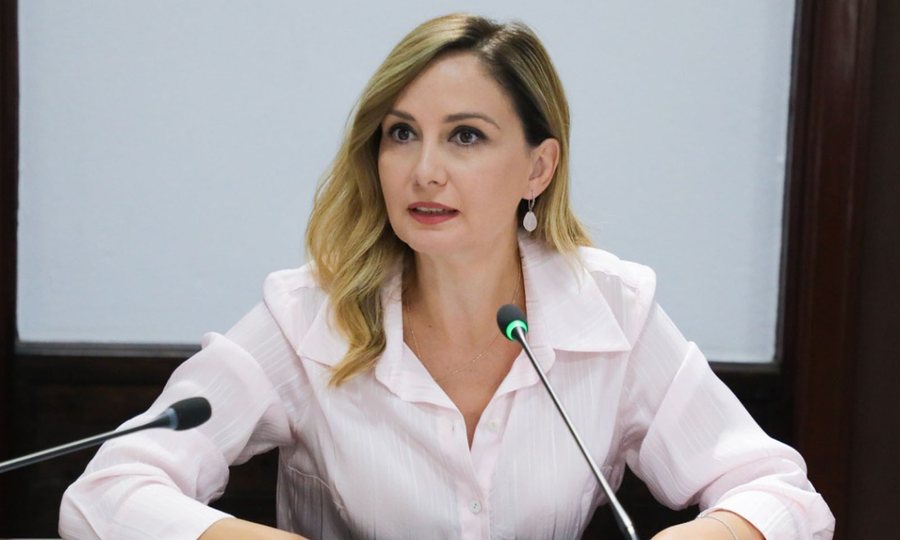
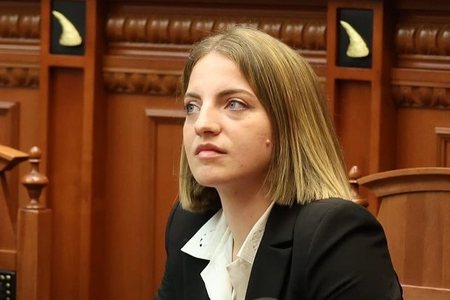
Democratic Party MP and chairwoman of the Media and Human Rights Committee, Jorida Tabaku, has reacted from Strasbourg after the approval of the European Parliament's report on Albania, describing it as a document that not only confirms support for the country's European integration, but also reflects the problems faced by Albanian citizens.
In a video posted on social media, Tabaku announced that during their stay in Strasbourg, representatives of the Democratic Party held meetings with the rapporteur for Albania in the European Parliament, Andreas Schieder, the shadow rapporteur of the European People's Party, Andrey Kovatchev, as well as other MEPs. According to her, in these meetings, concerns were conveyed that, according to the opposition, are also being raised by the protesting citizens.
The Democratic MP emphasized that the report adopted by the European Parliament reflects a number of issues that cannot be overlooked, including the electoral process, the combination of the state with the ruling party, the need for electoral reform, the fight against corruption, media freedom and respect for human rights.
According to Tabaku, the document also addresses economic issues long raised by the opposition and experts, such as the lack of competition in the market, issues related to the Strategic Investment Law and changes to the Law on Protected Areas.
She argued that these policies have favored a narrow group of interests, while harming fair competition and entrepreneurship.
Tabaku stated that the European integration process remains the most important instrument for addressing the problems affecting Albanian citizens, citing corruption, lack of meritocracy, living costs, pensions, and economic opportunities.
"Integration is the only way to change Albania. I know of no other way to improve living standards, to fight corruption, to guarantee competition and meritocracy, or to build a different Albania," she declared.
In conclusion, the DP MP said that the message from European institutions is clear and that it is now up to the government to decide whether to follow the path of reforms required by the European Union or continue with what she described as the concentration of power and the weakening of democratic institutions.
"The European Commission has clearly stated it in the IBAR report. The European Parliament has also clearly stated it in the report it adopted today. It is up to the government to reflect on whether it will choose the European path or the accumulation of power and autocratic models," said Tabaku.
Video message
Greetings from Strasbourg, where the report on Albania was just adopted.
The report on Albania had the support of all political groups and, of course, expresses support for the integration process. But what is more important is that the report also highlights the real situation that the country is going through today.
A situation that is reflected by the protests in the streets, a situation that is also reflected in the over 300 amendments that this report had.
The report discusses the elections and the problems that exist with the state's relationship with the party and the need for electoral reform that reflects the will of the citizens.
There is talk of the fight against corruption and the issue of the deputy prime minister's immunity.
There is talk of a wide range of reforms regarding human rights and media freedom.
There is also talk about the economy. There is talk about the lack of competition. There is talk about the Law on Protected Areas. There is talk about the Law on Strategic Investments, which has become an obstacle for honest businessmen, for honest enterprises and for foreign investments.
So we are talking about the reality that Albania has today.
Integration is the only way we can change Albania, by carrying out these reforms, by focusing precisely on what citizens are asking for today and on what the European Commission is asking for, by focusing on Albania's European path.
I know of no other way to change Albania. I know of no other way to improve living standards, to solve the problems that citizens are seeking to address; from the fight against corruption, to pensions, to prices, to competition, to meritocracy, to an Albania that should be different.
The European Commission has said it clearly in the IBAR report. The European Parliament has also said it clearly in the report it adopted today.
It is up to the government to reflect. To reflect on whether it will choose the European path or the accumulation of power and autocratic models.


Lini një Përgjigje