


 Shkruar nga Afrim Imaj
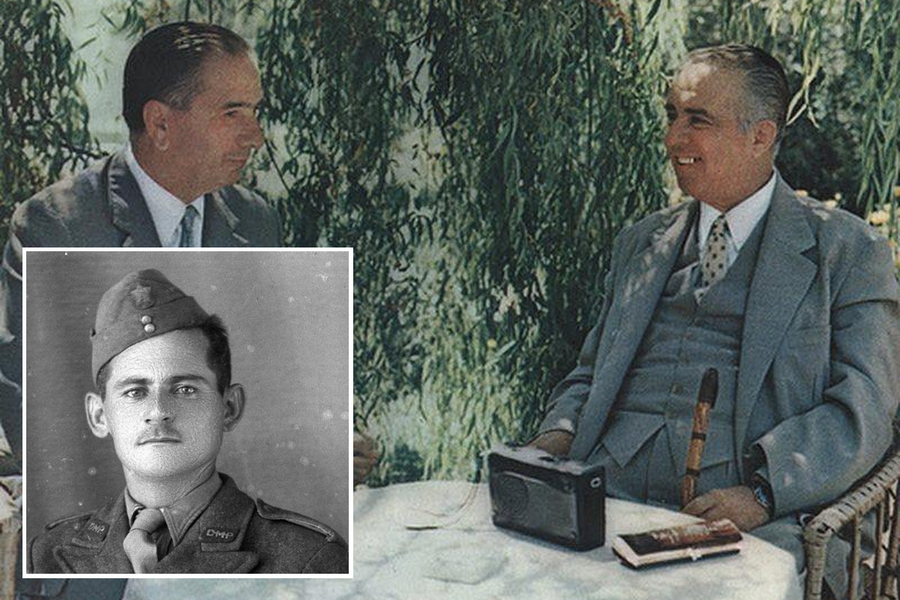
Zoi Themeli, from baker to head of State Security...
The story of the infamous general, promoted with party duty, who put anti-party contingents into action instead of political activists. Debates in the secretariat of the Central Committee of the Party for the dismissal of the First Secretary of the Dibra district in 1966
"There is no need to engage the communists, we make the Party more vital when we use the contribution of the anti-party element" The cause, previously unheard of in the practice of party organs, had become the main topic of the work of the first secretary of the Dibra district. In 1966, when it was two decades since the coup of Koçi Xoxe, another model of his was found in Peshkopi, just as dangerous as the former Minister of the Interior who had put the Security above the Party. General Zoi Themeli, one of the former high-ranking officials of the State Security, who had recently been appointed to the post of First Secretary of the Dibra district, was crucified in the fall of 1966 for what his former friend and superior, Koçi Xoxe, had gone before the firing squad in the late 1940s. The manuscript of Hysni Kapo, the former Party's second-in-command, which refers to the event, contains its epilogue with the final moments of the debates of the Foundation in Enver's office, in mid-September 1966. The tyrannical general who had defied an entire campaign of control teams, meetings, confrontations and analyses led by the Central Committee, came face to face with the "One" of the Party, not simply to measure strength. The strategy followed with the latter's people, by throwing branch after branch, would not work for him any longer. Hoxha, who was accustomed to beheading political rivals and anti-party elements, would not have had any difficulty, as Kapo writes, in overthrowing the monster of Peshkopia. But what had happened to the former general, who had become a serious problem for the Party's dome?
Zoi Themeli was entrusted with the task of First Secretary of Dibra, after having “excelled” for 20 years in the position of Director of Political Intelligence and Deputy Minister of the Interior. He would once again excel in his new position with conspiratorial practices in leading the Party, relying not on elected politicians, but on the contingents of the Security, whom he considered irreplaceable assets of the Party’s work. In a letter sent to grassroots organizations, Themeli directed the avoidance of activists from the Party’s organs and the support of leadership work to negative and vicious elements, who had long been secretly contributing to the Secret Police. This “innovation” of the notorious general had aroused the revolt of the communist army, who had conveyed their concern to the Party leadership. The latter had sent the first team headed by Piro Kondi, director of the Propaganda Directorate in the Central Committee, who, from the verification on the ground, did not find any serious violations. Not even in the letter of the Foundation to the organs and organizations of the Party, to the envoy of Enver, there was no anti-party spirit. Such assessments were also brought to Tirana by the other two envoys. However, Enver was not satisfied with that. He asked to bring to the office the protocols of the meetings of the organizations of the Bishopric where the letter of the Foundation had been discussed and began to study them carefully. What had escaped the successive teams could not escape the eye of the leader. He first started the battle with his envoys. From this moment on, Piro Kondi would no longer be a member of the Party Plenum and would leave the Central Committee apparatus. Likewise, Leka Shkurti, his assistant. Then came Themeli's turn, the battle with which he would wage in his office at the headquarters of the Central Committee. With that, Kapo ends the notes about the punished general in his manuscript. What happened to him after this was made public in the propaganda of the time, where Themeli was treated as an anti-party element. The rest of Kapo's memoirs that we publish today focus on the debates in Enver's office to finally leave Zoi Themeli out of the party...
Note dated September 13, 1966
In the meeting I had today with Zoi Themeli, I learned about the serious situation created in the Peshkopia organization. I do not like Zoi's position at all, he is on the wrong path. The letter issued by the District Bureau for organizations (signed by Zoi and with deeply anti-party content) and the 100-page minutes of the meetings of the grassroots organizations, where the unprincipled spirit of the letter is opposed, which I read until late at night, revolted me. It seems to me that Zoi has gotten on the wrong horse. In any case, we will examine his case carefully.
Note dated September 14, 1966
The issue that concerned me, that worried comrade Enver, was the information I gave him about the situation in Peshkopi. There, Zoi Themeli, who is the First Secretary of the district, has created great chaos. We decided to meet at the CC, the three secretaries, with Zoi Themeli. We listened attentively to Zoi and Hajriu (Hoxha). Zoi's attitude is revolting. Although he is very poor in mind, he seems to know a lot, he laughs with irony and disdain when Hajriu and his friends oppose any of his opinions. He has become like Koçi Xoxe in Peshkopi, but he tries to justify himself to his friends with evil. The tactic did not work out until the end. Zoi fell from his feet when comrade Enver intervened. He threw him in the trash. On the surface, it seemed that he understood the mistake, but in reality, arrogant people hardly recognize mistakes. However, the Party cannot leave his work alone...
BIOGRAPHY /From baker to state security chief
Zoi Themeli was born in 1918 and died in 1992. With primary education and a profession as a baker, immediately after the war he reached the highest levels of state security with the rank of lieutenant general. During the Italo-Greek War, he was a soldier and deserted. In December 1941 he became a member of the Communist Party of Albania. He was a member of the Peza platoon and then in other communist units. In the years 1945-1947 he worked in Shkodër as a section chief and director of internal affairs. In 1949-1966 he led political intelligence, focused mainly on the fight against political opponents in emigration. In 1966 he was elected first secretary of the Dibër District Party Committee, but did not complete a year in this position, as he was dismissed and convicted as an anti-party element. In addition to his military rank, he was elected a candidate for member of the Party's Central Committee./ Pamphlet





Lini një Përgjigje