


 Shkruar nga Pamfleti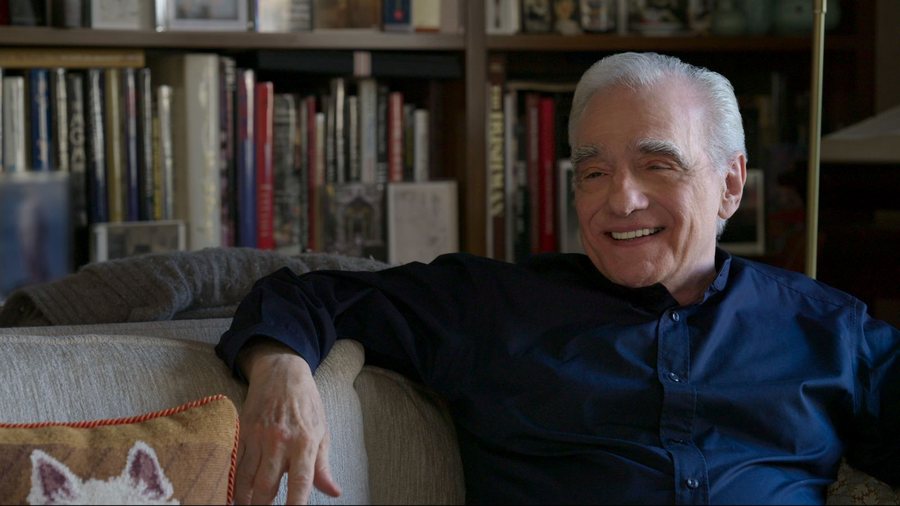
Martin Scorsese is one of the greatest directors in the history of world cinema. With a career spanning 6 decades, he has directed the most famous films in a multitude of genres and has won many awards. On this 83rd anniversary, here are some interesting facts about his life:
Grew up in Manhattan
Martin Charles Scorsese was born in the Queens borough of New York on November 17, 1942. His parents were both tailors. The family soon moved to “Little Italy,” a neighborhood in Manhattan. That environment shaped the young boy, and it is where many of Scorsese’s films were shot.
Childhood illness sparked love for cinema
Martin suffered from asthma and could not play sports or participate in any physical activities with other children. Therefore, his parents and older brother, Frank, took little Martin to the cinema, which developed Scorsese's passion and love for the field. As a teenager, he often rented films.
He was a very talented child.
When he was just 11 years old, he created a fictional film about the Roman Empire called "The Eternal City."
At first he wanted to become a priest!
Scorsese attended Cardinal Hayes High School in the Bronx, where he graduated in 1960. He initially intended to become a Catholic priest, but his plans changed after failing his first year.
in a preparatory seminar. At that moment, young Martin's love for cinema began to take shape. However, he enrolled at New York University and graduated with a degree in English in 1964.
At university, he began to develop his skills in film directing.
During his college years, Scorsese became involved in film directing. He made several short films, and in 1967, he made his first feature-length film, Who's That Knocking at My Door?
Getting to know the greats of the craft
In the 1970s, Scorsese met and became friends with young but influential filmmakers such as Brian De Palma, Francis Ford Coppola, George Lucas, and Steven Spielberg. It was Brian De Palma who introduced Scorsese to his future collaborator, Robert De Niro. At that time, he began working as an assistant director and editor for producer Roger Corman.
It was the latter who taught Scorsese that entertaining films could be made on a small budget and in a short time. He incorporated these lessons into his next film, Mean Streets (1973), which first brought him fame.
He used to be very superstitious.
During the 1970s, Scorsese suffered from a terrible anxiety about the number 11. He avoided flights that ended in 11, refused to travel on the 11th of the month, and wouldn't stay on the 11th floor of hotels. Scorsese himself says: "Strange things kept happening to that number during that period. I found that when I had a bad experience, or maybe I had been fired from a project, the numbers in the address of a building would add up to 11, or it was the 11th day..."
Peaks and troughs
Following the successes of Mean Streets and Alice Doesn't Live Here Anymore, Scorsese followed up with Taxi Driver in 1976. Still considered a cornerstone of American cinema and one of his best films, it was nominated for four Oscars, including Best Picture, and marked the beginning of Scorsese's collaboration with Robert De Niro.
That success encouraged Scorsese to make his first big-budget project: the musical “New York, New York” (1977). But the film failed miserably at the box office and is best remembered today for its soundtrack, which was brilliantly performed by Frank Sinatra. The disappointing reception of “New York, New York” plunged Scorsese into depression. At this stage in his life, he had serious problems with cocaine addiction.
Has caused controversy time and again throughout his career
With the strong themes he often tackles in his films, it's perhaps no surprise that Scorsese has on more than one occasion angered some sections of the public. In 1988, he adapted Greek writer Nikos Kazantzakis' 1955 novel, "The Last Temptation of Christ."
The depiction of Jesus Christ as a man with human flaws and sexual desires caused a public outcry and was criticized as blasphemy. Catholic protests took place outside cinemas where the film was shown, and Scorsese himself received death threats and had to be escorted by bodyguards for two years.
Meanwhile, in 1997, he directed the biographical film "Kundun," based on the life of Tenzin Gyatso, the exiled political leader of Tibet. It was heavily criticized by Chinese leaders, who added Scorsese to a list of 50 people banned from entering Tibet.
Has created an important group for preserving films
A lifelong film enthusiast and scholar, Scorsese has been a key figure in film preservation since 1990, when he founded the Film Foundation, a nonprofit organization that works with studios to restore old or damaged films. The foundation has restored more than 800 films from around the world, and offers free courses to young people on the language and history of film./ Pamphlet




Lini një Përgjigje