


 Shkruar nga Skënder Minxhozi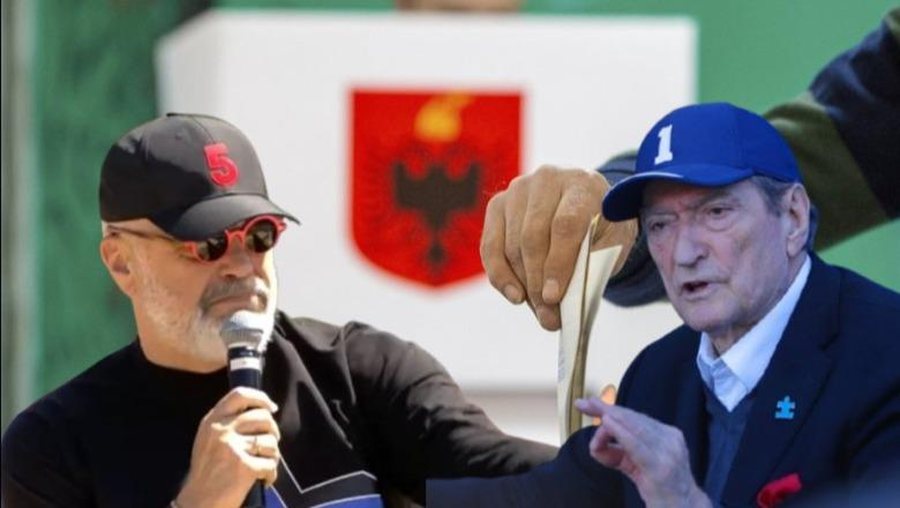
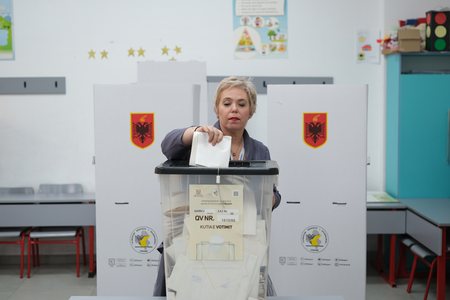
The opposition knew even before the elections that at stake on May 11 was not the issue of power, but the scale of the defeat.
The last time the left and right in this country had a real electoral contest was four years ago. Berisha was then just a luxury pensioner playing cards behind Lulzim Basha's back. Ilir Meta was president, not a prisoner, while Monika Kryemadhi was fighting for votes as only she knows how. The government found itself that year in a real electoral contest, which, if it had included the element of coalition building, would have caused even more headaches for Rama at the end of the race.
Compared to those elections, where the opposition came dangerously close to the government's figures in the popular vote, these of May 11 were simply a second test of Sali Berisha's political powerlessness. The first test, that of the 2023 local elections, saw the opposition take only 7 of the country's 61 municipalities. Shkodra and Bajram Curri fell, to name two strongholds of the right. Even in 2021, Basha and the others faced the same opponent with the same approaches and capacities to accumulate votes, but the result turned out differently. The fall of the DP is not found only in the greed of the socialists to steal the elections, but above all in the corrupt political cycle at the head of the party, where Basha and Berisha played the sword dance, making a mess of the leadership of the moment and, above all, the future of the DP.
The OSCE-ODIHR observer report did not absolve the opposition of the blame for the 50 mandates, attributing the catastrophic loss (13 MPs less than in 2021) solely to the abuse of power by the government. The elections were competitive, the report says. Everything that goes beyond this concept is part of the reading of the election results, not the reading itself. And such a positioning of international observers has been a standard of all electoral processes in Albania for as long as they can be remembered. It used to be said that “irregularities did not affect the essence of the result”, but then over the years this formulation has been replaced with the phrase “competitive elections”.
The irregularities observed in the use of government assets in the electoral process are a concomitant disease of the Albanian transition. Whoever has had power has tried to use it to generate votes. There have been those who inaugurated highway tunnels a few hours before the vote and who are now scandalized by the use of public money for party votes.
The opposition knew even before the elections that the issue on May 11 was not power, but the scale of the defeat. And the defeat came in dimensions similar to the local elections. Here, the lost municipalities were replaced with parliamentary mandates left to the streets, somewhere in favor of new parties, somewhere in favor of the government.
In the depth and gap that they have created with the opposition, the losses of the last two votes by the opposition reconfirmed, if it had to be done, the now clear diagnosis that keeps the opposition tied to the loser's wagon. The connection of Berisha's personal fate with his party creates not only stagnation and chaining of the DP, but also stops the entire political process related to the rotation of leadership in the rest of the political spectrum. As long as Berisha is there, there will be other party leaders dating from the first or second decade of pluralism.
The Doctor's insistence these hours to run for party leader next spring, while his historical opponent, who left politics 20 years ago (and is 9 years younger than him), is fighting for his life in a Tirana hospital, is the great irony that today binds the opposition and its electoral fate. Every time a pair of elections appear on the horizon, as has happened in the last two years. Every time someone in the DP inadvertently raises the topic of the rotation of the top leadership elite. The DP has its head in the '90s, while its body struggles and writhes in the third decade of the 2000s. This political Frankenstein is still today the primary circumstance guaranteeing victory for the socialists, worn out by 12 years of power.
In this sense, the latest report on the May 11 elections is neither the Holy Grail nor the crystal ball to correct a situation fatally blocked in the head of the Democratic Party. Apart from 1996, when the opposition was initially massively robbed on election day, and two days later ate a collective wood in Skanderbeg Square in the eyes of terrified observers behind the windows of the Tirana Hotel, so beyond this extreme case, no observation mission has given a rejecting and disqualifying opinion on the Albanian elections.
By not retelling the story of the elections and by not questioning the final result, the OSCE-ODIHR report leaves the country's party elite on its list of endemic diseases. The solution to the defeat is not found in international reports, but mainly within the walls of the losing party. Of course, in a party that has the power and will to look the crisis in the eye, and not to applaud the president even in the middle of the chaos.



Lini një Përgjigje