


 Shkruar nga Eduard Zaloshnja
Thanks to this giant electoral hole of the 'Alliance for Greater Albania', the SP secured a full 82 parliamentary mandates with votes within the country, even though it received 34,000 fewer local votes than in 2021.
After the publication of the OSCE report on our parliamentary elections, I did an internet search for all OSCE reports after Albanian parliamentary elections (after 1990, of course). From a comparison of them, it is obvious that there has always been criticism of the way we have conducted parliamentary elections – the common denominator of all the reports has been that since 1991, we have not been able to conduct elections in full compliance with the standards of the Copenhagen Charter for free and fair elections.
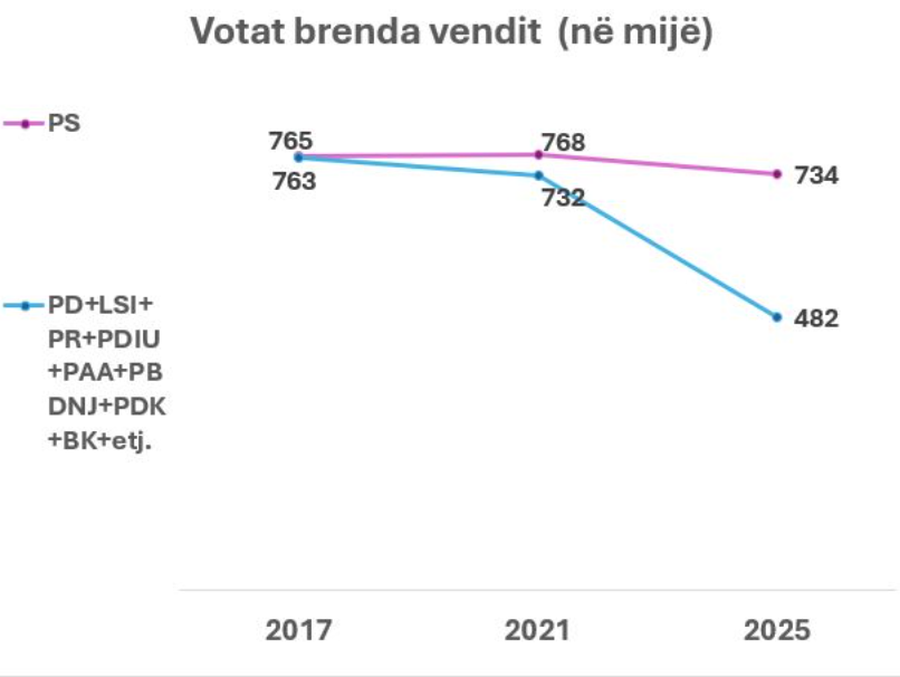
Since 2017, the ruling SP has competed alone in parliamentary elections, facing several main opposition parties (PD, LSI, PR, PDIU, PAA, PBDNJ, PDK, BK, etc.). By collecting the votes of the main opposition parties, it is found that the SP's lead over them as a group was modest in 2017 and 2021, but the SP secured a full 74 parliamentary mandates in both elections thanks to the distortions of our regional electoral system.
And here we come to 2025…
After Berisha returned to the leadership of the DP (in a fierce struggle with his former stooge Basha), the DP, LSI, PR, PDIU, PAA, PBDNJ, PDK, BK, etc. created the joint coalition 'Alliance for a Greater Albania'. But the votes this coalition received domestically were not at all magnificent - it received a full 250,000 fewer votes domestically than its constituent parties had received four years earlier!
Thanks to this giant electoral hole of the 'Alliance for a Greater Albania', the SP secured a full 82 parliamentary mandates with votes within the country, even though it received 34 thousand fewer votes here than in 2021 (it secured another 1 mandate in the Vlora Region with the votes of immigrants, but before the counting of votes from Greece began).
The chart below best summarizes the 300 words above…





Lini një Përgjigje