


 Shkruar nga Thoma Gëllçi
Transparency was ensured at satisfactory levels, although no one was able to clearly see what was happening.
The Election Observation Mission (ODIHR) assesses that the elections in Albania took place in a general atmosphere of dynamic calm, where tension was high, but managed with unprepared professionalism.
The process was open and inclusive, except for those who were left out.
Transparency was ensured at satisfactory levels, although no one was able to clearly see what was happening.
2. Legal and administrative framework
Albanian legislation provides a solid foundation for the development of democratic elections, with some small gaps that can be filled with institutional creativity.
The Central Election Commission demonstrated full independence in close cooperation with the government.
Decisions were balanced: sometimes in favor of one side, sometimes in favor of the same.
The electronic system worked efficiently, except in cases where it did not work, which demonstrates a willingness for continuous improvement.
3. Election campaign
The campaign was lively, competitive, and fair, except for the lack of equality and competition.
The involvement of state resources was observed to be both limited and extensive at the same time.
Opposition candidates had equal opportunities to complain, but not to be heard.
The campaign was characterized by moderately aggressive language and a civil debate filled with cultured insults.
Most media outlets provided equal coverage to the parties, although the reporting was significantly skewed in favor of balance.
4. Voting day
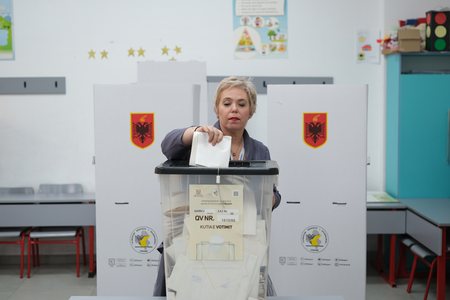
Election day took place in a calm, organized and spontaneous manner.
The process was professionally monitored by observers who, while not seeing every violation, ensured that it took place in an orderly manner.
In some centers, voting began late due to opening on time.
The secrecy of the vote was widely respected, except in cases where it was made public at the request of the voter or the head of the center.
The atmosphere was friendly, although sometimes accompanied by shouts about the swamp owls or the head of the criminal organization of the narcostate.
5. Counting and announcement of results
The counting process was transparent and unambiguous.
The commissioners attempted to ensure accuracy through random errors distributed fairly among the parties.
In some cases, the results were announced before the end of the count, which indicates high prediction efficiency.
In other cases, they were delayed, to maintain democratic suspense.
In the end, all parties accepted the result in all areas where they had won and called it illegal where the opponent had won.
6. The role of state institutions
State institutions played an active role in maintaining the government's neutrality towards itself.
The State Police maintained order and peace, while monitoring any potential incidents of disturbance to order and peace.
The public administration was careful not to get involved politically, except in cases where it was involved to preserve the workplace institutionally.
7. Preliminary recommendations
• Improve the legal framework so that each party feels like a winner, regardless of the outcome.
• Ensure that all parties have equal access to unequal resources.
• Avoid using pressure on voters, except in cases where they cannot be persuaded otherwise.
• Strengthen the independence of institutions through more efficient dependence on the government.
• To guarantee international standards, adapting them to their local version.
8. Conclusion
The mission assesses that the elections represented significant progress on the long road towards standards that have not yet been achieved and that have a long way to go.
The process reflected a commitment to formal democracy and a deep understanding of its flexibility.
The elections marked major steps in the right direction, even though the path led elsewhere. The process was praised as free in spirit but meticulously controlled in practice. It was a notable success in the way it achieved uneven results with equal efficiency. Progress was significant, especially in areas where a step back was taken to create the illusion of progress. In conclusion, Albania showed that democracy can move quickly even when it stands still.
The mission remains ready to return to observe the same success next time.





Lini një Përgjigje