


 Shkruar nga Pamfleti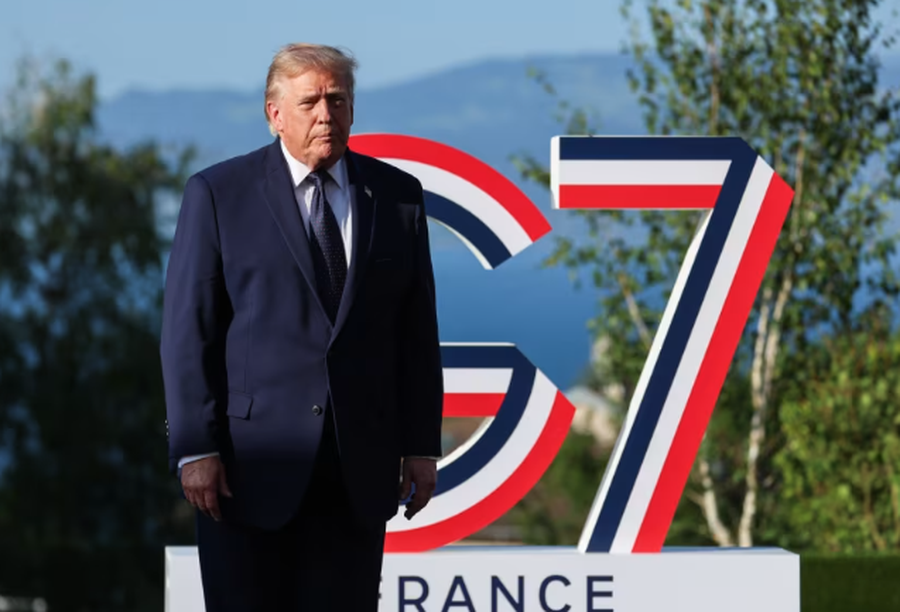
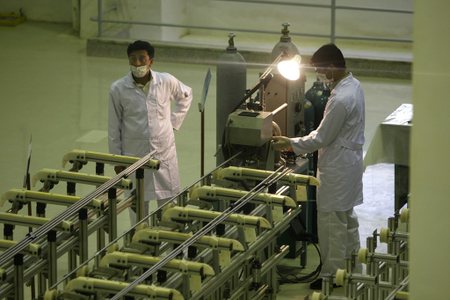
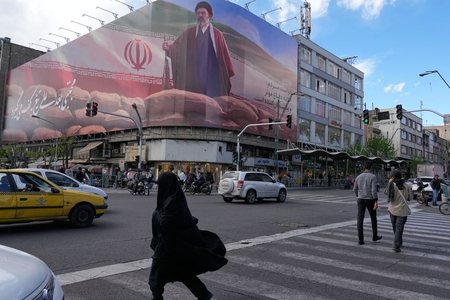
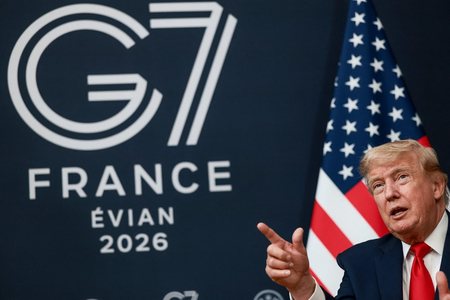
The new deal that President Donald Trump's administration is negotiating with Iran has sparked a fierce debate within the conservative camp in the United States. At the center of the criticism is the idea that Tehran could be given access to a reconstruction fund worth up to $300 billion if it respects the terms of a peace deal.
The discussion gained momentum after Vice President JD Vance stated in an interview with CBS News that Iran could benefit from major international investments in the future. The administration later clarified that the funds would not come from American taxpayers, but from Persian Gulf countries, and that they would only be made available if Iran changed its behavior and adhered to the agreement.
Vance stressed on Fox News and later in an interview with Megyn Kelly that the United States would not support investment from countries like the United Arab Emirates unless Iran met the conditions set. According to him, the funds would serve as an economic stimulus to encourage a change in Iranian policies.
However, this approach has brought to mind the many statements that Donald Trump has made over the years against the 2015 nuclear deal, reached by the Obama administration. That agreement gave Iran access to about $50 billion of its assets frozen in foreign banks as a result of international sanctions.
At the time, Trump fiercely opposed the deal. He repeatedly claimed that Iran was benefiting from the $150 billion deal and that the money would be used to fund international terrorism. In articles, interviews, and campaign events, he portrayed the deal as an example of weak American leadership and bad negotiations.
During the 2016 presidential campaign and then during his first term, Trump repeatedly argued that the release of Iranian funds posed a major security risk. He declared that the United States was giving a “financial gift” to a state it considered a sponsor of terrorism.
One of the main arguments of Republicans at the time was that the funds were “fungible.” According to this logic, even if the money was not used directly for military or terrorist activities, it could free up other financial resources that the Iranian regime would use for these purposes.
Trump also revisited the topic during tensions with Iran in 2019 and 2020. After the killing of Iranian General Qasem Soleimani, he accused the Obama administration of empowering the Iranian regime by giving it access to billions of dollars. On several occasions, he claimed that Iran had received $150 billion, although official estimates put the real amount significantly lower.
During the 2020 campaign, Trump warned that a Joe Biden victory would bring back similar deals with Iran. He repeatedly stated that a Democratic administration would give Tehran even more money and called the 2015 agreement the “worst deal” he had ever seen.
Even after leaving office, Trump continued to hint at the possibility of a new deal with Iran, claiming that the financial amounts could increase even further. At a campaign event in Georgia, he said that a Democratic administration could give Iran not $150 billion, but $250 billion.
This is where the political challenge for the current Trump administration lies. Although the proposed fund of up to $300 billion would be financed by countries other than the United States, critics argue that the practical result remains similar: Iran would gain access to vast financial resources as part of a diplomatic deal.
Supporters of the deal point out that there is an important difference between frozen Iranian assets and foreign investments conditioned on Tehran's behavior. According to them, the funds will be activated only if Iran respects its commitments and contributes to regional stability.
However, opponents point out that the arguments used today by the Trump administration resemble those that Republicans rejected a decade ago. For this reason, the debate focuses not only on the content of the agreement, but also on the coherence of Republican foreign policy towards Iran.
In conclusion, the controversy over the potential $300 billion fund risks becoming one of the most contentious issues of the new Iran deal. While the administration argues that it is about conditional investments and not American funds, critics recall that Trump has built a significant part of his political rhetoric for years on opposing agreements that give Iran access to large financial resources./ CNN




Lini një Përgjigje