


 Shkruar nga Enver Robelli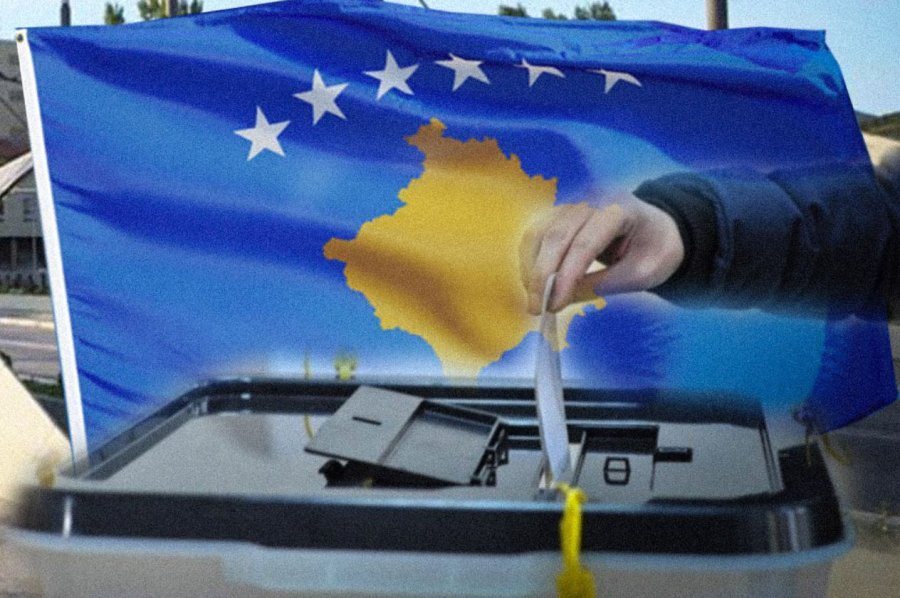
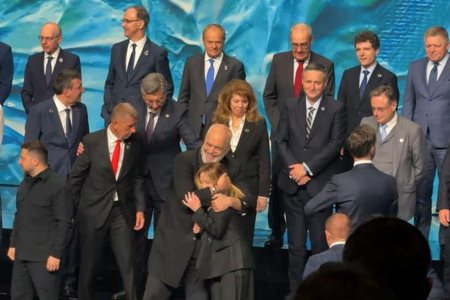
The great disease of Kosovo's politicians is the ambition to present themselves as close to Western partners through handshakes in corridors and photos taken by foolish phones.
As for the result: we must wait for the announcement of the final result that the Central Election Commission will make. From experience we know that surveys, exit polls, etc. - are not always accurate. The votes that came by mail have not yet been counted. They are mainly votes from the diaspora. And there are over 100 thousand votes.
But one thing is clear and not surprising: Kosovo's citizens are tired of elections. Within 16 months, Kosovo has voted three times at the national level. Plus once in local elections, add to these the run-off. It is surprising that citizens have been invited to vote five times in less than a year and a half. Not a few people have taken this as a personal insult. Many Kosovo citizens have started voting on Friday and Saturday - by getting in their cars and going to Albania or elsewhere for the weekend. This is called "voting on foot". This is also a form of protest.
On the eve of the December 28 elections, the Vetëvendosje Movement successfully managed to spread the narrative that the other parties were to blame for the political crisis. This time, this narrative did not convince as many people as on December 28. People's enthusiasm was not increased even by the allocation of money from the budget on the eve of the elections - a practice that remains as ugly now as it was before.
It has been clear that LDK will not fall below 13 percent. Right now, the increase seems to be around 5 percent. If it stays like this, it is a respectable increase, but not sensational.
PDK and AAK maintain or minimally improve their electoral base. This can be called a success.
Everyone is seeing themselves as winners. But almost all parties have received fewer votes than in the December elections.
As for the campaign: it was a monotonous campaign. With almost no new ideas. With repetition of the promises of December last year, when the parliamentary elections were held. The campaign was dominated more by mutual personal attacks and banalities.
It remains to be seen whether political parties will learn any lessons from this situation.
For now, it is unclear whether the first party will manage to form a government with the help of non-Serb minority MPs. It is clear that for the post of president there must be an agreement between the parties to ensure a quorum of 80 MPs. With the exception of VV, no other party has the votes to propose a candidate for president. Once again, the necessity of compromise for a president who is worthy of this post is raised. No political party and no politician has reason for euphoria.
Kosovo faces an uncertain period.
First: at the end of July, the verdict in the trial against the former leaders of the war for the liberation of Kosovo is expected to be announced. If the verdict is unfavorable for them (and for Kosovo), there could be strong reactions in the country. This requires institutional stability.
Second: the dialogue with Belgrade has stagnated and the European Union, unfortunately, has so far put more pressure on Kosovo than on Serbia. The political class of Kosovo must sooner or later find an answer as to what it will do regarding the obligation it has taken upon itself to establish an association of municipalities with a Serbian majority in Kosovo. This burden can hardly be carried by one party alone. Acting as if this issue does not exist does not make the problem disappear. Yes to establishing order, everywhere in Kosovo, without any compromise, but not to distort politics into songs with sharki and çifteli.
Third: There should be more professionalism and realism in foreign policy. We should give up the thick lies in the style of "with me Kosovo joins NATO", "with me Kosovo integrates into the EU". This is not a personal issue. The EU has approached the joint proposal of Rama and Vučić: no membership, but only some integration in some areas in the EU. It can be called third-class membership. There are benefits from the European common market. And participation in some meetings in Brussels, but without decision-making rights.
Fourth: investments in the energy sector, including some specific requests from the United States of America, must be treated seriously and with unbiased public debate.
Fifth: whoever becomes prime minister must keep one thing in mind: the team must be held accountable. Ministers and ministers cannot vegetate for 4 years without leaving a visible mark on the government. Whoever becomes president must understand that Kosovo is not a presidential republic and cooperation and coordination are essential for the country's success.
The great disease of Kosovo's politicians is the ambition to present themselves as close to Western partners through handshakes in corridors and photos taken by foolish phones. All of this is accompanied by big promises, which in the end turn out to be empty. Successful politics is done with systematic work, with total restraint of ego and above all with professionalism.


Lini një Përgjigje