


 Shkruar nga Ernesto Galli Della Loggia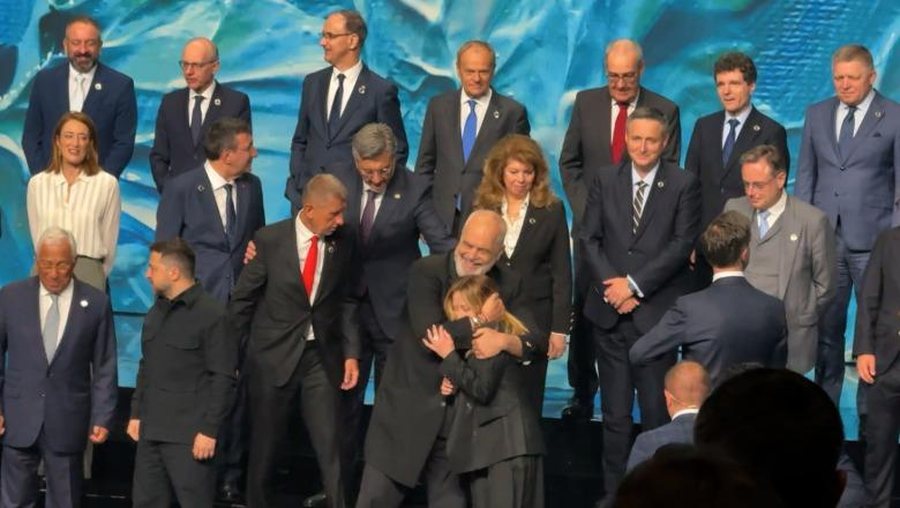
In Europe, democracies are now governed by mediocre political and parliamentary classes, stripped of great ideas...
It has become a cliché: democracies in Europe today are not in good health, and their approval ratings are certainly not among the highest, also because, let us remember, they are the only regimes whose popularity can be measured more or less through that crude but still significant indicator: election results. Where elections are not held or are fraudulent, any measurement of the approval of the political regime is practically impossible. However, things here in Europe are as I said: democracies are not popular. In the eyes of their citizens, democracies appear as “cold” regimes, lacking any capacity for emotional engagement, failing to inspire any real sense of identification and therefore participation.
But the reason is not only the concrete difficulties, especially economic ones, that democratic societies face, increasingly unable to fulfill their promises of well-being and equality. In reality, the current crisis of European democracy also has completely different explanations: for example, the fact that any truly competitive aspect of politics has now disappeared from our democratic regimes. That is, there has been a radical sterilization of any aspect of conflict, of opposition, and thus the capacity that democracy, like any political regime, should have to produce a public self-representation of itself has disappeared.
For example, its power, which can be theatrical and spectacular, but is ultimately always based on conflict. A self-representation undoubtedly appropriate to the nature of a political regime unlike any other, such as it is, but still a political regime destined to govern the evil seed of Adam, not a sung mass. It is true, in short, that democracy rightly prides itself as one of its historical achievements in the fact that it is the regime that does not cut off heads, but counts them. And yet, the fascinating and terrifying spectacle of the guillotine must be replaced by something: not so bloody, of course, but one that ultimately has an emotional impact and communicates it.
One of these spectacles, symbolic in nature but nonetheless significant, in which democratic regimes initially periodically, sometimes brutally, represented their essence was classically election night, witnessing the defeat of the party that had been in government until the previous day. The reversal of roles, the powerful dethroned and suddenly reduced to insignificance, evoked and corresponded in some way to ancient folkloric patterns of revolt and revenge among European populations ("charivari"). More specifically, in the past, the electoral victory of one faction over another could mean, for example, new laws that significantly determined the use of collective resources, shifted power, and truly changed the lives of individuals and social groups.
Today, however, almost nothing remains of all this. Indeed, at least in Europe, democracies are now governed by mediocre political and parliamentary classes, stripped of great ideas, strength and personality. Moreover, these political classes clearly convey the impression that they do not matter much and are fully aware of this. They feel, partly because of the fragile geopolitical position of their countries and their mediocre bureaucratic and clerical tone, stripped of any strong political mandate, especially because they lack a united and motivated electorate to support them.
In short, while the demographic profile of the continent and its civil-religious identity are on the verge of dramatic change, while the entire legacy of Europe's humanist past risks being left to disappear, overwhelmed by the inclusive-democratic prejudices of our current educational systems, while our historic American ally and protector has decided to abandon us at the crossroads, while the complete lack of our satellite systems, energy sources and secure supply chains is being fully revealed, the democracies of the old continent still seem to have sunk into a kind of sweet sleep. Our public opinion still seems interested in playing with the old prejudices of the twentieth century and the permanent party divisions. While the world is on fire and these are now coming ever closer to us, in Italy perhaps the majority still constitute those for whom the mere thought of building a tank is equivalent to the extermination of an orphanage.
All European political systems today are in dire need of decisive and far-sighted leadership. They need women and men who can make bold decisions and ask their fellow citizens to make even bolder sacrifices, while being able to clearly explain the reasons behind them. In short, our democracies are in urgent need of change: what else needs to happen for us to be convinced of this?/ Adapted from "Pamphlet" by "Corriere della Sera"



Lini një Përgjigje