


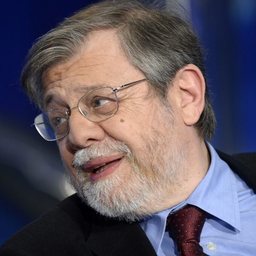
 Shkruar nga Angelo Panebianco
We shouldn't hide our heads in the sand...
It is a debate as old as democracy itself. Are democracies capable of dealing with the difficulties that arise from the international environment in which they operate? Does not their foundation in freedom of thought, pluralism, the separation of powers, and the free competition of political parties put them at a disadvantage compared to authoritarian regimes where none of these constraints exist? Does the ever-troubled internal life of democracies have a negative impact on their ability to face international challenges with the necessary care?
We know that democracies, when involved in wars where their survival is at stake, display previously hidden virtues: the citizens of a democracy that is involved in war usually fight the enemy with greater zeal and dedication than do the subjects of an authoritarian regime. Citizens fight to defend their home; subjects fight to defend the home of the despot. The motivations and intensity of their commitment are different. It often happens that in a struggle for survival between a democracy and an authoritarian regime, the democracy prevails or at least gives difficulties to even a more powerful enemy.
Whatever its flaws, Ukraine is a democracy: that is also why, for more than four years, Ukrainians have held their ground against a paper enemy, vastly superior in military strength, whose fighters lack their resolve. Foreign aid is important, but it would be useless if Ukrainians were not, and are not, resolutely determined to defend their homeland.
But the extreme case of a democracy defending itself from an invader is one thing; conducting foreign policy when, despite not being under direct attack, it must confront an unstable, turbulent, and dangerous international environment is quite another. In this case, doubts about the resources and capabilities at a democracy's disposal become legitimate.
These doubts have always been there, but today they are more urgent than ever. Consider the impact of “social media democracy,” based on horizontal communication, which conveys simplistic and extremist messages about everything, even the most complex and sensitive. It contaminates the communication system and public life as a whole. The effects are felt in every field. The most sensitive ones have to do with international affairs. How can one develop a wise foreign policy under these conditions?
As international navigation becomes more complex and difficult, the public arena is increasingly invaded by "terrible simplists" who sell certainty, in a world where the only certainty is that there is no certainty, to a frightened and disoriented public that clings to anyone who claims to know exactly what to do. In an unstable and disorienting world, there is no more coveted commodity than that of illusionists who sell certainty.
Europe is in big trouble. It has to deal with Trump, but it cannot break away from the United States. Moreover, it is internally divided. To face change, it needs a cohesion that it lacks. Is it the fault of this person or that other? No, it is the fruit of a historical legacy, the effects of which can be contained, with greater or lesser difficulty, but not eliminated.
Many problems are common, but European democracies are different. All have strong internal constraints. But in some cases, a widespread political culture makes one democracy better equipped than another to face challenges. Take the case of Germany. It, like all others, has its "workshops", its growing extremist movements. But it also has a political culture that is not rebellious, not hostile to public authorities in principle. This can help its foreign policy in difficult times. The opposite is the case with Italy, where anti-politics is a characteristic cultural trait. The opposite of what would be needed in a dangerous international situation such as the current one.
Some predict that Europe, without the glue represented by American leadership, is destined to collapse, predicting that old divisions will erupt with force. If this prophecy, unfortunately, proves true, Italy would become a kind of raft lost in the Mediterranean, at the mercy of everyone.
It is clear that we need a ruling class, not just politicians, capable of addressing the seriousness of the problems. But worthy ruling classes cannot be improvised. In a country that has long been accustomed to feeling protected by its international alliances and now faces epochal changes, it would be necessary to break with entrenched habits. For example, we need to increase the opportunities not only for politicians and experts, but also for business leaders, senior bureaucrats, communications directors, and clergy to meet to agree on the problems that need to be addressed.
Without a convergent assessment of the issues at stake, at least in general terms, by the ruling class, Italian democracy will be in grave danger. It will not be possible to show the most open segment of the public the complexity of the issues at stake and the pros and cons of the different possible options. Nor will it be possible to counter the various simplifications and misunderstandings. For example, it is futile to tell ourselves that Europe needs military defense if what characterizes the public spirit is moral disarmament, the conviction that we can remain lambs in the face of savage predators.
Democracies can rely on great resources, both material and moral. But they are also fragile, prone to hiding their heads in the sand. Times do not allow this./ Adapted from “Pamphlet” by “Corriere della Sera”


Lini një Përgjigje