


 Shkruar nga Massimo Nava
Trump's policies have undermined economic globalization and the multilateral approach to world affairs, but nothing can stop the globalization of images, the circulation of ideas and examples...
Sometimes time brings the paradoxes of history. Who knows if in a few years, or even a few months, we Americans, Europeans, Westerners, will find ourselves thanking Donald Trump. Not because he has made America greater, but because he has made the world around us more aware and less dependent.
Let us close our eyes for just a moment to the catastrophe of the present, the world on the brink of world war, the oil crisis, the international law in tatters. And let us open them again, imagining the possible positive consequences of a politics so neurotic and unstable that it is beginning to be disliked, and this is the first consequence, not even by the magic circle of advisers, followers and conformists, except, of course, the discontent that creeps through industrial and financial circles and even within the Republican Party.
The second is the awakening of the people, with squares filling up again as they have not been for years with young people participating, with intellectuals and artists mobilizing, with churches taking sides. People of every race and color march in procession, concerned about a world without peace, about the political massacre of the most authentic and once universal American ideals, about civil rights being violated. It is happening in the United States, Canada, Europe and Italy, where a broad collective reflection on the fundamental reasons that influenced the vote of young people in the referendum would also be useful.
The third is a decisive distancing of many governments "allied" and "friendly" to the United States, led by Canada and Spain, from the policies of the White House. Canada is implementing measures to mitigate its economic and political dependence on its neighbor. Spain has expressed strong diplomatic reactions. Several countries have banned American fighter jets from flying over the United States. With varying degrees of admiration, although without questioning the historical ties with the United States, there is a general awareness - in France, Germany and even in the Italian government, as in the Sigonella affair and the recent statements of Minister Crosetto - that submission could be disastrous, while criticism could be useful for the Americans themselves in the short or medium term: how important is the loss of their global capital of prestige and goodwill to them?
Trump's policies have undermined economic globalization and the multilateral approach to world affairs, but nothing can stop the globalization of images, the circulation of ideas and examples. The crowded squares of the United States are echoing in Rome, Paris and Berlin, as if the pendulum of democratic values has begun to swing back in the right direction.
The fourth consequence is the inevitable path towards a common European defense policy. The progressive disengagement of the United States from NATO, as Trump continues to threaten, is an invitation to do today or tomorrow what would have been useful to plan yesterday. Moreover, since the days of de Gaulle, European defense policy has been discussed, despite concerns about being too autonomous to please the Americans and their defense industry. Today, Trump is offering autonomy on a silver platter, while demanding, through threats and blackmail, the continued use of military bases, as he did to bomb Iran.
Unfortunately for Europeans and Ukrainians, Russians will also thank Trump for cornering President Zelensky and leaving Ukraine on Europe's shoulders, but if this leads to peace and Kiev's entry into the EU, that will still be good news compared to the daily and never-ending tragedy.
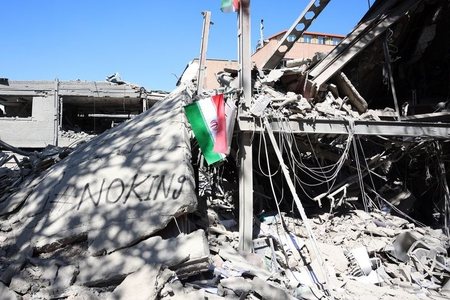
Finally, the most urgent consequence of the catastrophic adventure in Iran remains to be assessed. The Hormuz crisis is forcing the world to rethink, as it did after the crisis of the 1970s, a development model dependent on primary energy sources, gas and oil, the availability of which, with the exception of the United States, is found in the areas of the planet most threatened by instability or controlled by authoritarian regimes./ Adapted from “Pamphlet” by “Corriere della Sera”



Lini një Përgjigje