


 Shkruar nga Makis Pollatos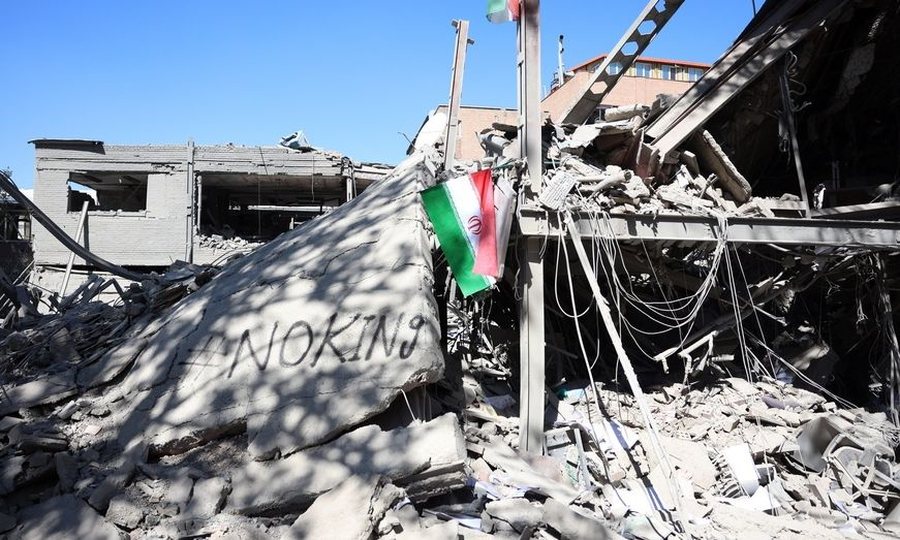
In the planetary game that has been played for 41 days, global balances are being reorganized...
The Middle East has been the region that gave birth to wars and religions. Christianity, Islam, Judaism, the Crusades, the Arab-Israeli wars, Iran vs. Iraq, the invasion of Kuwait, Desert Storm, Sabra and Shatila, Hamas, Israel vs. Hezbollah, Israel vs. Iran, it's all happened there.
War comes after peace, which is always so fragile in the Middle East that all those in the know are almost at any moment ready to put on their khakis and try to dominate their opponents. In historical times, most of the time, conflicts and wars are linked or even intertwined with religion and often break out during major religious holidays, as attackers believe that in this way they will achieve the greatest possible surprise.
Who knows, there may be a large dose of truth in Marx's view that religions are the opium of the people.
In today's era, when news is consumed at the speed of light and events that occurred a few hours ago seem like ancient history, the United States and Israel's war against Iran hides so much and involves so many actors with different interests and conflicting pursuits that the cessation of operations may not be clear whether it will be the beginning of the end or the end of the beginning.
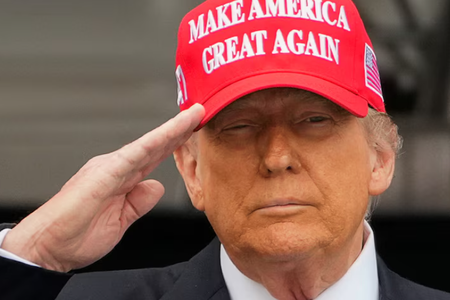
Donald Trump has a difficult domestic road ahead, with the November elections likely to be a crossroads. It doesn't take much thought to understand that the US president would like the support that powerful Jewish organizations can offer him. And Benjamin Netanyahu certainly knows this, as he wants to convince the US president to continue the war against Iran and Hezbollah to the end. Where the end could be the disintegration of Hezbollah and the unconditional capitulation of Tehran, having previously announced that the ambitious goal of completely destroying Iran's nuclear and ballistic programs has been achieved.
Those who view the leaders of states like the United States and Israel as one-dimensional and with a single meaning may not have included sufficient, and I think important, data in their analysis.
It is not just about controlling the Strait of Hormuz, through which oil, liquefied natural gas, and other goods and cargo pass. The Americans have an excellent opportunity to put pressure on China, which is heavily dependent on oil and gas from Iran and other Arab countries in the Middle East. The Chinese are patiently waiting to see how developments unfold, while the Indians, the other very powerful pole in Asia, are vacillating between neutrality and support for the United States.
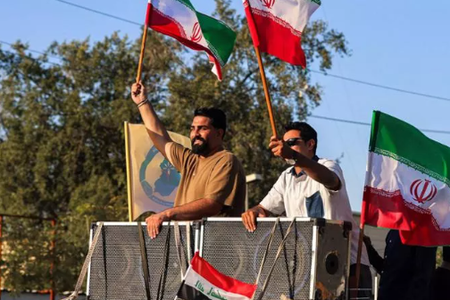
Pakistan wants to curry favor with the United States by exploiting its traditionally good relations with the Iranian regime and emerging as a powerful player with influence over the warring parties. The Good Friday peace talks in Islamabad give Israel another 24 hours to continue its operations in Lebanon to defeat Hezbollah, which is why Netanyahu is intensifying the bombing campaign aimed at eliminating the leadership of Naim Qassem, even if the all-out attacks increase civilian casualties.
In the planetary game that has been played for 41 days, global balances are being reorganized. The rise in oil prices is not only benefiting the United States, but also Russia, which has its own oil and natural gas at much higher prices than until February 28.
It is no secret, nor can it be kept silent, that in this strategic balancing game, Europe appears weakened, sidelined, almost indifferent and unable to influence the United States or Iran, much less Israel, which has never hidden its long-held view of the diplomatic and military capabilities of the 27-nation European Union.
In total, the governments of the EU member states represent a population of 450 million, but each state entity has its own interests, and in a game as big as the war in Iran, European pluralism seems even greater and more problematic.
In war, much more than in peacetime, it is not important to shout and threaten, but to remain calm and find ways to maneuver when necessary, knowing that in addition to reliable allies, you must be able to rely on your strengths and calculate when to make your move, with whom to cooperate and how to always be within the radar range of the players who shape the final agreements, based on mutually beneficial exchanges. /Adapted from Newsbomb /




Lini një Përgjigje