


 Shkruar nga Pamfleti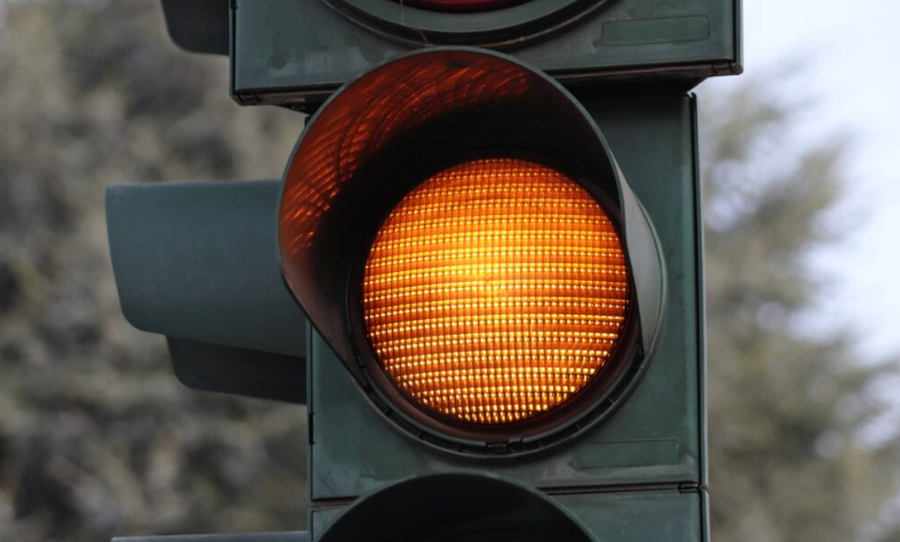
Traffic lights are an integral part of the road network and the basic tool that ensures the unhindered and safe movement of vehicle drivers at intersections.
Even if someone hasn't sat in a driving school, they know that green indicates the continuation of the journey, while red indicates a mandatory stop. However, traffic lights also emit a yellow (or orange) color, the meaning of which is not equally clear to all road users.
In particular, many drivers consider the color orange equivalent to green, with the only difference being that they have to... hurry up so as not to be "caught" by red.
However, they ignore the fact that the Highway Code treats the color orange as red, and therefore drivers must stop and wait until the light turns green again.
A driver can only pass through a yellow light (a continuous yellow circular light) if he is so close to the traffic light that he cannot stop safely, as the Highway Code adds. What does this mean? Braking suddenly, a few meters before the traffic light, poses a risk:
loss of vehicle control
rear-end collision with a following vehicle
slipping (e.g. on a wet road).
However, unlike violating a red traffic light which carries a hefty fine and the revocation of your driving license, an orange traffic light carries a lower fine.
At the same time, drivers should also be careful when they encounter a single or double yellow circular light that is flashing. In this case, they should slow down and proceed with special caution, giving priority to pedestrians and vehicles.








Lini një Përgjigje