


 Shkruar nga Pamfleti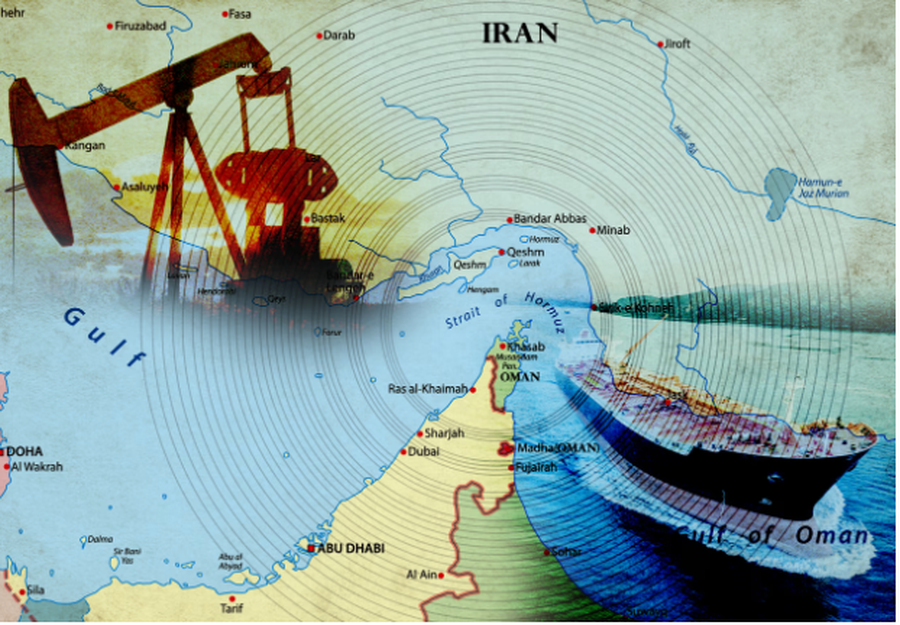
Oil prices rose sharply after US President Donald Trump rejected Iran's latest response to end the war in the Middle East...
Oil rose after US President Donald Trump rejected Iran's latest response to his proposal to end the war in the Middle East. The development extended the effective closure of the Strait of Hormuz, one of the most important maritime corridors for global energy.
The international price of Brent oil rose 4.1% to $105.50 (£77.60) per barrel, while US-traded crude rose 4.4% to $99.80.
Meanwhile, Brent crude futures rose as much as 4.5% to $105.80 a barrel, while West Texas Intermediate traded near $100. In a post on social media, Trump called Iran's response "totally unacceptable," as the sides struggle to maintain a fragile ceasefire after several escalations in hostilities.
Energy prices have fluctuated significantly since the start of the conflict, while Brent crude oil has risen back above $100 per barrel since the ceasefire came into effect on April 8.
The near-total closure of the Strait of Hormuz since the war began in late February has restricted supplies of crude oil, natural gas and fuel to global markets. That has pushed up energy prices and raised concerns about inflation. The International Energy Agency estimates that the conflict is causing the largest supply shock in history.
“Optimism for a close deal between the U.S. and Iran has faded, pushing oil prices higher,” said Warren Patterson, head of commodities strategy at ING Groep NV in Singapore, adding “concerns about a possible re-escalation are expected to rise again, leaving room for further price increases.”
According to the Wall Street Journal, Tehran offered to transfer part of its highly enriched uranium stockpile to a third country but refused to dismantle its nuclear facilities. Iran disputed the report, according to the semi-official Iranian news agency Tasnim.
A drone attack on Sunday that temporarily set fire to a cargo ship near Qatar in the Persian Gulf marked the latest incident involving shipping in the region since a ceasefire began in early April. The United Arab Emirates and Kuwait said they had intercepted hostile drones.
Saudi Aramco Chief Executive Officer Amin Nasser said on Sunday that the market will only return to normal in 2027 if shipping through Hormuz remains restricted for more than a few more weeks. The company has diverted some of its oil flows through the port of Yanbu on the west coast to make up for lost supplies.
A limited amount has passed through the strait, while the United Arab Emirates and Saudi Arabia have managed to get a few tankers out. However, total flows remain much lower than before the war. Qatar also managed to send a cargo of liquefied natural gas, its first since the conflict began.
There is growing conviction on Wall Street that shipping through the Strait of Hormuz will remain disrupted through the second half of the year. Most participants in a survey by Goldman Sachs Group Inc. predicted disruptions in flows beyond the end of June.
Major energy companies have seen their profits rise, while oil and gas prices have risen sharply on global markets.
On Sunday, Aramco said its profits had increased by more than 25% in the first three months of the year compared to the same period in 2025.
Saudi Arabia's energy giant's cross-border pipeline "has proven to be a critical supply artery" and has helped it avoid shipping disruptions caused by the war with Iran, Aramco chief Amin Nasser said.
Last month, BP reported that its profits for the first three months of the year had more than doubled, while Shell announced last week that its profits had increased significantly.
In an interview with CBS's "60 Minutes" on Sunday, Israeli Prime Minister Benjamin Netanyahu warned that the war with Iran "is not over." He said more work is needed to dismantle Iran's nuclear capabilities and remove its stockpile of highly enriched uranium.
Trump is set to meet with Chinese President Xi Jinping this week. U.S. officials said Sunday that he is expected to ask the Chinese leader for clarification on Beijing's approach to Iran. China's revenue to Iran, as well as potential arms exports, are expected to be among the topics of discussion.
More than 4,000 lots of the July Brent contract were traded in the first five minutes, compared with an average of less than 1,000 contracts in recent market openings. The spread between short-term Brent contracts widened to more than $4 a barrel in “backwardation,” a market structure that typically indicates tight supply. / Pamphlet /



Lini një Përgjigje