


 Shkruar nga Gjergj Zefi
Trump downplays attacks as "warning strikes," as world awaits Iranian response that could avert or ignite new Middle East conflict...
There is a very dangerous moment in modern diplomacy: when parties agree to negotiate but at the same time continue to attack each other. This is exactly where the US and Iran find themselves today.
The Americans await Tehran's official response to the latest proposal for a ceasefire and security agreement, while on the ground military tension continues to rise alarmingly.
This contradiction makes peace more doubtful than ever: do we really have a chance for a reduction in tension, or is the world gradually entering a new major conflict in the Middle East?
The American proposal is not just a diplomatic draft. It is a test of strength.
According to international reports, Washington demands that Iran stop enriching uranium, hand over strategic reserves, and limit military activities that the US considers destabilizing for the region.
In return, gradual economic relief and a controlled opening of financial channels for Tehran are offered.
On paper, this looks like a deal for stability. In reality, for the Iranian regime, it sounds like a demand for strategic surrender.
That is why the Iranian response is lagging. Tehran knows that any outright acceptance of the American conditions would be interpreted as weakness, not just within Iran, but throughout the region where the Islamic republic has built its influence for decades. From Lebanon to Syria, from Iraq to Yemen, Iran has tried to project itself as a power that is not subject to American pressure.
It is for this very reason that the Iranian leadership is biding its time: not because it does not understand the risk of a clash, but because it is trying to negotiate without appearing to back down.
Meanwhile, Washington is playing another game. Donald Trump's statement, calling the recent strikes on Iranian targets a "love tap," was much more than a political joke. It was a strategic signal.
In American security parlance, this means: “We can hit harder, but we haven’t decided to do it yet.”
Trump is trying to maintain a delicate balance between military pressure and maintaining diplomatic channels. He wants to show strength towards Iran without pushing the conflict into an uncontrollable war.
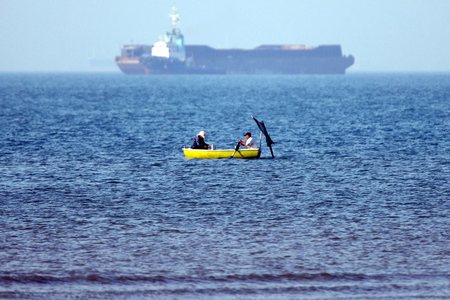
But here arises the greatest paradox of the current crisis. The more the US increases military pressure, the harder it becomes for Iran to accept compromise. And the more Iran rejects American conditions, the greater the risk that Washington will choose escalation. This is why the situation in Hormuz has become the most dangerous point on the globe. Every maritime incident, every downed drone, every seized tanker could become the spark that ignites the entire region.
In fact, neither side seems to want war. The US knows that an open conflict with Iran would be far more complex than previous wars in the Middle East. Iran is not Iraq or Afghanistan. It has missile capabilities, networks of regional allies, and direct and indirect control over strategic energy corridors. A prolonged war would hit the global economy, oil prices, and the very stability of international markets.
Iran also knows that a direct confrontation with the US would have serious consequences for the regime. The Iranian economy is already under extreme pressure from sanctions, social discontent is growing, and a long war could produce internal destabilization. That is why Tehran is trying to win diplomatically without entering into military capitulation.
This is where the answer to the main question lies: what are the chances of peace today?
Peace has a chance only because both sides know the catastrophic cost of war. Not because there is trust between them. Not because there is a real political rapprochement. And not because the conflict has been resolved. On the contrary, the tension is extreme. But at this moment, both Washington and Tehran seem to be trying to avoid the point of no return.
However, history has shown that major wars often start not from long-term strategies, but from small mistakes, political arrogance and military miscalculations. And when diplomacy runs parallel to missiles, peace is always just one step away from collapse./ Pamphlet


Lini një Përgjigje