


 Shkruar nga Pamfleti
From Donald Trump to Gianni Infantino, from immigration to political protests, the 2026 World Cup risks being much more than a football tournament.
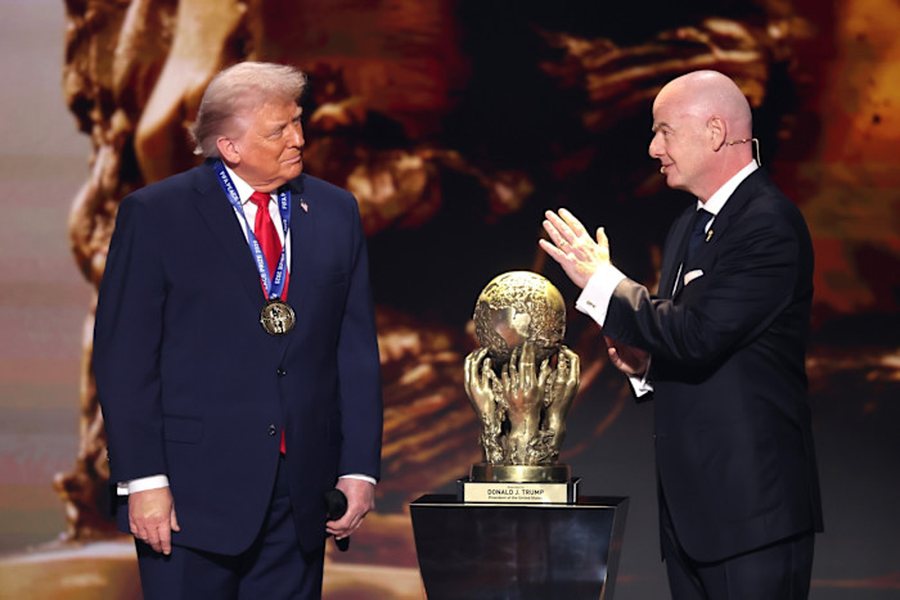
It's hard to find people looking forward to the 2026 World Cup. Dutch political scientist Cas Mudde calls it the "MAGA World Cup," while for many critics the photo of FIFA president Gianni Infantino presenting Donald Trump with the newly created "FIFA Peace Prize" just before the US attacks on Venezuela and Iran symbolically sums up the problems surrounding the tournament.
Trump aims to be a central figure in the world's biggest sporting spectacle. The United States is the main host of the tournament, with 78 matches, including almost all the major challenges. Canada and Mexico will host only 13 matches each.
However, the enthusiasm is not as great as expected. Ticket prices have caused anger among fans, while in many host cities a portion of tickets have remained unsold and hotels have started to reduce prices due to weaker-than-expected demand.
An even bigger concern is immigration. Human rights groups fear that US Immigration and Customs Enforcement (ICE) could use the tournament to round up and arrest undocumented immigrants. Acting ICE director Todd Lyons has said the agency will be a “key part” of security during the World Cup. This has raised fears that Latin American fans could be subject to increased scrutiny.
From "peace through football" to global politics,
the World Cup was born from the vision of Frenchman Jules Rimet, president of FIFA from 1921. A survivor of World War I and decorated several times for bravery, Rimet saw football as a means of reconciliation between peoples.
He believed that the game could soften rivalries and bring nations closer together. The first World Cup was held in Uruguay in 1930, laying the foundations for an event that would become a global phenomenon.
However, the tournament's history has always been intertwined with politics. Benito Mussolini's fascist Italy hosted the 1934 World Cup. Later, FIFA collaborated with Argentina's military regime in 1978, with Vladimir Putin's Russia in 2018, and has chosen Saudi Arabia for the 2034 edition.
According to the author of the analysis, FIFA has consistently justified these choices with the philosophy of "peace through football", claiming that sport can bring countries with problematic political systems closer together.
Presidenti aktual i FIFA-s, Gianni Infantino, është afruar dukshëm me Donald Trumpin. Gjatë vitit të kaluar ai kaloi më shumë kohë me presidentin amerikan sesa me shumicën e liderëve botërorë.
Infantino mori pjesë në aktivitete të organizuara nga Trump, mbështeti publikisht iniciativat e tij për paqen në Lindjen e Mesme dhe krijoi madje çmimin “FIFA Peace Prize”, i cili iu dorëzua presidentit amerikan.
Kritikët argumentojnë se kjo afërsi ka dobësuar aftësinë e FIFA-s për të ushtruar presion mbi vendin organizator, siç ka bërë në raste të tjera.
Pse ky Botëror është ndryshe?
Ndryshe nga liderët autoritarë që kanë përdorur Kupën e Botës për të përmirësuar imazhin e vendeve të tyre, Trump nuk duket i interesuar për një strategji të tillë.
Musolini, regjimi ushtarak argjentinas, Putini apo familja mbretërore e Katarit e përdorën turneun për të paraqitur vendet e tyre si mikpritëse dhe moderne.
Trump, përkundrazi, nuk kërkon të ndryshojë perceptimin për Amerikën. Ai është krenar për politikat e tij të ashpra ndaj emigracionit dhe nuk përpiqet t’i fshehë ato. Qytetarët e disa vendeve, përfshirë Iranin, Haitin, Senegalin dhe Bregun e Fildishtë, përballen me kufizime të mëdha për marrjen e vizave amerikane, gjë që sipas kritikëve bie ndesh me parimet e FIFA-s kundër diskriminimit.
Për Trumpin, Kupa e Botës duket më shumë si një skenë gjigante mediatike.
Ai e ka krahasuar turneun me organizimin e shumë Super Bowl-eve njëri pas tjetrit, duke theksuar se disa ndeshje të Botërorit tërheqin audienca më të mëdha televizive sesa finalja e futbollit amerikan.
Rreziku i protestave
Por historia tregon se liderët nuk e kontrollojnë kurrë plotësisht Kupën e Botës.
Në vitin 1938, italianët antifashistë që jetonin në Francë protestuan kundër skuadrës së Musolinit. Në Argjentinën e vitit 1978 dhe Katarin e vitit 2022, organizatat ndërkombëtare përdorën vëmendjen globale për të denoncuar shkeljet e të drejtave të njeriut.
Analistët besojnë se e njëjta gjë mund të ndodhë edhe në SHBA.
Të gjitha 11 qytetet organizatore votuan për kandidatët demokratë në zgjedhjet e fundit. Kjo do të thotë se stadiumet dhe zonat përreth tyre mund të shndërrohen në hapësira proteste kundër administratës Trump. Vetë presidenti ka kërkuar në disa raste që ndeshjet të zhvendosen nga qytete me prirje të majta si Seattle.
Nëse Trump shfaqet në stadiume dhe imazhi i tij transmetohet në ekranet gjigante, ekziston mundësia reale që ai të përballet me fishkëllima dhe protesta, siç ka ndodhur në ngjarje të tjera sportive.
Futbolli përballë politikës
Një tjetër pikë tensioni pritet të jetë komuniteti latino-amerikan. Emigracioni mbetet tema qendrore e politikës së Trumpit dhe miliona tifozë me origjinë nga Meksika, Kolumbia apo vende të tjera të Amerikës Latine pritet të mbushin stadiumet dhe zonat e tifozëve.
Clashes between Latin American fans and authorities also occurred during the 1994 World Cup in the United States. Many analysts warn that similar tensions could recur in the current political climate.
Protests are also expected from various diaspora communities, including opponents of the Iranian regime, who have often used sporting events as a platform to express their dissatisfaction with Tehran.
However, the author concludes that despite politicians' attempts to use the World Cup for their own interests, the tournament remains above all a global celebration of football.
"The World Cup belongs neither to Trump nor to Infantino. FIFA simply organizes and monetizes it," he writes.
In the end, millions of people will gather in front of screens, in homes, bars and public squares to watch the matches. And this, according to the author, remains the greatest strength of the World Cup: its ability to unite people across politics, ideologies and national borders./ Financial Times


Lini një Përgjigje